Researchers reconstructed a six‑enzyme pathway that produces the diterpenoid alkaloid atisinium, transferring the necessary genes from wolfsbane and larkspur into Nicotiana benthamiana. A novel reductase named DAS was identified, and isotope labeling revealed ethanolamine as the nitrogen donor rather than the expected ethylamine. The work provides a sustainable platform to produce and study complex alkaloids with analgesic, antiplasmodial and anticancer potential, though later pathway steps toward molecules like aconitine remain unknown.
Scientists Reconstruct Wolfsbane and Larkspur Pathway, Enabling Production of Potent Alkaloids

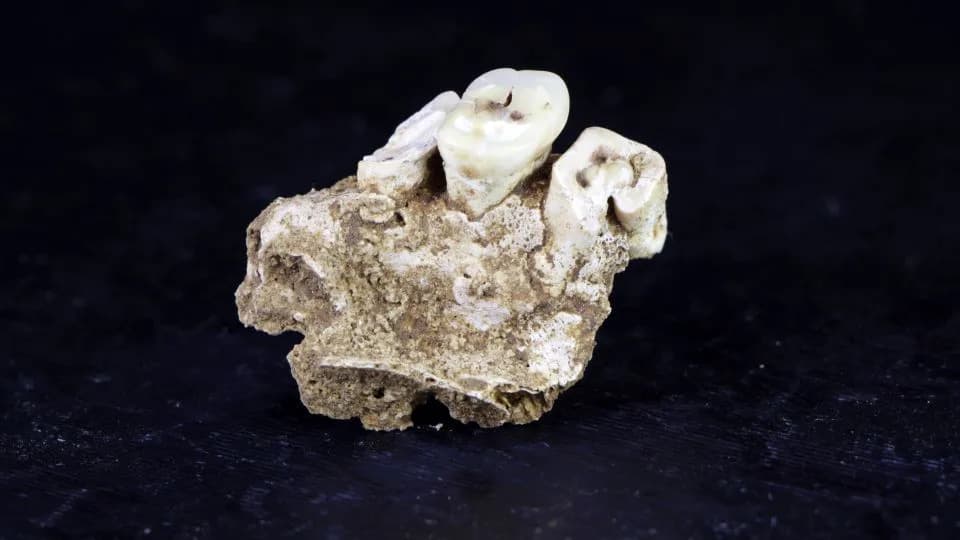
Scientists recreated a wolfsbane and larkspur alkaloid pathway, opening new ways to study complex plant-derived medicines. (CREDIT: Wikimedia / CC BY-SA 4.0)
Researchers from Michigan State University and the Czech Academy of Sciences have reconstructed a six‑enzyme biosynthetic pathway that produces the diterpenoid alkaloid atisinium, moving key early steps out of wolfsbane (Aconitum) and larkspur (Delphinium) and into a tobacco relative for experimental production.
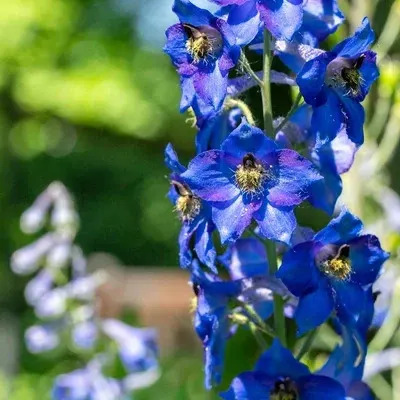
A larkspur specimen in bloom at Beal Botanical Garden. Known for their toxicity, injurious plants such as larkspur and wolfsbane have been leveraged by humans for millennia for their medicinal potential. (CREDIT: Paul Henderson)
What the Team Did
The groups sequenced RNA from multiple tissues of Delphinium grandiflorum, Aconitum plicatum and Aconitum lycoctonum, and analyzed public datasets from additional Aconitum species to find genes highly expressed in roots, where diterpenoid alkaloids accumulate. From thousands of candidate transcripts, they shortlisted cytochrome P450 enzymes and other pathway genes, tested them functionally, and ultimately identified six enzymes sufficient to produce atisinium.

Working with Lansing local artist Marissa Tawney Thaler, the researchers crafted a special cover for Molecular Plant. The final design includes purple wolfsbane, indigo larkspur, a brown-and-gold cell culture in a petri dish, as well as a molecular representation of atisinium with color-coded nodes for oxygen and nitrogen atoms. (CREDIT: Marissa Tawney Thaler)
Key Findings
Novel Enzyme Identified: The researchers discovered a previously uncharacterized reductase they named diterpenoid alkaloid synthase (DAS), which helps install nitrogen into the growing molecule.
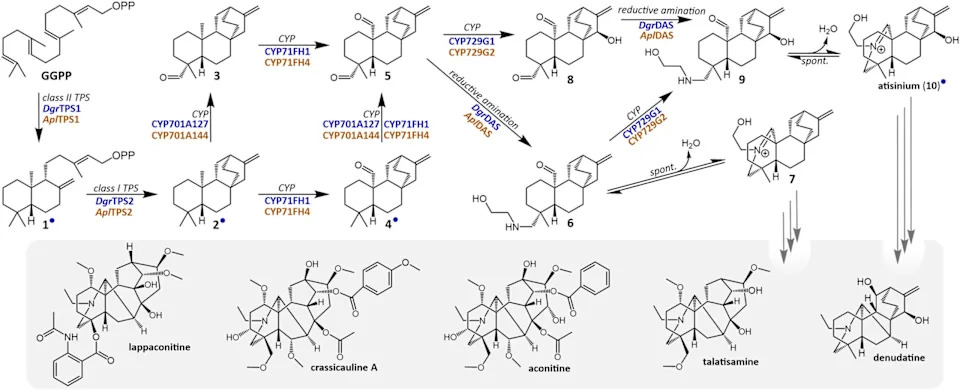
Proposed biosynthetic pathway toward diterpenoid alkaloids. (CREDIT: Björn Hamberger et al, Molecular Plant)
Surprising Nitrogen Source: Isotope‑labeling experiments showed ethanolamine — not the expected ethylamine — donates the nitrogen incorporated into atisinium and related alkaloids. Both atisinium and the potent neurotoxin aconitine incorporated labeled ethanolamine in callus experiments.
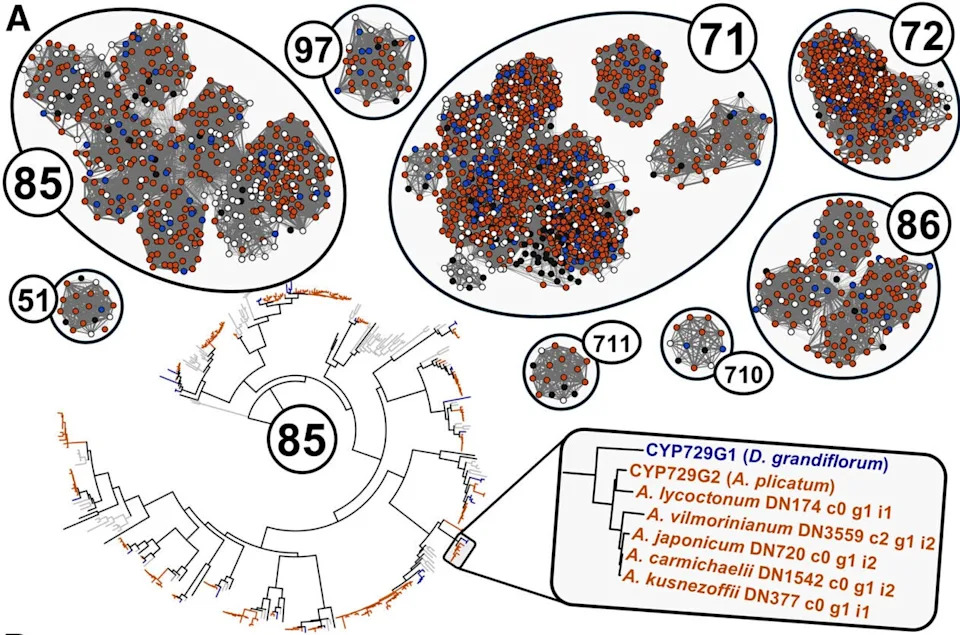
Visual representation of the search strategy for candidate CYPs. CYPs mined from each transcriptome were grouped into distinct clans through a sequence similarity network, and each clan was built into an individual phylogenetic tree. (CREDIT: Björn Hamberger et al, Molecular Plant)
Heterologous Production: The team expressed the six genes in Nicotiana benthamiana, demonstrating that a non-native plant host can transiently produce pathway intermediates and function as a biological factory for these compounds.
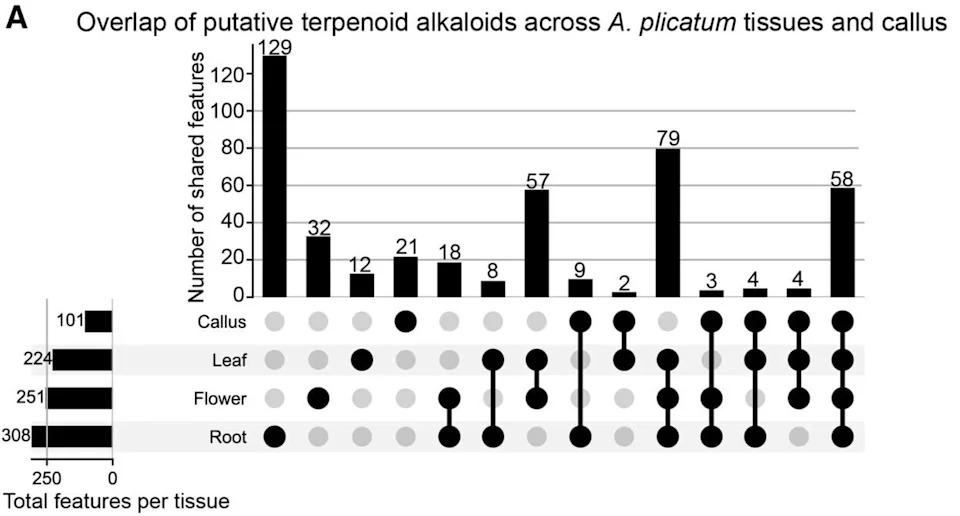
An UpSet plot showing shared and unique putative terpenoid alkaloids across callus cultures and leaf, flower, and root tissue of A. plicatum. (CREDIT: Björn Hamberger et al, Molecular Plant)
Why This Matters
Diterpenoid alkaloids are structurally complex natural products that combine terpenoid and alkaloid features. Some, like aconitine, are potent neurotoxins (aconitine contains six interconnected rings and 15 stereocenters and has resisted total chemical synthesis since its isolation in 1833), while other family members show analgesic, antiplasmodial and anti‑cancer potential. By reconstructing early biosynthetic steps, researchers now have a practical, sustainable route to produce and test these molecules without relying solely on slow plant extraction or extremely challenging chemical synthesis.
Methods in Brief
The study combined transcriptomics, cross‑species comparative analysis, coexpression patterns, enzymology and isotope‑labeling. From an initial pool of >2,100 predicted cytochrome P450 transcripts across datasets (284 in D. grandiflorum alone), the team used expression patterns and phylogenetic comparisons to focus on a handful of candidates for functional assays.
Remaining Questions
Although the researchers reconstructed early steps up to atisinium, many downstream enzymes and transformations that produce the hundreds of more elaborate diterpenoid alkaloids remain unknown. The pathway to highly complex molecules such as aconitine is still incomplete.
Implications and Next Steps
Having the six‑enzyme blueprint gives scientists a starting platform to discover downstream enzymes, scale production in heterologous hosts, and evaluate biological activities for drug discovery or safer pest‑control agents. The findings appear in the journal Molecular Plant.
Credits: Study led by teams at Michigan State University and the Czech Academy of Sciences. Artwork and cover design mentioned in the original report were created by Marissa Tawney Thaler; figure credits to Björn Hamberger et al.
Help us improve.