Key findings: Internal Russian procurement documents show the planned Angara production ramp-up relies on imported machine tools, with Chinese suppliers making up about 10.5% of units but roughly 28.2% of the programme's technological core. In the metalworking shop, Chinese equipment exceeds 47% of needs, and Khrunichev plans to spend roughly 900 million roubles on Chinese-made machines. EU imports of Chinese machine tools remained strong in 2025 and rose in early 2026, complicating sanctions and export-control efforts.
Russia's Angara Rocket Ramp-Up Relies Heavily on Chinese Machine Tools, Documents Show
Credit: Getty Images
Russia is racing to boost production of its Angara launch vehicles, but internal planning documents reveal a significant reliance on imported machine tools — many from China. The programme aims to increase annual Angara output from roughly one rocket today to four within the next decade, requiring extensive factory modernization and targeted equipment purchases.
What the Documents Reveal
Researchers who obtained internal procurement plans found a list of 541 pieces of equipment: 477 are Russian-made, 57 are sourced from Chinese suppliers and two come from Bulgaria. By simple unit count, Chinese-made machines represent about 10.5% of the list.
Chinese Role Is Larger Than It Appears
When items are evaluated by technological importance rather than by count, Chinese suppliers play a much larger role: the documents estimate Chinese-made machines account for 28.2% of the project's technological core. In the metalworking shop specifically, more than 47% of required equipment is expected to be Chinese-made.
Money Follows the Core
Budget figures reinforce the dependence on higher-end imported tools. Of the 3.62-billion-rouble equipment budget (roughly $44.7 million), over 84% is allocated to the technological core where Chinese machines are prominent. Khrunichev, the prime manufacturer cited in the plan, intends to spend close to 900 million roubles (about $11.3 million) on equipment manufactured in China.

Google logo on a black background next to text reading 'Click to follow TechRadar'
Sanctions, Controls and Market Dynamics
Since Russia's 2022 invasion of Ukraine, export controls and sanctions have restricted certain high-tech industrial exports to Russia. The EU restricts heavy forging and hydraulic presses to Russian end-users, and the United States sanctioned at least one Russian hydraulic-press maker (Pressmash) in 2023.
Nevertheless, EU imports of Chinese-made machine tools under equivalent customs codes remained sizeable — about €207 million in 2025 — and rose another 17.6% in the first half of 2026 versus the same period a year earlier. Many Chinese manufacturers sell near-identical machines to both Western markets and to Russian customers, complicating efforts to cut off supply through targeted measures.
Strategic and Security Implications
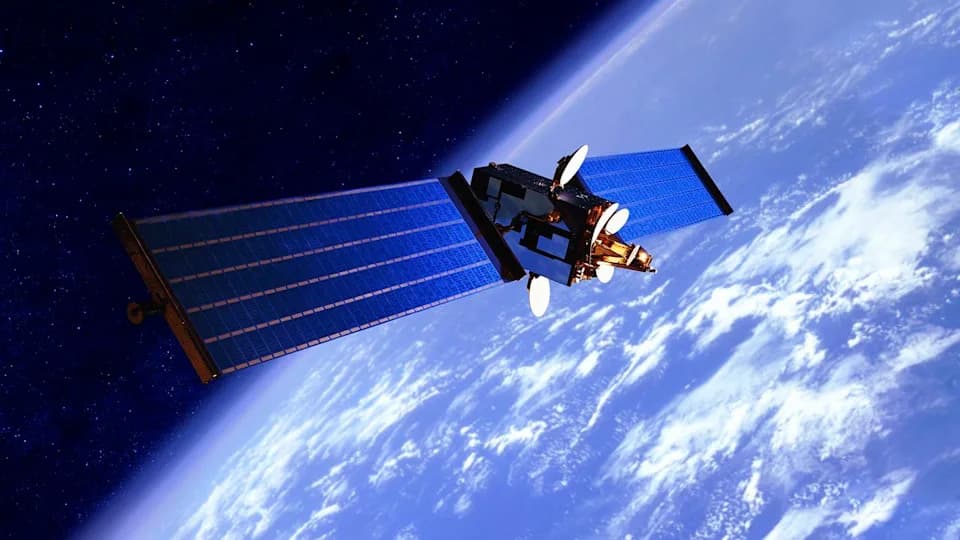
The Angara rockets produced with this equipment are slated to carry satellites for the Russian Ministry of Defense. U.S. experts warn such payloads could pose risks to space and terrestrial assets; Russian specialists counter that these spacecraft operate explicitly "in the interests of the Russian Ministry of Defense." The divergence in assessments has persisted since the conflict began and underscores geopolitical sensitivities around space infrastructure.
What Comes Next
The procurement plan highlights a broader policy challenge: restricting specific high-end industrial flows while preventing dual-use goods from being re-routed through alternative suppliers. Whether commercial incentives will lead more Chinese manufacturers to supply Russia despite potential reputational or market losses in Europe and North America remains uncertain.
Bottom line: The Angara expansion is feasible only with substantial shop-floor upgrades and specialized machine tools. Although Chinese machines account for a modest share by count, they represent a disproportionately large share of the technological capacity and budget critical to Russia’s next-generation rocket production.
Help us improve.