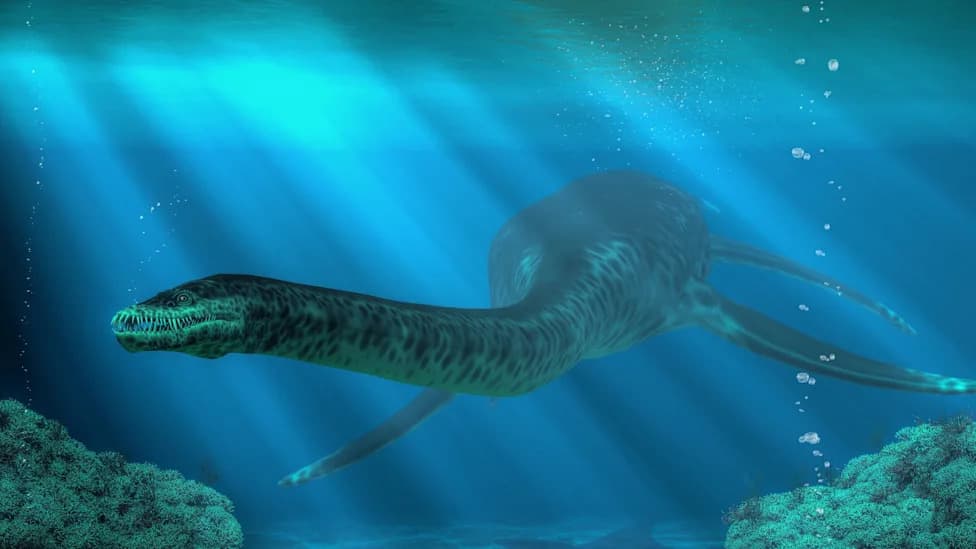
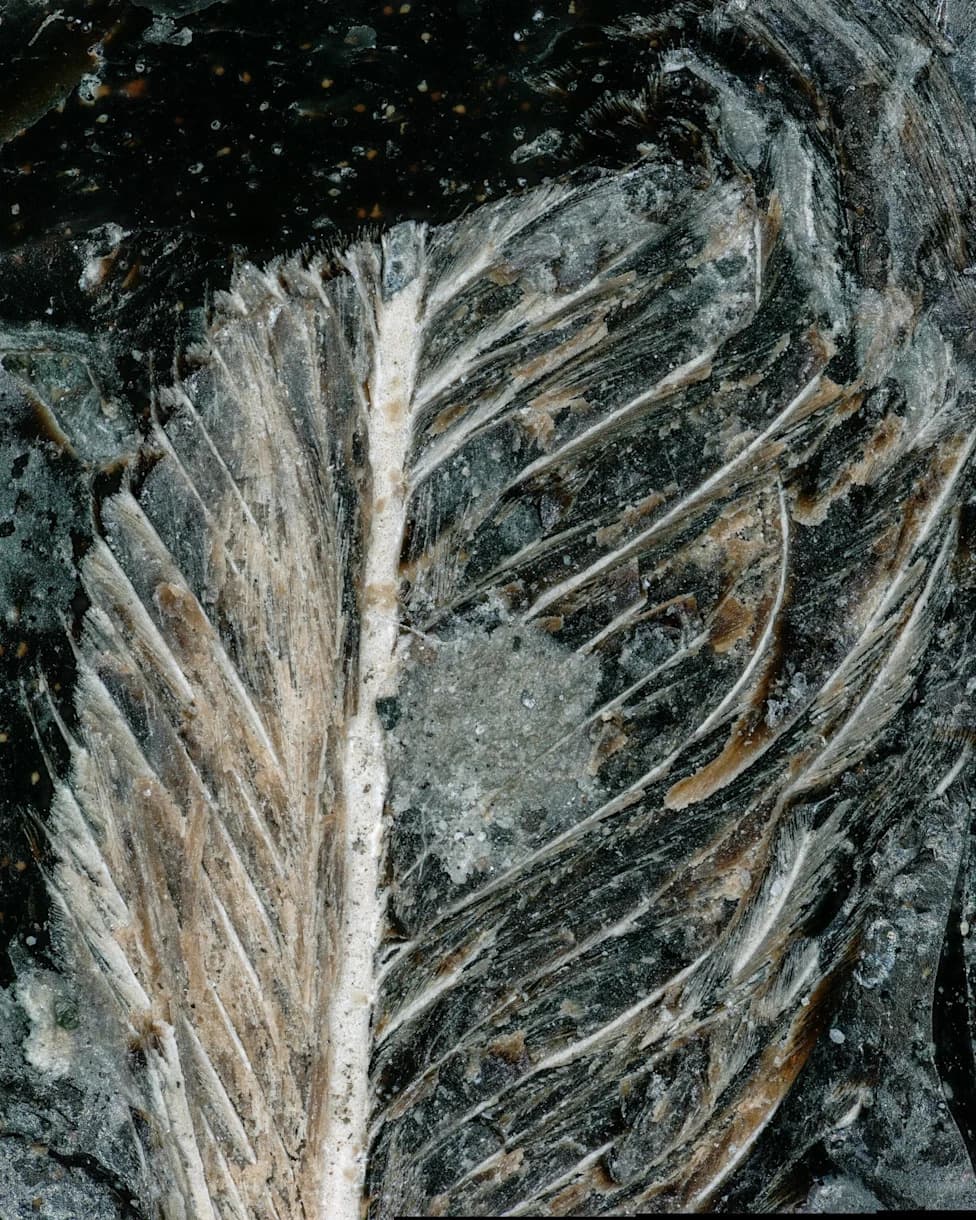
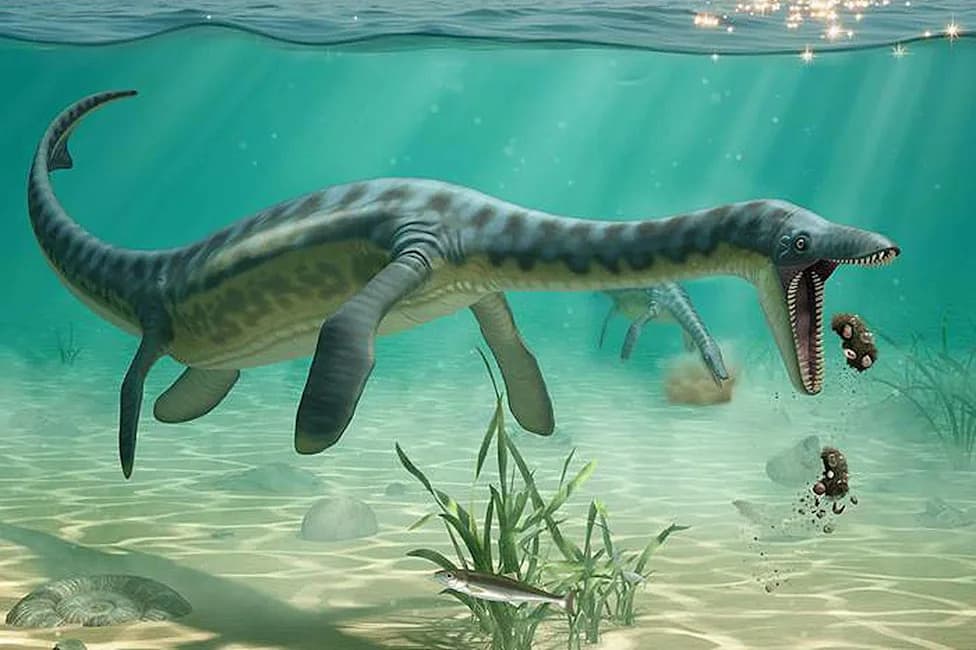
A 19–22-foot ichthyosaur (Platypterygius australis) discovered near Richmond, Queensland, preserves stomach contents that include pterosaur jaw fragments plus fish and cephalopods. Synchrotron CT scans at ANSTO revealed these internal remains without damaging the fossil, making this the first direct evidence that an ichthyosaur ate a pterosaur. Large bite marks and fractured bones on the specimen indicate attack or scavenging by the giant pliosaur Kronosaurus queenslandicus, offering a rare glimpse of multiple links in an ancient marine food chain.
Rare Australian Fossil Preserves a Food-Chain Moment: Ichthyosaur Ate a Pterosaur Before Kronosaurus Attack
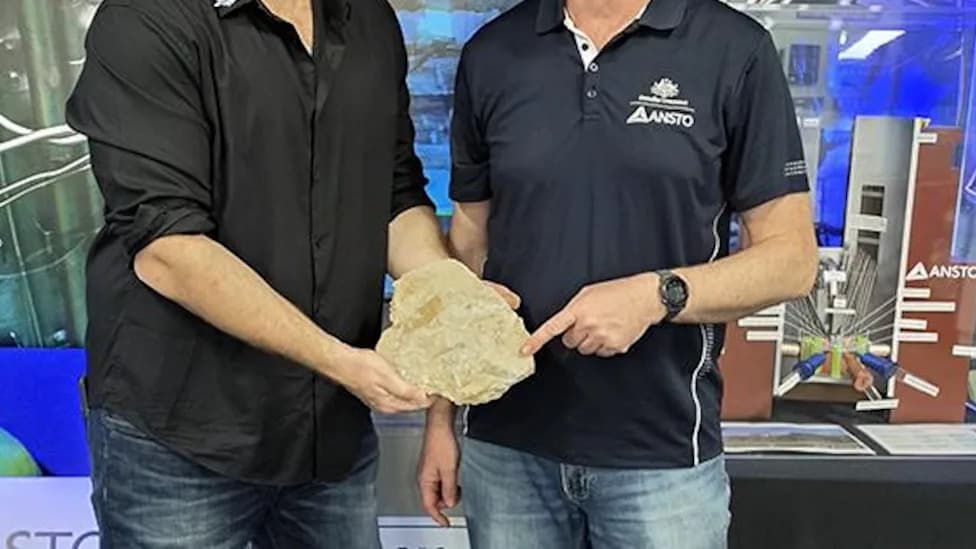
Photo Credit: Australian Nuclear Science and Technology Organisation
Long before Queensland's Outback became the arid interior we know today, the region lay beneath an ancient sea. A single fossil from that lost seascape appears to capture an extraordinary sequence of predator-and-prey events frozen in time.
Researchers examined a 19- to 22-foot ichthyosaur, identified as Platypterygius australis, recovered near Richmond, Queensland. Advanced three-dimensional imaging revealed remains inside the ichthyosaur's abdominal cavity, including fragments of a pterosaur jaw plus fish and squid-like cephalopods — evidence of its last meals.
First Direct Evidence of an Ichthyosaur Eating a Pterosaur
According to a study published in Gondwana Research, this specimen provides the first fossil evidence that an ichthyosaur consumed a pterosaur. The find expands our understanding of dietary breadth among marine reptiles and the interactions between aerial and marine predators in the Mesozoic.
Signs of a Larger Predator
The specimen also displays large bite marks, missing elements and fractured bones consistent with attack or scavenging by the giant pliosaur Kronosaurus queenslandicus. These injuries suggest the ichthyosaur was itself preyed upon or scavenged, offering a rare snapshot of multiple trophic levels captured in one fossil.
How the Hidden Details Were Revealed
Scientists used non-destructive synchrotron CT scanning at the Australian Nuclear Science and Technology Organisation (ANSTO) to peer into mineralized nodules behind the skull without damaging the specimen. The scans revealed delicate internal remains invisible from the outside and allowed detailed study while preserving the fossil for future research and museum display.
The fossil was first uncovered in 2019 at a public fossicking site by Mike and Cathy Freeman and Gary and Barb Flewelling, who nicknamed the specimen "Bag of Bones" (B.O.B.). Additional pieces associated with the find were later recovered by Kevin Petersen, curator of Kronosaurus Korner. Matt White, a research associate at the University of New England and lead author of the paper, said, "I was amazed by the size of the ichthyosaur, and shocked to see it littered with bite marks and partially exposed pterosaur remains behind the skull."
Why This Matters
Most fossils document anatomy; far fewer preserve behavior or ecological interactions at a specific moment. This specimen helps paleontologists reconstruct ancient marine food webs by linking stomach contents and bite patterns to predator-prey dynamics and energy flow through prehistoric oceans.
Help us improve.