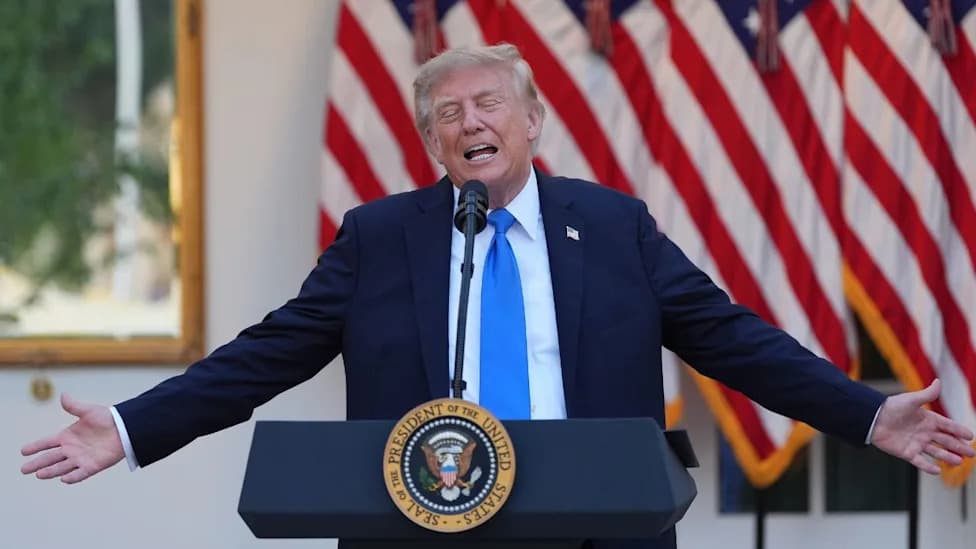
Quick Take: The claim that Donald Trump filed an "emergency motion" to stop his lawsuit against the BBC is false. On Aug. 6, 2026, a judge granted a temporary stay limiting the BBC's access to tax returns and records for about 400 companies — a move to restrict financial discovery, not to dismiss the case. Trump has narrowed his claims to alleged personal reputational harm and still seeks $10 billion over the disputed 2024 documentary.
Fact Check: Trump Did Not File An Emergency Motion To End BBC Lawsuit — He Sought To Block Financial Discovery
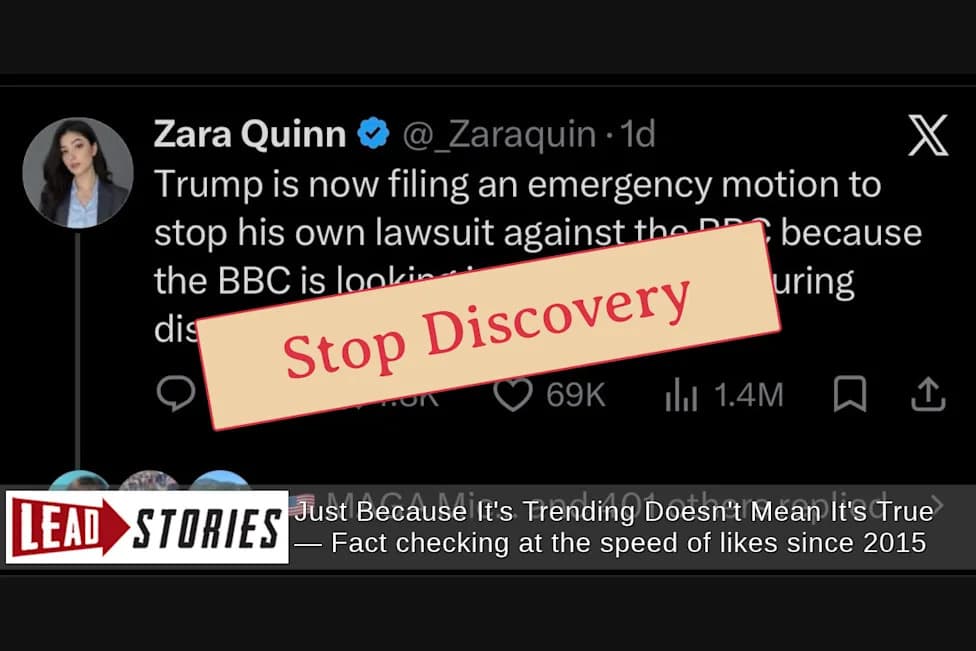
Lead Stories says: Stop Discovery
Did former President Donald Trump file an "emergency motion" to stop his own lawsuit against the BBC? No. On Aug. 6, 2026, a U.S. federal judge granted a temporary stay that limits the BBC's access to certain financial records in Trump’s $10 billion defamation suit — but that action is not the same as asking to dismiss or end the case.
What Happened
Trump's lawyers asked the court for a temporary restriction on financial discovery while the parties dispute the scope of documents the BBC may obtain. The order, issued Aug. 6, 2026, prevents the BBC from obtaining tax returns, financial statements and ownership records tied to roughly 400 companies associated with Trump’s business network while the matter is litigated.
What The Social Post Claimed
The claim posted to the @_Zaraquin account on X stated: "Trump is now filing an emergency motion to stop his own lawsuit against the BBC because the BBC is looking into his finances during discovery."
What The Record Shows
Fact-checkers searched major news aggregators and credible outlets (including Google News and Yahoo News) and found no reports supporting the claim that Trump sought to terminate or withdraw the lawsuit via an "emergency motion." If a plaintiff wants to end a civil suit, the complaint can simply be withdrawn or dismissed — there would be no procedural need for an "emergency motion" to stop one’s own case.
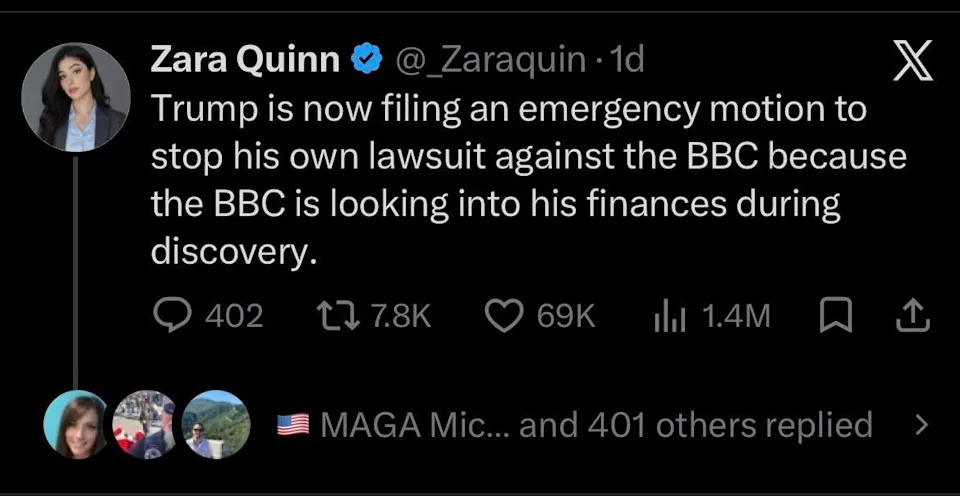
Image source: post by @_Zaraquin on X.
Why Trump's Lawyers Sought The Stay
Attorneys for Trump argued that allowing the BBC to review sensitive financial documents could cause irreversible harm because confidential information could not be "un-seen" if disclosure were later found improper. The temporary order narrows the immediate scope of discovery while the dispute over privacy and relevance is resolved.
Current Status Of The Case
Trump has withdrawn claims that the 2024 BBC documentary harmed his brands and corporate businesses, narrowing the suit to alleged personal reputational harm. He continues to seek $10 billion in damages. The underlying dispute stems from a BBC documentary that included edited portions of Trump's Jan. 6, 2021, speech; the broadcaster has apologized for the editing error and says it was unintentional and not defamatory.
Bottom Line
The social post's claim that Trump filed an emergency motion to "stop his own lawsuit" is inaccurate. The court action on Aug. 6, 2026, was a temporary stay limiting financial discovery, not a request to end the litigation.
Help us improve.