Miami restaurateur Wilkinson "Ken" Sejour says the end of Temporary Protected Status for Haitian nationals has left customers frightened and threatens two of his Chef Creole locations after he lost managers across seven restaurants. Sejour — who voted for Donald Trump — fears the policy affecting roughly 350,000 Haitians could effectively end his hospitality career. Recent court rulings, including a June Supreme Court decision, and other administrative actions have also affected TPS designations for South Sudanese, Syrian and several other nationalities.
‘People Are Scared’: Miami Restaurateur Who Voted for Trump Says End Of Haitian TPS Threatens His Business
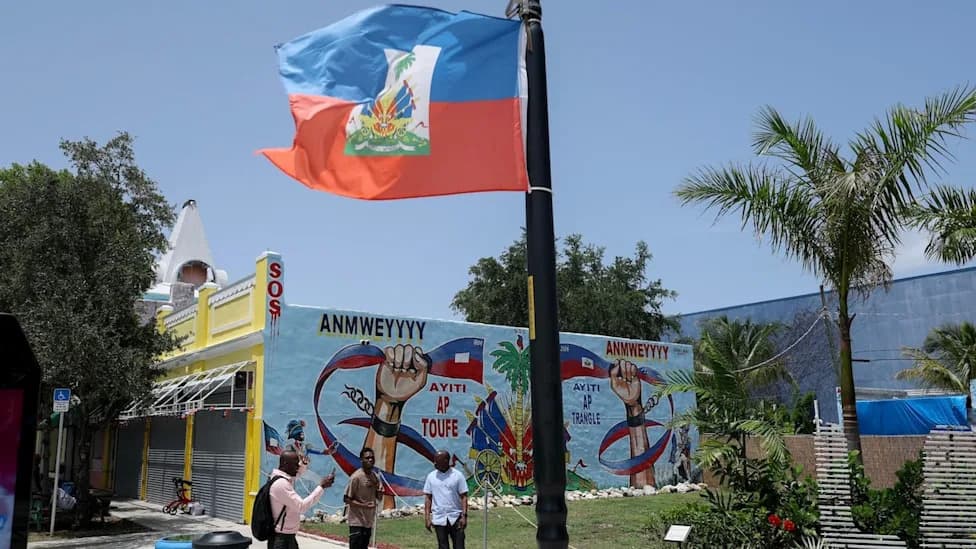
MIAMI, FLORIDA - JUNE 06: Pedestrians walk through the streets of the Little Haiti neighborhood on June 06, 2025 in Miami, Florida. (Photo by Joe Raedle/Getty Images)
Wilkinson "Ken" Sejour, owner of Miami’s Chef Creole, says the Trump administration’s decision to end Temporary Protected Status (TPS) for Haitian nationals is already reverberating through Little Haiti, where many businesses depend on Haitian workers and customers.
At Chef Creole, a longtime neighborhood restaurant known for comfort food rooted in Haitian and Bahamian traditions, the policy change has sown confusion and fear. Rumors about potential immigration raids and arrests have spread, and Sejour told CBS Evening News that "people are scared."
Sejour said he has lost his full management teams across seven restaurants and now faces the prospect of closing two locations. "The end of TPS means for me that my future in the hospitality business is almost gonna be non-existent," he said.
"I voted for Donald Trump," Sejour told reporters, adding that he supported Trump because the candidate "sold to me that he was a businessman and that he would make business decisions."
According to government figures cited in reporting, roughly 350,000 Haitian nationals had been covered by TPS prior to the termination. The State Department also lists Haiti among 23 countries under its highest travel advisory — the "Do Not Travel" designation — and it is currently the only Caribbean nation on that list.
Broader Policy Changes and Legal Challenges
The rollback of TPS protections is not limited to Haiti. A federal judge in Massachusetts recently ruled in favor of the administration’s action to end TPS status for hundreds of South Sudanese nationals. In June, the Supreme Court issued a 6-3 decision that allowed the administration to move forward with ending TPS protections for some nationalities, including Haitian and Syrian nationals. Other countries whose TPS designations have been ended or reviewed in recent months include Ethiopia, Nicaragua, Nepal, Honduras and Burma.
Advocates and business owners say the uncertainty — combined with worker departures and community fear — could have lasting economic and social consequences for neighborhoods like Little Haiti.
What Business Owners Say
Sejour’s experience illustrates how immigration policy shifts can ripple through local economies: staffing shortages, fewer customers, and mounting operational challenges. Community leaders and advocacy groups are calling for clearer guidance from federal agencies to reduce fear and misinformation while policymakers and courts continue to process legal challenges to the policy changes.
What To Watch: How local businesses adapt or close, whether additional legal decisions alter TPS rollbacks, and what communications the Department of Homeland Security and State Department provide to affected communities.
Help us improve.