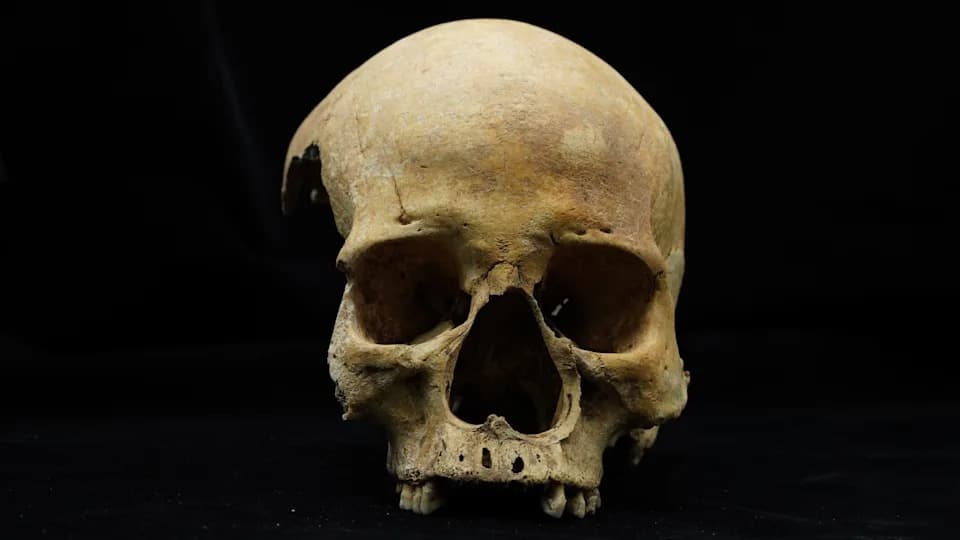
Ancient DNA from the Shimao Neolithic Site (c. 2300–1800 B.C.) shows the community developed locally from the Yangshao culture and practiced organized, gendered human sacrifice tied to elite rituals. Men were concentrated near an eastern gate, possibly linked to wall-building or defense rites, while women were buried near elite cemeteries, perhaps as part of ancestor veneration. Genetic evidence also indicates power stayed within elite family lines across generations, even as women could reach top positions.
Ancient DNA Reveals Shimao's Gendered Sacrifices and Hereditary Elite Rule
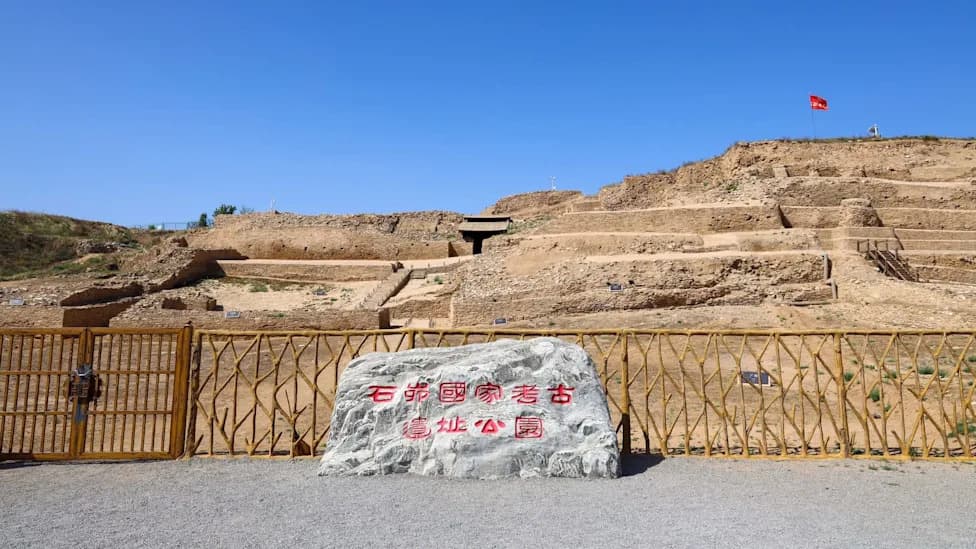
Photo Credit: iStock
Long before China's imperial dynasties, the people of Shimao (c. 2300–1800 B.C.) were building massive stone fortifications, burying elites in elaborate tombs and organizing social life in ways that feel eerily familiar today. New genetic evidence is sharpening that picture, revealing both the community's local origins and the violent rituals that accompanied elite power.
New Genetic Evidence From a Landmark Study
A study published in Nature and reported by the South China Morning Post analyzed ancient DNA from human remains at the Shimao Neolithic Site in Shaanxi. The site — once misidentified as part of the Great Wall until jade artifacts demonstrated its much greater antiquity — offers unusually specific biological and social data for a community that flourished some 4,000 years ago.
Gendered Patterns of Human Sacrifice
Genome analysis revealed that sacrificial victims were buried in spatially distinct zones by sex: males were clustered near an eastern gate, while females were interred close to cemeteries associated with social elites. The researchers propose that male victims may have been tied to rites connected with the construction or defense of the walls, whereas female victims were more likely part of ancestor-veneration ceremonies meant to honor nobles or rulers.
Origins, Kinship and Social Hierarchy
Genetic data indicate the Shimao community descended from the earlier Yangshao culture rather than representing a recent invading population. At the same time, the population shows selective genetic connections with neighboring groups, including communities at Taosi and Yumin groups in Inner Mongolia, suggesting local development with episodes of contact and gene flow.
Crucially, ancient DNA allowed researchers to test kinship ties directly: there is little genetic kinship between the elite tomb owners and many of the sacrificed individuals. That pattern suggests graves and ritual sites centered on elite families, while sacrifice appears to have been organized by social status rather than strictly by biological kinship.
The authors conclude that the lack of kinship between elite tomb owners and the sacrificed people suggests graves were centered around social elites and their families, and that the sacrifice rite was administered according to social status.
Michael Rivera, a bioanthropologist at the University of Hong Kong who was not involved in the study, noted that ancient DNA helps reveal population histories and relationships between communities, adding that the Shimao population "were not recent migrants or conquerors but evolved locally and were connected to communities in Shanxi and Inner Mongolia."
Taken together, the findings point to a resilient social hierarchy in which power remained concentrated within elite family lines over multiple generations — a pattern that in some respects foreshadows later hereditary rule. At the same time, the evidence indicates that women could, in certain cases, attain the highest positions of authority within this broadly patriarchal structure.
What This Means for Archaeology
This research illustrates how powerful ancient DNA has become as a complement to traditional archaeology: it can reveal family relationships, migration and mixing patterns, and the social organization of ritual and leadership — details that broken pottery and walls alone rarely provide. At Shimao, genetic data have translated scattered material clues into a clearer picture of politics, ritual and hierarchy in a Bronze Age society.
Help us improve.