The author, a biology and neuroscience instructor, argues that U.S. education often prioritizes grades and performance over curiosity and student well-being, producing widespread anxiety. A survey of more than 84,000 college students found about one-third reported moderate to severe anxiety. Chronic academic pressure and social comparison blunt dopamine-driven curiosity and reshape brain regions involved in memory and self-regulation, with lasting physical and mental health effects. The author describes classroom changes that foster belonging, choice and reflection while preserving productive challenge.
We Teach Students to Be Anxious: How Grades, Pressure and Comparison Undermine Curiosity
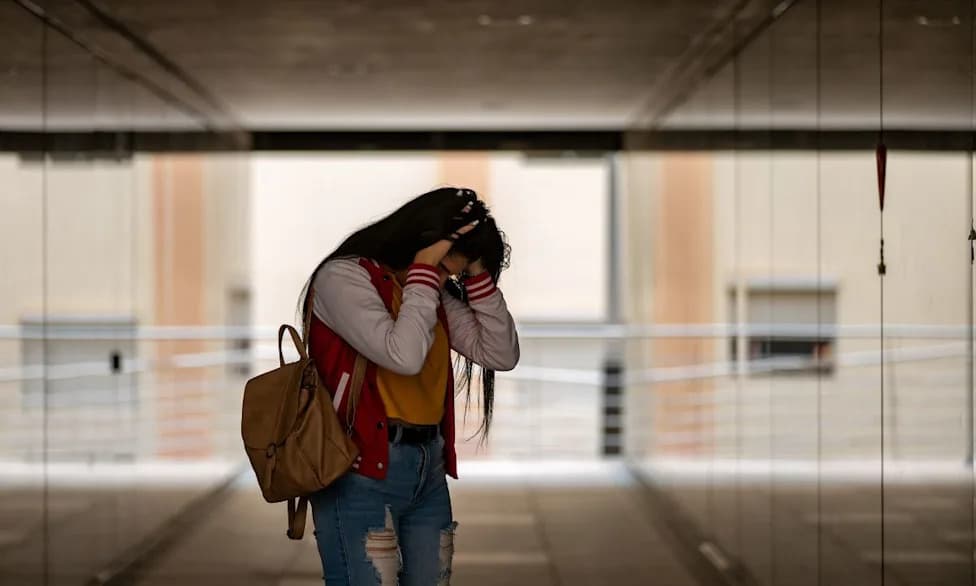
Short-lived nerves before the first day of school are normal and can sharpen focus. But when anxiety becomes a constant companion for children and teenagers, that stress does not switch off after class or when an exam ends; it can become the baseline state that follows learners well beyond graduation.
I teach biology and neuroscience to undergraduates, and I argue that an education system that prizes performance and grades over curiosity and well-being is producing generations of anxious adults. A recent survey of more than 84,000 college students found roughly one-third self-reported moderate to severe anxiety, and about the same proportion reported symptoms of depression.
How Evaluation Interrupts the Curiosity Loop
Early learning is typically rewarding: when it happens naturally it can be immersive, joyful and timeless. Curiosity provokes dopamine responses in children's brains. Scientists describe a 'curiosity loop' in which the brain makes a prediction, encounters something novel or unexpected, releases dopamine, and the learner is motivated to pursue the answer because discovering it feels pleasurable.
As students move through school, they accumulate homework and exams and are increasingly measured against benchmarks such as grades. Those evaluation systems can inadvertently interrupt the curiosity loop. Some educators defend grades as a form of accountability and a shared standard; others note that grades often fail to reflect true understanding and create intense academic pressure.
Academic Pressure, Social Comparison and Long-Term Harm
Academic pressure stems from fear of failure, chronic worry about workload and tests, parental expectations, and competition with peers. Social comparison and the expectation that you must speak only when certain — never appear confused, never slow down — amplify that pressure. Research links intense academic pressure in adolescence to depressive symptoms that can persist into adulthood; one 2026 study found that pressure to achieve at age 15 predicts longer-term depressive symptoms.

Engineers coined the word 'stress' in 1855 from the word 'distress,' to describe a beam being pulled or twisted until it shifts shape and develops a deformation.Klaus Vedfelt/DigitalVision/Getty Images
'I developed extreme anxiety; it like completely took over my life,' a former student I call Hannah told me. 'There was no excitement to learn.'
What Chronic Stress Does To the Brain and Body
Chronic stress changes brain structures involved in learning and self-regulation. It can reshape the hippocampus, where memories are encoded, making learning harder. Ongoing stress blunts dopamine responses so fewer things feel rewarding — a change that can resemble depression — and it remodels the prefrontal cortex, weakening the ability to manage pressure. Each added stressor lowers tolerance for the next, so anxiety shifts from an occasional reaction to a default state.
Persistent stress also carries broader health consequences, contributing to inflammation and autoimmune symptoms; in my classes I frequently encounter students coping with chronic pain and panic disorders.
Classroom Practice That Protects Curiosity and Well-Being
Knowing that at least a third of the students in my classes struggle with mental health has changed how I teach. I still teach difficult material, but I deliberately cultivate curiosity and belonging. In a 300-person course of many pre-med students, I have moved beyond pure lecture: I keep clear structure, encourage peer teaching, use real-world scenarios and games, offer choice in assignments, and build reflection into the curriculum. Those changes aim to preserve productive struggle while minimizing dread.
Some struggle is necessary for learning, but struggle and chronic dread are not the same. A living-systems lens — judging a system by what it actually produces, not by its intentions — highlights that our schools often produce anxiety even when we say we want lifelong learners. Recognizing that mismatch is the first step toward redesigning classrooms that reward curiosity rather than punish it.
Note: This article is adapted from a piece originally published in The Conversation under a Creative Commons license.
Help us improve.