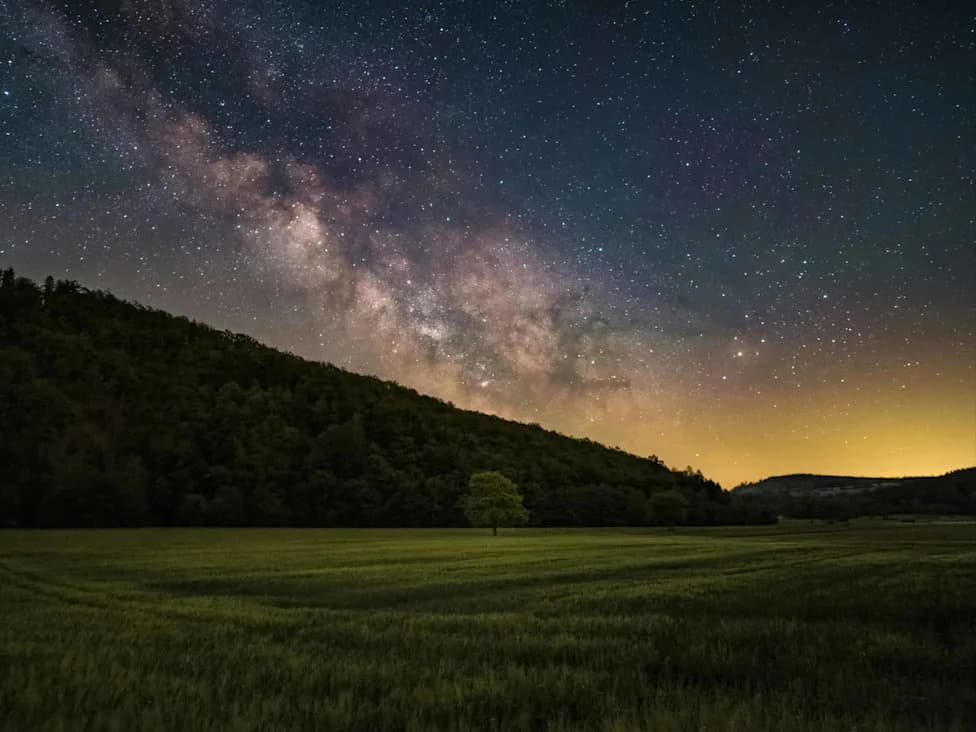
The Marfa Lights are glowing orbs seen at dusk near Marfa, Texas, that long attracted folklore and speculation. Field experiments by UT Dallas students and later spectroscopic work by Texas State University show distant car headlights and small desert fires can recreate many of the observed effects. Historical reports that predate automobiles and a 2025 UT Austin report finding a geothermal hotspot beneath Marfa leave parts of the story unresolved. The phenomenon remains a lively mix of science, history and local legend.
Mostly Solved: How Headlights Likely Explain the Marfa Lights — But History and Geology Keep the Mystery Alive
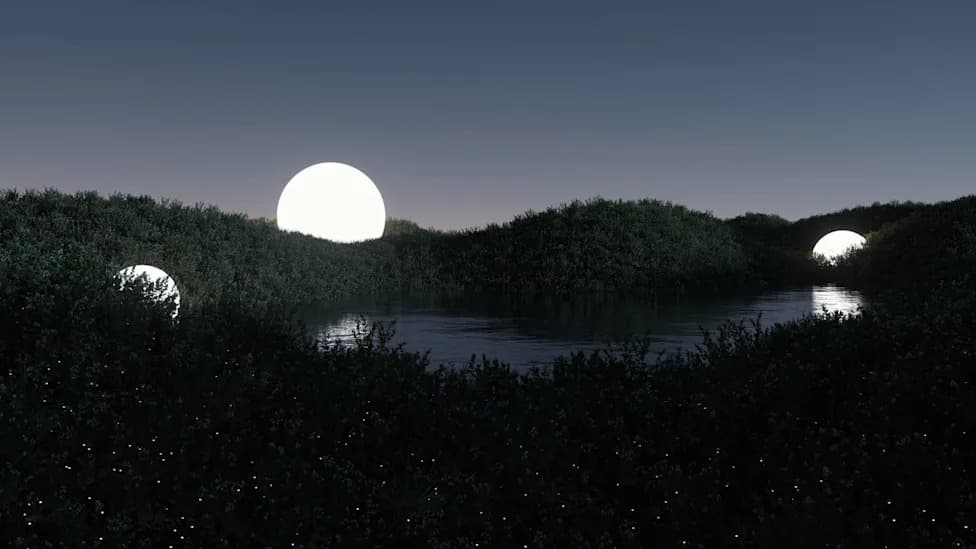
Scientists May Have Solved the Marfa LightsIntrovert Visuals - Getty Images
The Marfa Lights are a long‑running atmospheric curiosity: glowing orbs in red, blue and white that appear to dance along the horizon at dusk in the Chihuahuan Desert outside Marfa, Texas. The display has drawn curiosity-seekers for decades and spawned many explanations, from swamp gas and St. Elmo’s fire to piezoelectric rocks and even extraterrestrial visitors.
What Researchers Found
In 2004 a team of students from the University of Texas at Dallas conducted controlled field experiments using lasers, walkie‑talkies, a traffic‑volume monitor, a chase car and high‑speed video. Their tests showed that car headlights on Highway 67, about two miles from the official viewing area, could reproduce the orbs observers reported when headlights were flashed from the highway.
Follow‑up work by researchers from Texas State University, performed several years later, used spectroscopic methods and reached a similar conclusion: distant automobile headlights or small fires in the desert are the most plausible, repeatable sources of the lights captured on film and in measurements.
The Historical Puzzle
Scientific fieldwork offers a pragmatic explanation for many modern sightings, but it does not fully resolve historical accounts. A February 1945 San Angelo Times article headlined Ghost Light Appears in Marfa Area is among the earliest written reports, but local oral histories push the timeline back further. Regional lore credits cowhand Robert Reed Ellison with seeing mysterious lights in 1883 while driving cattle through Paisano Pass, roughly twelve miles east of Marfa.
What family members recall is that the lights were a regular, unexplained feature of the landscape. They were part of the local memory even if no detailed contemporary description survives.
Researchers who traced Ellison’s memoir and family recollections found no clear, contemporaneous scientific description that definitively identifies what those early witnesses observed, leaving the pre‑automobile reports an open question.
New Geological Context
In December 2025 the University of Texas at Austin published a report identifying a geothermal hotspot beneath the Marfa area, noting unusually hot subsurface rocks for east of the Rocky Mountains. While that finding does not confirm a direct connection to the lights, it introduces geological complexity that could influence local atmospheric or thermal conditions and merits further study.
Why It Still Matters
Taken together, modern experiments and spectroscopic measurements have demystified at least one likely source of the Marfa Lights: distant vehicle headlights and occasional small fires can recreate many of the observed effects. At the same time, older anecdotes and new geological data leave room for additional inquiry. The Marfa Lights remain a popular destination for visitors who come to witness a mix of folklore, visual spectacle and evolving science.
Bottom line: Fieldwork points to mundane sources for many sightings, but historical reports and subsurface geology keep the story interesting and worth further investigation.
Help us improve.