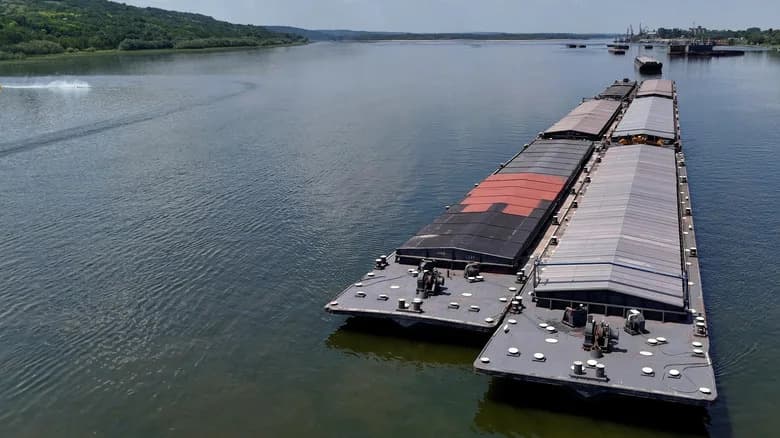
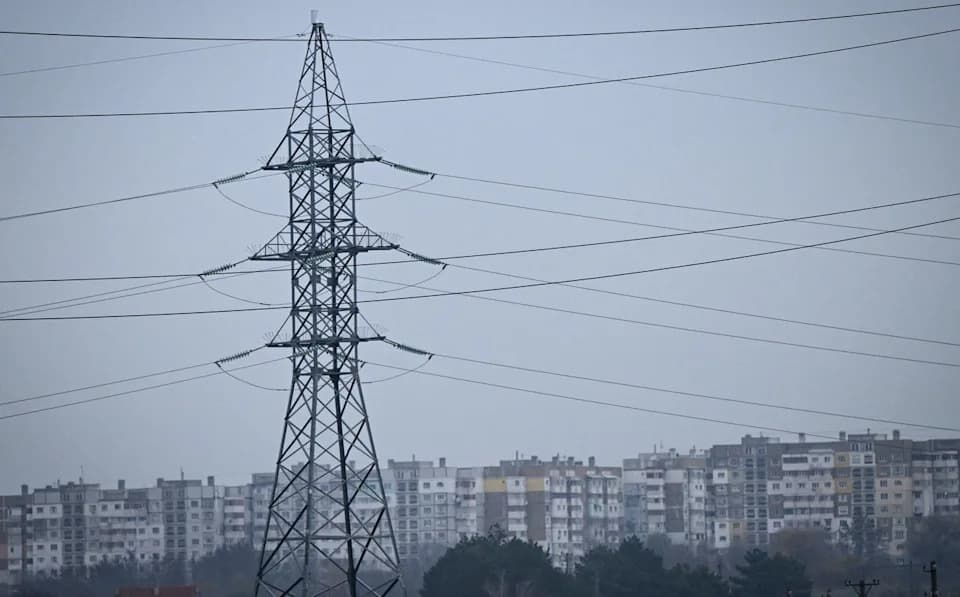
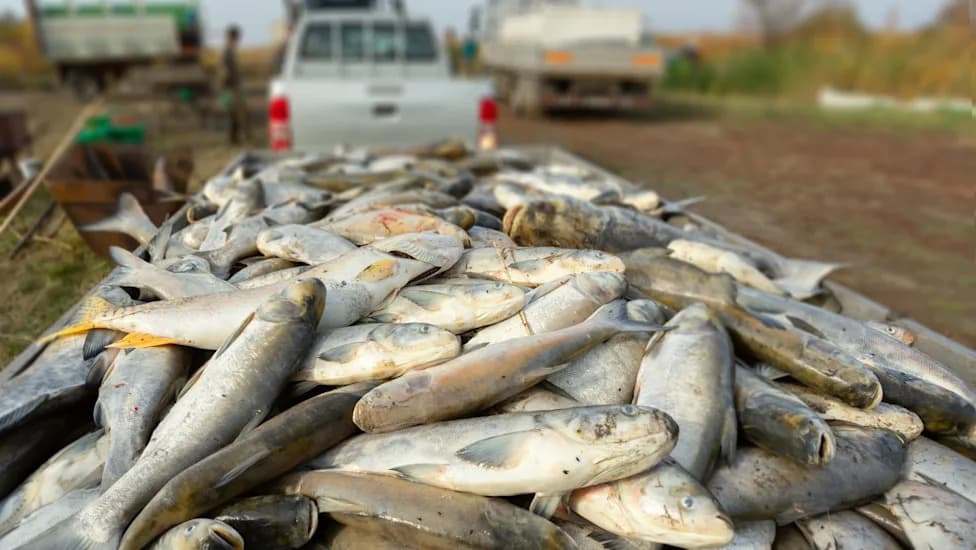
Prime Minister Peter Magyar said rain in Austria should briefly raise Danube water levels by about 20 cm, but the Paks nuclear plant remains under strain and is operating at roughly 10% capacity due to a heatwave and record-low river flows. Energy-saving measures and dimmed city lights, introduced last week, will be relaxed as supplies stabilise. The government is preparing contingency plans and will assess investments to strengthen Hungary's energy and water resilience, while pursuing a plan to add 4 GW of wind capacity by 2030.
Hungary Expects Temporary Danube Rise as Paks Nuclear Plant Remains Severely Curtailled
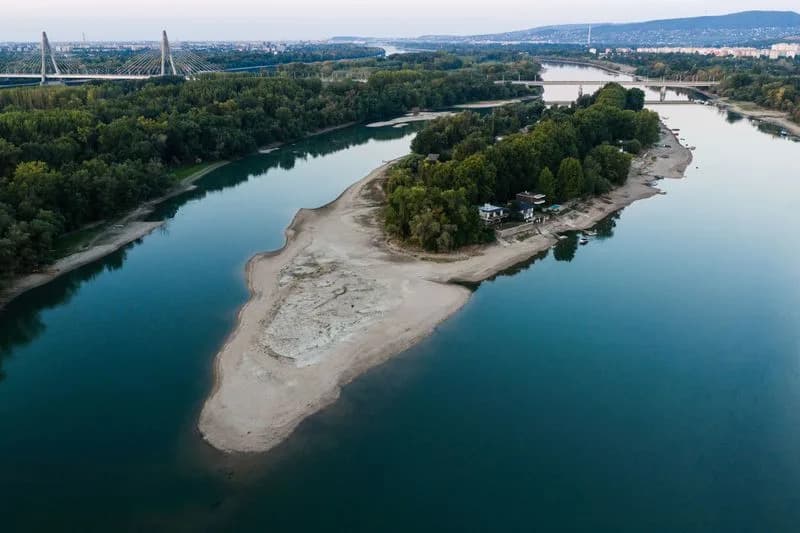
A drone view shows the low water level of the Danube River around Lupa Island in Budakalasz, Hungary, August 4, 2026. REUTERS/Marton Monus
Hungary's Prime Minister Peter Magyar said in a video update that rain in Austria should push Danube water levels up temporarily, but the situation at the Paks nuclear power plant remains strained.
The reactor complex has been operating at roughly 10% of its generation capacity since late last week after a prolonged heatwave and record-low Danube flows reduced the river's ability to cool the plant. That shortfall has stretched the country's reserve power supplies to the limit.
Last week Magyar appealed to businesses and households to reduce electricity use during evening hours. The government also dimmed decorative lighting on Budapest's historic buildings to conserve energy.
"We have never seen such national cooperation. According to the first surveys, nearly all Hungarian families took part in savings and changed their energy and water use," Magyar said, praising public compliance.
Government Working On Paks Contingencies
Magyar warned the Paks plant's situation remained "difficult" and said the government was drawing up contingency plans should low Danube levels — which Paks uses for cooling — become a long-term issue. Authorities expect the river to rise by about 20 centimetres in the coming days due to rainfall upstream, but they cautioned the increase is likely to be temporary without further rain.
The government said it will review which investments are needed to boost Hungary's energy and water resilience. Magyar framed the episode as part of broader climate impacts: "Climate change is already here, and we need to build a country that can adapt to this." He also reiterated plans to add 4 gigawatts of wind capacity by 2030 to diversify the power mix.
Europe, the continent warming fastest this year, has faced record heat and large wildfires this summer, with countries such as France and Spain notably affected.
Reporting by Krisztina Than and Anita Komuves; Editing by Jan Harvey.
Help us improve.