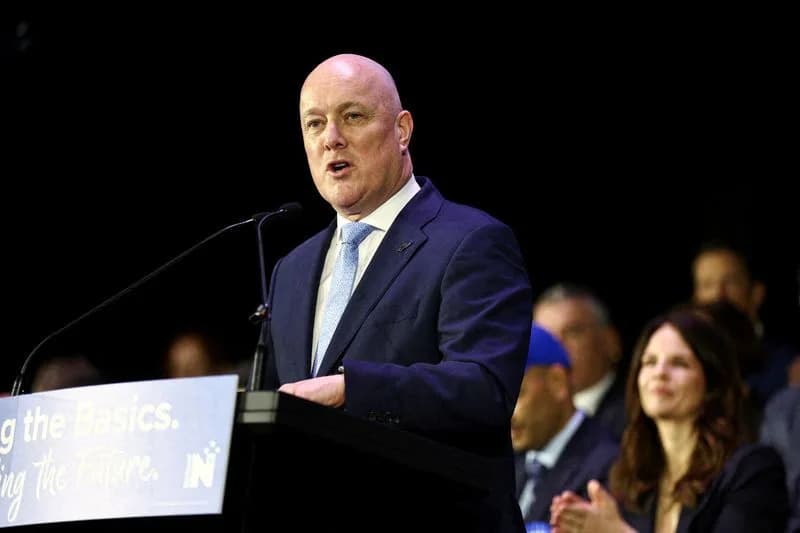
The Taxpayers' Union–Curia poll puts the National–New Zealand First–ACT coalition on track for a narrow one-seat majority in the 120-seat parliament, while the centrist Opportunity Party has surged to 6.1% and could win eight seats. Labour is projected to lose ground, leaving centre-left parties with a combined 59 seats. Prime Minister Christopher Luxon leads preferred PM ratings but has ruled out partnering with Opportunity; his suggestion of an MMP referendum has also sparked criticism within the coalition.
Razor-Thin Majority for NZ Governing Bloc as New Centrist Opportunity Party Surges
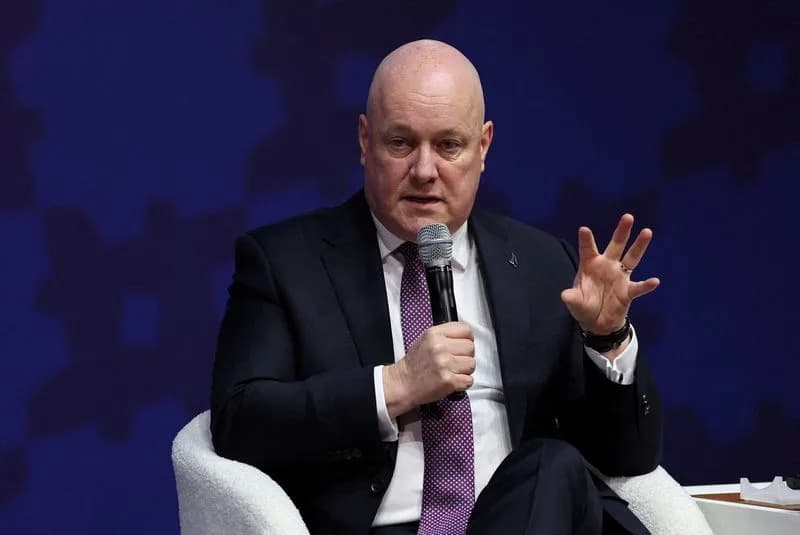
FILE PHOTO: New Zealand's Prime Minister Christopher Luxon speaks at the 2025 Asia-Pacific Economic Cooperation (APEC) CEO Summit in Gyeongju, South Korea, October 29, 2025. REUTERS/Tyrone Siu/File Photo
A Taxpayers' Union–Curia poll released on Aug. 7 suggests New Zealand's centre-right governing coalition would hold a razor-thin majority if an election were held today, while a surge for the new centrist Opportunity Party could reshape post-election coalition negotiations ahead of the November vote.
What the Poll Shows
The survey projects the bloc of the National Party, New Zealand First and ACT would win 61 seats in the 120-seat parliament — a one-seat majority. The opposition Labour Party is forecast to lose five seats, with much of that support appearing to transfer to Opportunity, which the poll estimates could win eight seats. Taken together, Labour, the Greens, Te Pāti Māori and Opportunity are projected to hold 59 seats.
Opportunity Party support rose to 6.1% in the poll — the first time it has exceeded the 5% threshold required for list representation under New Zealand's electoral rules. If that level holds at the election, Opportunity would be the first new party to enter parliament in more than two decades.
Poll Methodology
The Taxpayers' Union–Curia poll surveyed 1,000 eligible voters by phone and online between August 1 and 4.
Political Reactions And Stakes
Prime Minister Christopher Luxon, leader of the National Party, has said he will not work with the Opportunity Party, arguing its policies — particularly on tax — are incompatible with National's approach. That stance could limit coalition options even if National remains willing to work across political lines.
Luxon's rating as the preferred prime minister rose by more than four percentage points in the poll, leaving him the most popular leadership choice. However, the poll was completed before Luxon indicated openness to a referendum on New Zealand's Mixed Member Proportional (MMP) electoral system, a comment that exposed tensions within the governing bloc.
New Zealand First leader Winston Peters called the referendum idea "inexplicable," while ACT said it would oppose the proposal.
Background
MMP was adopted in 1996 after concerns that the previous first-past-the-post system disadvantaged smaller parties. Voters backed retaining MMP in a 2011 referendum, with around 58% voting to keep the system.
Implications: With the poll pointing to a one-seat governing majority and a resurgent centrist party that could reach the representation threshold, coalition bargaining and policy priorities may shift significantly ahead of the November election. The dynamics around the proposed MMP referendum further complicate relations among National's partners and could become a campaign flashpoint.
Help us improve.