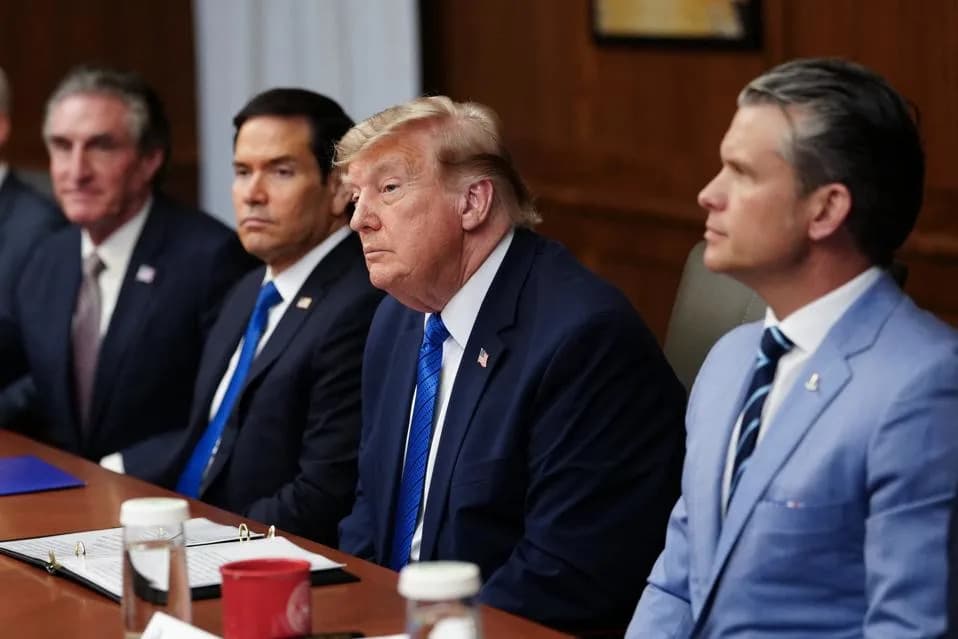
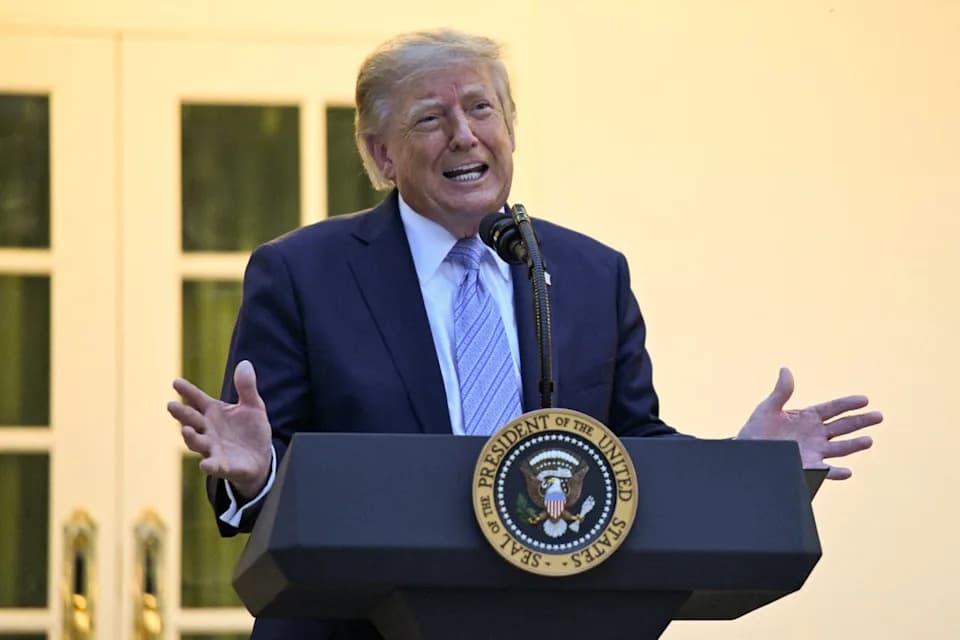
President Donald Trump on Thursday forcefully defended Defense Secretary Pete Hegseth after a Washington Post report said the two clashed at Camp David over an alleged munitions shortfall tied to the Iran conflict. Trump dismissed the leak as "treasonous," reiterated that the U.S. has ample munitions, and wrote on Truth Social that he is "extremely happy" with Hegseth, who he said is "highly respected within the Military."
Report and Response
The Post described a meeting in which Trump accused Hegseth of failing to inform him about a purported weapons shortage. The president denied those claims and threatened legal consequences for leakers, saying long prison terms would be sought.
Disputed Assessments of Iran's Capabilities
Hegseth has repeatedly told the public and the president that U.S. strikes have degraded Iran's missile and drone programs. But an April U.S. intelligence assessment, reported by CNN and attributed to sources familiar with the report, found that more than half of Iran's missile launchers remained intact. Critics say Hegseth's public and private briefings have been overly optimistic as Tehran continues attacks on U.S. forces — including strikes that coincided with the deaths of four U.S. service members in July.
Transparency and Casualty Reporting
Separately, the Pentagon has drawn scrutiny for recategorizing some injuries and deaths under a broader "overseas operations" label in its public database, which lawmakers say obscures Iran-specific casualty figures. A group of Democratic senators introduced legislation aimed at preventing the Secretary of Defense from hiding the true human cost of the conflict.
Operational Limits and Political Fallout
Multiple outlets have reported the U.S. is nearing depletion of long-range missiles, limiting options for stand-off strikes and increasing reliance on riskier piloted missions. The administration has sent mixed signals throughout the conflict — at times signaling de-escalation, including a June memorandum of understanding reported to pause hostilities, then resuming strikes weeks later. Those contradictions have intensified domestic political tensions within the Republican coalition.
GOP Fractures
A small group of prominent anti-Trump conservatives — including former Rep. Marjorie Taylor Greene, Tucker Carlson and Rep. Thomas Massie — are discussing a third party organized around opposition to the Iran war. Carlson has publicly criticized Hegseth and used blistering rhetoric as he outlines plans for the movement. Several figures have said they no longer support the Republican Party.
As the Iran conflict continues, questions about military readiness, public transparency and White House decision-making persist — even as the president insists there is no rift with his defense chief.