Advocates and family members say former U.S. Marine Robert Gilman, detained in Russia since 2022, slipped into a dissociative stupor in June and is being fed through a tube. They allege he was tortured and injected with mind‑altering drugs while in custody. The White House and State Department have urged Russia to release Gilman for urgent medical care in the U.S., and Secretary of State Marco Rubio reportedly raised the case with Russian Foreign Minister Sergei Lavrov. The family had sought a wrongful‑detention designation in March 2023; advocates warn his death would further strain U.S.-Russia ties.
Former U.S. Marine Robert Gilman Reportedly Near Death in Russian Custody, Family and Advocates Say
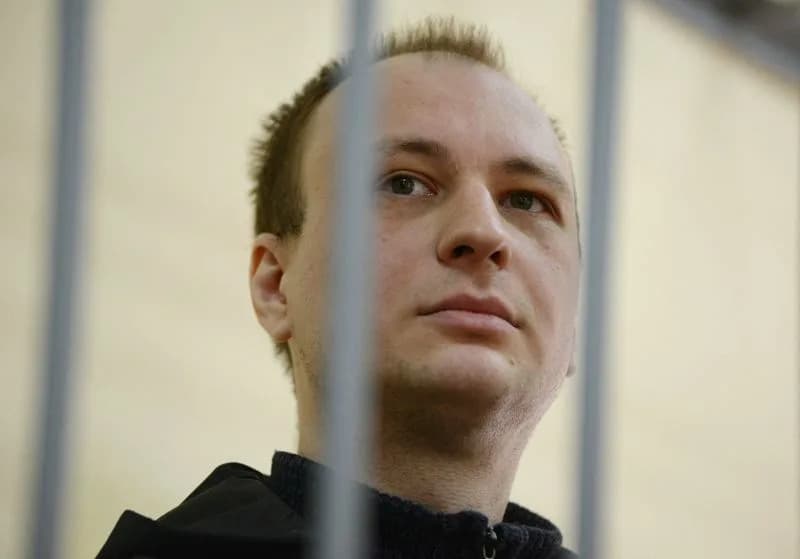
FILE PHOTO: Former U.S. Marine Robert Gilman, who serves a prison sentence for assaulting a Russian police officer in 2022, attends a court hearing in Voronezh, Russia April 6, 2026. REUTERS/Vladimir Lavrov/File Photo
Advocates and family members say Robert Gilman, a 32-year-old former U.S. Marine held in Russia since 2022, slipped into a dissociative stupor in June, is being tube-fed and may be near death. They allege he was tortured and injected with mind‑altering drugs while in custody. U.S. officials have urged Moscow to release him so he can receive urgent medical care in the United States.
Condition, Hospitalization and Family Concerns
Eric Lebson, chief strategy officer at Global Reach, which represents Gilman’s family, said Gilman was moved in late June from a prison hospital in Voronezh to the psychiatric ward of a civilian emergency hospital after medical staff assessed him to be in a catatonic-like state described as a “dissociative stupor.” Lebson said Gilman cannot communicate, keeps his eyes closed and is being fed through a tube.
“I am more afraid for my brother than I have been since this horrible nightmare started,” said Lexie Hudson, Gilman’s sister. “I’m worried that I may never see him again if the Russians don’t release him. I’m worried that he could die.”
The World Health Organization’s ICD-10 defines dissociative stupor as a “profound diminution or absence of voluntary movement and normal responsiveness to external stimuli.” Advocates say Gilman’s condition has prevented him from attending court hearings.
Allegations, Legal Status and Family Statements
Gilman was arrested in Voronezh on January 17, 2022 while traveling by train. Russian state media reported he was detained for allegedly kicking a police officer while drunk. In an October 2024 Boston Globe op-ed, his father, Vladimir Gilman, said those charges were false and that Robert had been ill at the time of the incident.

FILE PHOTO: Former U.S. Marine Robert Gilman, who serves a prison sentence for assaulting a Russian police officer in 2022, attends a court hearing in Voronezh, Russia April 6, 2026. REUTERS/Vladimir Lavrov/File Photo
Robert Gilman was initially sentenced to four-and-a-half years. Russian state media later reported his sentence was extended in 2024 to 10 years for allegedly assaulting prison staff; his family and advocates deny that allegation, saying he was subjected to harsh conditions, torture and injections of mind-altering drugs that led to his transfer to a civilian hospital.
Diplomacy, U.S. Response and Access
The White House and the State Department have urged Russia to release Gilman for urgent medical treatment in the United States. A source told Reuters that Secretary of State Marco Rubio raised Gilman’s case with Russian Foreign Minister Sergei Lavrov during a meeting in Manila on July 23, though the source did not know Lavrov’s response.
U.S. consular officials were occasionally allowed prison visits in the past, but neither they nor Gilman’s Russian lawyer have been permitted into the civilian hospital, Lebson said. Gilman’s mother has reportedly been barred from visiting him despite holding a judicial order permitting her to see her son.
Wrongful-Detention Request and Wider Implications
The family asked the U.S. State Department in March 2023 to designate Gilman as wrongfully detained, a status that would prioritize efforts to obtain his release; Reuters was unable to determine why that designation has not been made. Advocates warn that Gilman’s death would further strain already tense U.S.-Russia relations and drew comparisons to the Otto Warmbier case, in which an American detained in North Korea was returned comatose and later died in the U.S.
The Russian embassy did not respond to requests for comment. Reporting credits to Reuters remain with Jonathan Landay; editing noted by Don Durfee and Rod Nickel.
Help us improve.