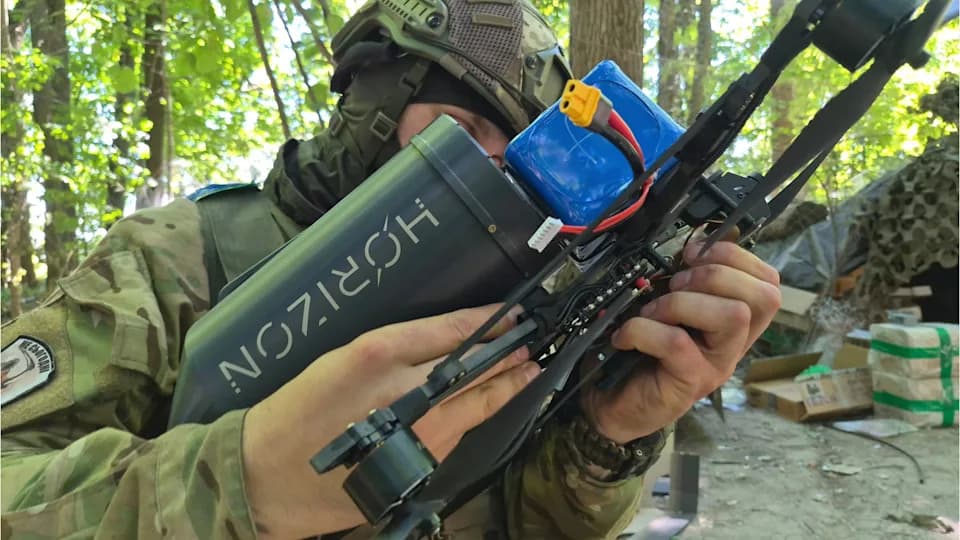
U.S. Marines conducted live‑fire training with explosive FPV "kamikaze" drones on Aug. 5, 2026, at Pocheon under the Korean Marine Exercise Program, operating less than 20 miles from the DMZ. The 7th Marine Regiment used Neros Archer drones, which can strike targets at roughly 12–15 miles, to destroy armored targets and simulate attacks on enemy personnel. The drills were recorded by a Skydio drone and come amid broader U.S. posture shifts in the region, including F‑16 repositioning and a permanently based MQ‑9 Reaper unit, as well as recent CBRN training with South Korean forces.
U.S. Marines Conduct Live‑Fire 'Kamikaze' FPV Drone Drills Near South Korea's DMZ
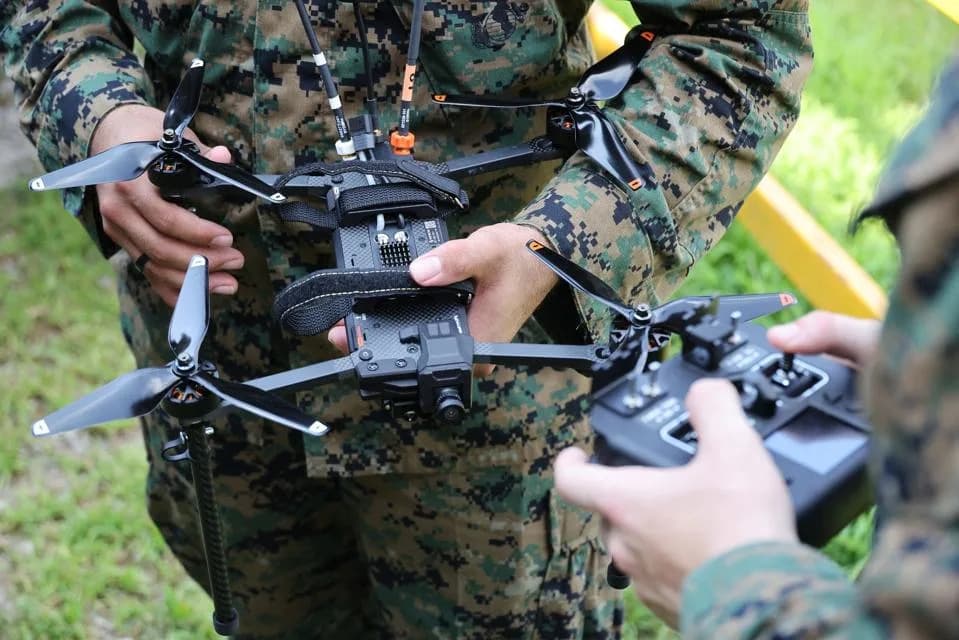
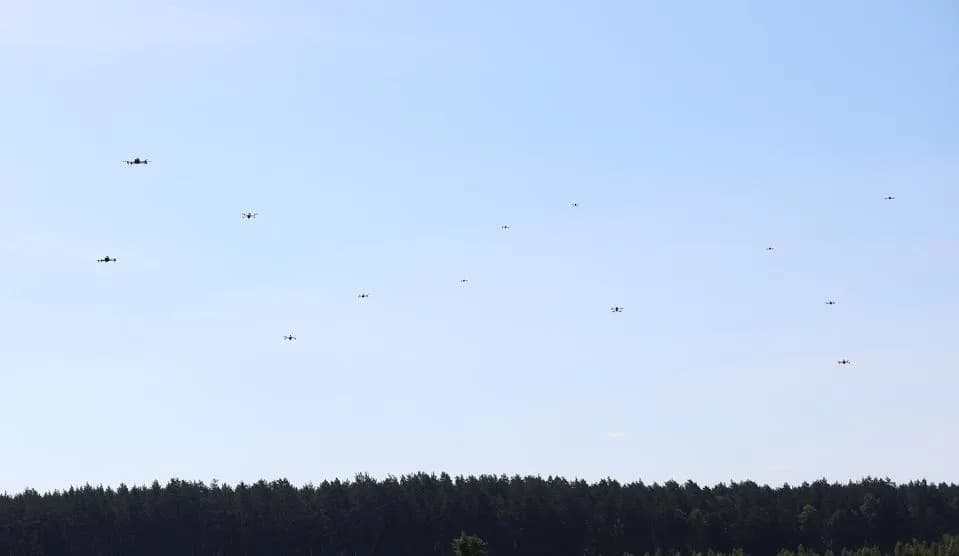
The Neros Archer, an FPV, or first person view, attack drone operated by U.S. Marine Corps is seen during a live-fire exercise at Pocheon on August 5, 2026. (Photo by KIM HONG-JI / POOL / AFP via Getty Images)POOL/AFP via Getty Images
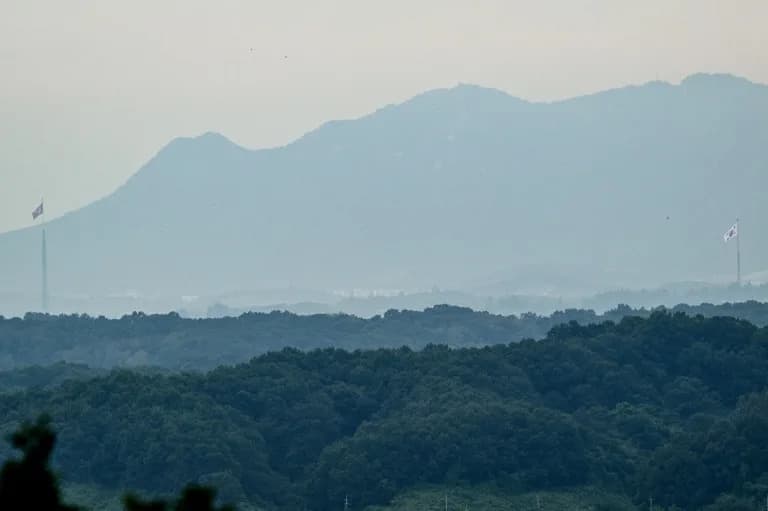
The U.S. Marine Corps carried out live‑fire training using small, explosive‑armed FPV (first‑person‑view) attack drones on Aug. 5, 2026, at a range near Pocheon, South Korea — less than 20 miles from the Demilitarized Zone (DMZ) with North Korea. The exercise marked the first publicly reported use of explosive FPV drone strikes by U.S. forces on the Korean Peninsula and was conducted under the Korean Marine Exercise Program (KMEP).
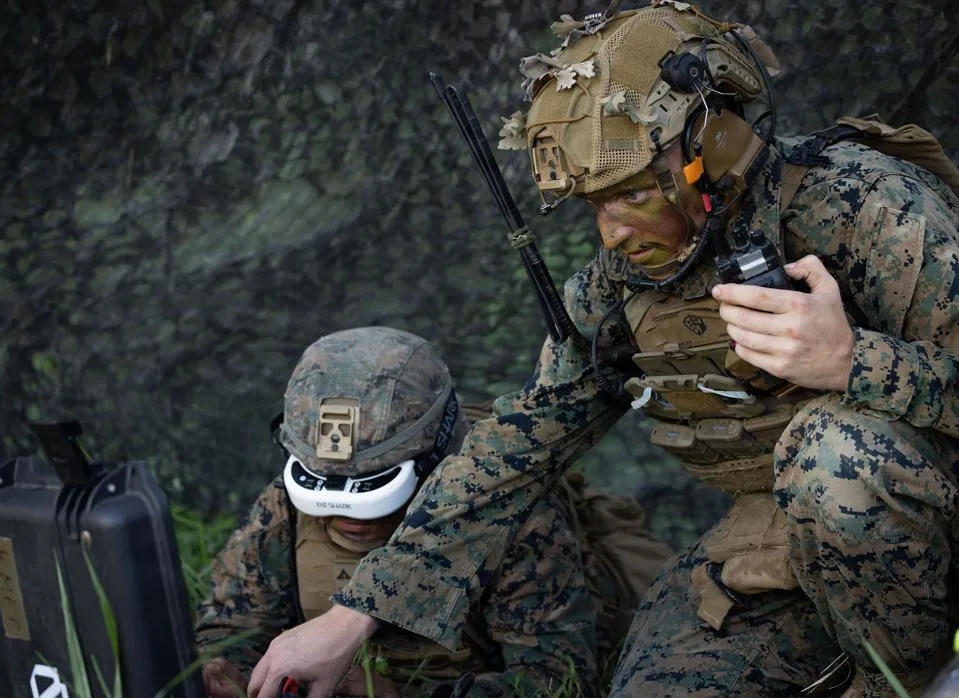
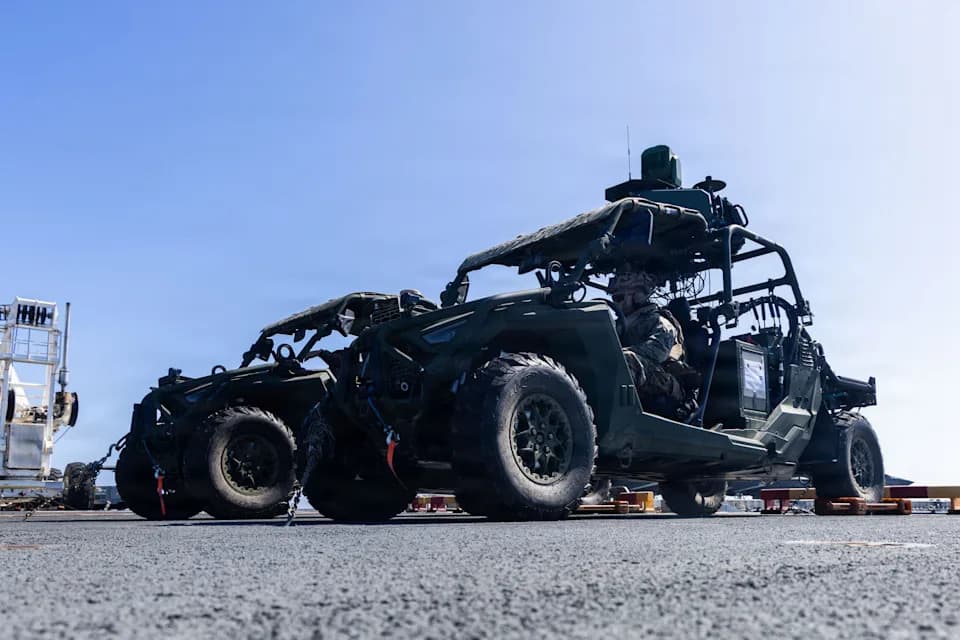
U.S. Marines conduct live-fire first-person view attack drone training in Pocheon, South Korea on Aug. 5, 2026 in a historic first for military activities on the Korean Peninsula. (U.S. Marine Corps photo by Cpl. Daniel Granados)
What Happened
Marines from the 7th Marine Regiment launched Neros Archer unmanned aircraft systems fitted with warheads to engage armored-vehicle targets and to simulate strikes against enemy formations. The Neros Archer platform, which is also employed by the U.S. Army, is reported to have an effective strike range of roughly 12–15 miles. Portions of the training were recorded by a Skydio drone system, according to Yonhap News Agency.
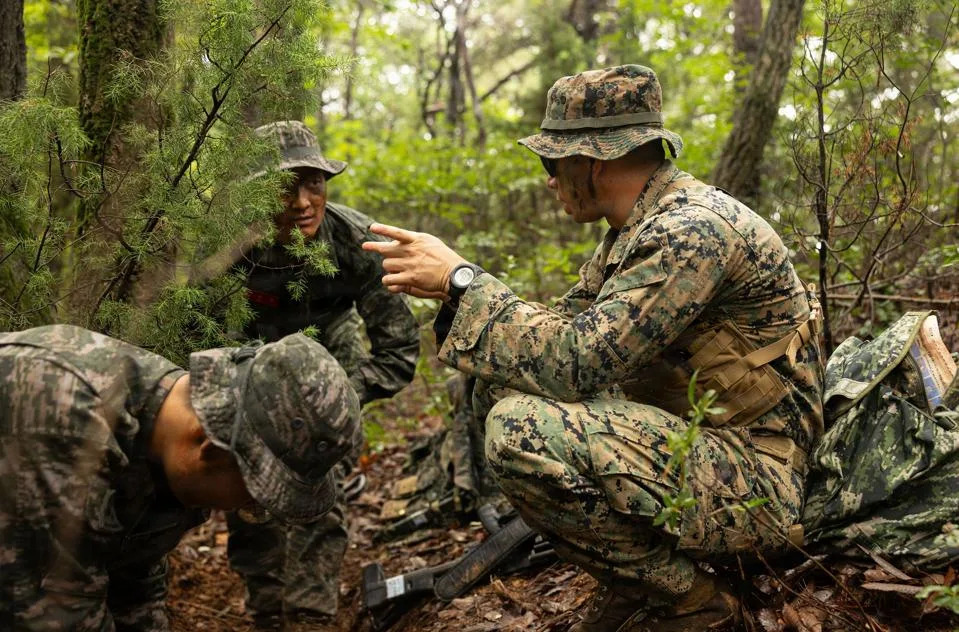
A U.S. Marine instructs South Korean Marines on the use of cover and concealment during joint exercises in July 2026. Although U.S. and South Korean troops regularly train together, the U.S has been stepping up its efforts to increase joint readiness to respond to potential attacks from the North. (U.S. Marine Corps photo by Cpl. Daniel Granados)
Context and Wider U.S. Activity
The Pocheon drills come amid a broader U.S. effort to strengthen deterrence and interoperability with South Korea. Over the past year U.S. forces have shifted air assets closer to the border — including transferring F‑16 Fighting Falcons from Kunsan to Osan for a new "Super Squadron" training initiative — and permanently based an MQ‑9 Reaper drone unit in the country. In July 2026, U.S. Air Force airmen and Marines also participated in joint chemical, biological, radiological and nuclear (CBRN) response and decontamination training in South Korea.
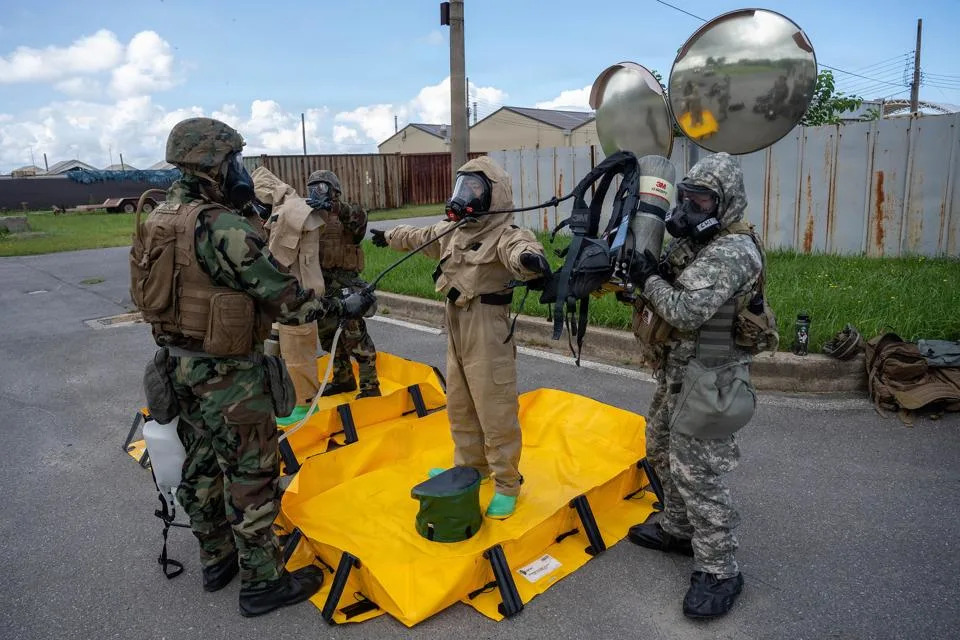
U.S. Air Force Airmen and Marines simulate spraying a decontamination solution on a participant as part of a joint-force chemical, biological, radiological, nuclear response and decontamination training in South Korea in July 2026. (U.S. Air Force photo by Senior Airman Tabatha Chapman)
Implications
Officials say these drills are intended to improve lethality, responsiveness and integration with South Korean forces in the face of evolving threats. Conducting live‑fire FPV missions near the DMZ underscores the increasing role of unmanned systems in allied force posture in Northeast Asia and signals a more proactive U.S. approach to joint readiness. While unprecedented on the peninsula, analysts expect further development and integration of such capabilities with allies in the region.
Fact Note: The exercise was part of routine joint training under KMEP but represents a notable expansion in the types of munitions and unmanned tactics used during publicly acknowledged drills on the peninsula.
Photo credit: U.S. Marine Corps / Cpl. Daniel Granados; additional image reported by KIM HONG‑JI / POOL / AFP via Getty Images.
Help us improve.