Celebrating 14 years on Mars, NASA's Curiosity rover—landed on Aug. 6, 2012 in Gale Crater—has far outlived its original two-year plan and continues to return critical science. The mission confirmed lakes and streams in Gale between about 3.3 and 3.8 billion years ago and produced evidence of early water and megaflooding. Curiosity has detected a range of organics, including benzothiophene, benzene, propane, long-chain alkanes and, in April 2026, additional ancient carbon-based molecules that are building blocks for life.
Curiosity at 14: NASA's Rover Uncovers Mars' Watery Past and Organic Building Blocks
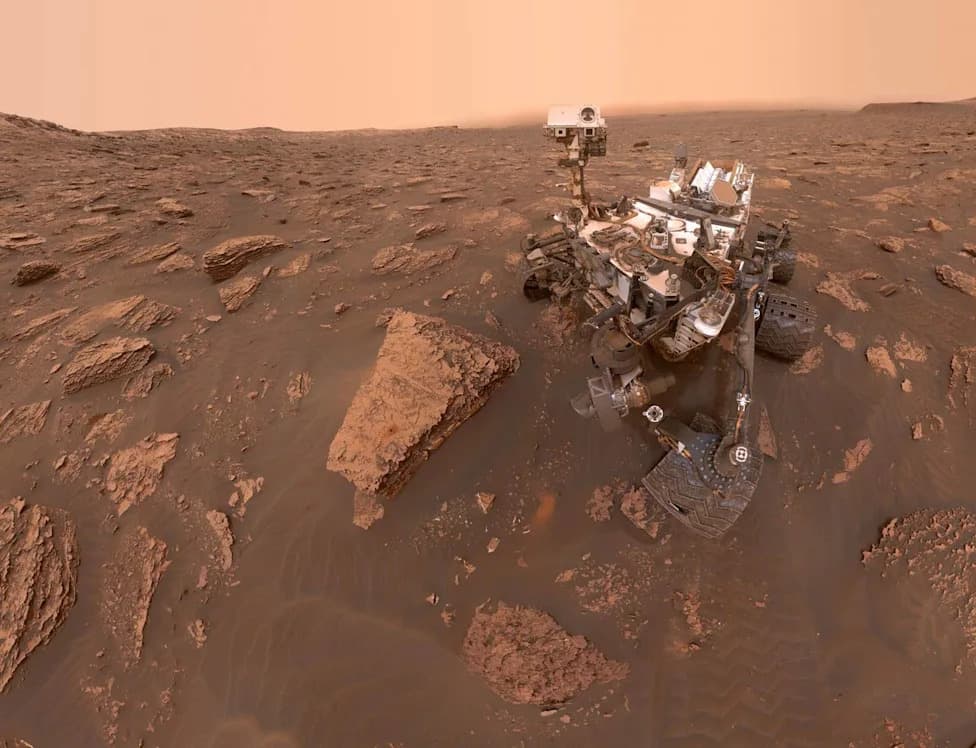
Celebrating 14 Years of Curiosity Rover's Historic Mars Mission and Discoveries
Fourteen years after its dramatic touchdown, NASA's Curiosity rover continues to teach us about Mars' ancient environment and its potential to have supported life. Curiosity landed on Aeolis Palus inside Gale Crater on Aug. 6, 2012, after an almost nine-month journey from Cape Canaveral. Although it was designed for a two-year mission, NASA extended Curiosity's mission indefinitely in December 2012, and the rover remains active today.
Key Discoveries
Ancient Water and Flooding: In 2015, Curiosity helped confirm that Gale Crater once hosted lakes and streams between roughly 3.3 and 3.8 billion years ago. The rover's instruments provided further evidence of water on early Mars (reported on Nov. 4, 2018), and in 2020 analyses indicated that Gale experienced megaflooding around 4 billion years ago.
Organic and Geochemical Findings: Curiosity's chemistry investigations uncovered organic and prebiotic-relevant molecules. The mission identified compounds such as benzothiophene and molecules considered DNA precursors, including benzene and propane. In 2024 the rover detected long-chain alkanes preserved in mudstone, and in April 2026 it revealed a suite of ancient carbon-based molecules—the same basic types of organics that underpin life on Earth.
Why It Matters
These discoveries do not prove that life ever existed on Mars, but they show that Gale Crater once offered long-lived, habitable conditions and the molecular ingredients that could support biology. Curiosity's findings guide future missions and help refine targets for ongoing and planned exploration—especially efforts that will search directly for biosignatures.
Operational Milestone: As of Aug. 4, 2026, Curiosity has spent 4,974 sols on Mars. A sol (a Martian solar day) lasts about 24 hours, 39 minutes, and 35 seconds—slightly longer than an Earth day.
Fourteen years after arrival, Curiosity remains a cornerstone of planetary science, continuing to expand our knowledge of Mars' watery history and its potential to have once supported life.
Originally published by Men's Journal on Aug. 6, 2026.
Help us improve.