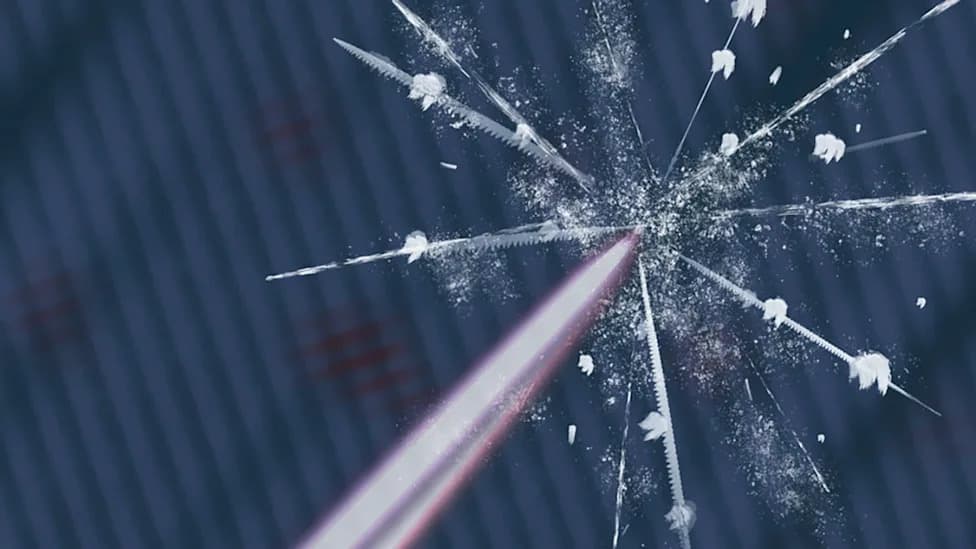
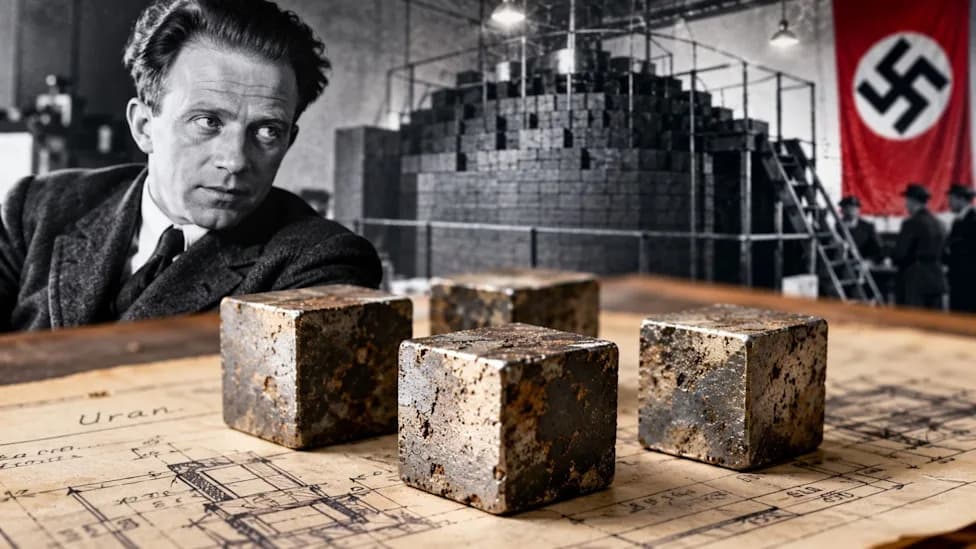
Researchers led by Luca Bindi discovered an iron‑ and silicon‑rich alloy inside microscopic fragments of Hiroshima fallout glass called hiroshimaites. The alloy's atomic ordering is highly organized and approaches a quasicrystal structure, likely forming as metal vapors condensed extremely rapidly within the bomb's fireball. Similar quasicrystals were previously found in trinitite from the Trinity test. These materials offer insights for materials science, planetary impact studies, and nuclear forensics.
Scientists Uncover Nearly Quasicrystalline Alloy Formed in Hiroshima's Atomic Fireball
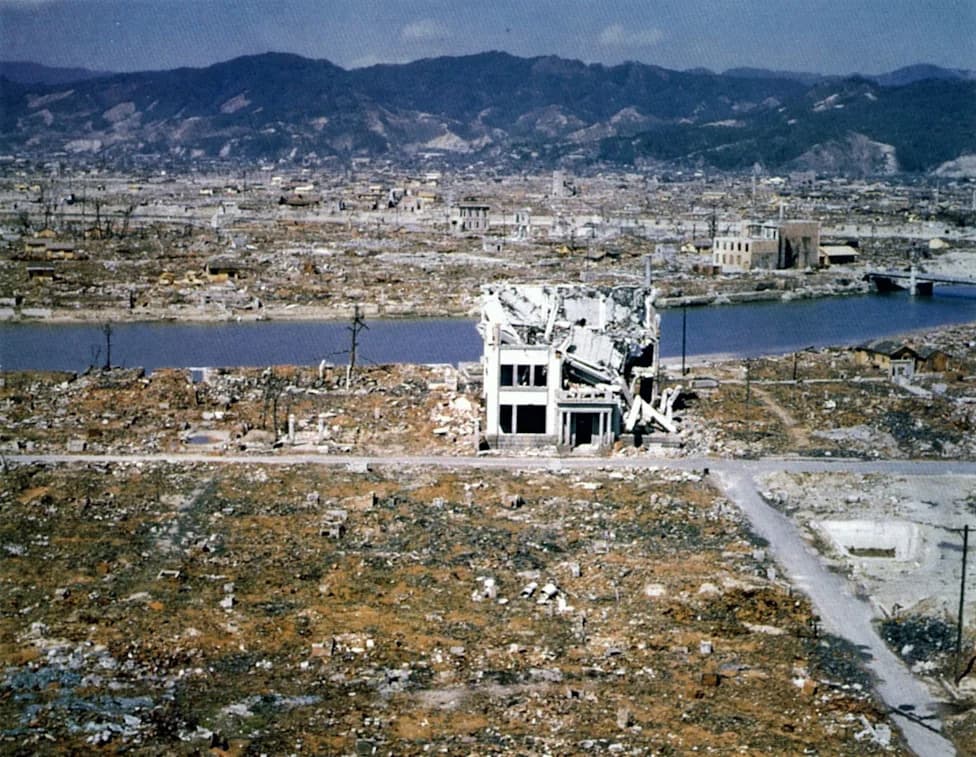
An Atomic Bomb Forged an Impossible MetalGalerie Bilderwelt - Getty Images
Researchers have identified a previously unknown iron‑ and silicon‑rich alloy embedded in microscopic particles of fallout glass from the 1945 Hiroshima bombing. The alloy's internal ordering is highly organized and approaches a quasicrystal structure — a pattern that can only form under extraordinarily rapid cooling and extreme temperatures like those inside an atomic fireball.
What Happened
On the morning of August 6, 1945, the B‑29 Enola Gay dropped an atomic bomb over Hiroshima. The detonation, equivalent to roughly 20,000 tons of TNT, exploded about 1,800 feet (≈548 meters) above the city. Temperatures at the fireball surface reached an estimated ~7,700 °C (≈13,892 °F), while ground‑level temperatures near the hypocenter rose to roughly 3,000–4,000 °C (≈5,432–7,232 °F). The blast and ensuing fires destroyed about half the city and caused tens of thousands of immediate deaths, with many more later succumbing to radiation‑related illness.
How the Alloy Was Found
Decades after the attack, a team led by mineralogist and crystallographer Luca Bindi (University of Florence) collected and examined small glassy fragments of fallout known as hiroshimaites. These particles formed when urban materials — metal, glass, soil and water — were vaporized by the blast and then rapidly recondensed.
Using a scanning electron microscope (SEM) to inspect the larger particles, the researchers isolated minute metallic inclusions and analyzed them with X‑ray diffraction to resolve their crystal and atomic structure. Most inclusions were ordinary iron‑chromium alloys, but one inclusion exhibited an iron‑ and silicon‑rich phase with an internal ordering that had never been seen before. Its arrangement is extremely ordered and nearly quasicrystalline, though it does not fully meet the strict definition of a quasicrystal.
"This finding expands the known spectrum of materials generated by nuclear detonations and demonstrates that anthropogenic plasma events can produce complex metallic phases in natural settings," the authors write in a study published in Science Advances.
Context: Trinity and Trinitite
The discovery echoes an earlier result from the Trinity test (Alamogordo, New Mexico), conducted less than a month before Hiroshima, where researchers — including Bindi — identified a true quasicrystal inside melted desert glass called trinitite. In both cases, extremely rapid condensation and cooling of metal vapors preserved unusual structural motifs that are difficult or currently impossible to reproduce in ordinary laboratory synthesis.
Why It Matters
These blast‑formed phases have several important implications:
- They demonstrate that extreme, short‑lived environments can produce stable solids with novel atomic arrangements.
- They serve as time capsules that record the high‑temperature, high‑pressure chemistry of large impacts and detonations, making them useful analogs for planetary impact studies.
- They provide forensic signatures for reconstructing details of nuclear events and can inform future alloy design and functional materials research.
Bindi and colleagues encourage ethically and legally governed studies of such materials to both reconstruct event histories and explore potential new classes of materials.
Note on Sensitivity: The scientific findings are distinct from the human tragedy of the Hiroshima bombing; this article focuses on materials‑science results drawn from historical debris while acknowledging the event's grave human cost.
Help us improve.