French winemakers in the Var region fear smoke from recent wildfires could taint this year’s rosé, producing a burnt flavour that typically appears only after fermentation. Producers like Gregory Guibergia are separating harvests into batches and sending grapes for lab testing because smoke compounds can bind to grape sugars within hours. Firefighting retardant exposure has already rendered some parcels unusable, and while remedies such as activated charcoal can reduce smoke taint in rosé and white wines, treated bottles may still face market rejection.
French Winemakers Fear Smoke-Tainted Rosé After Devastating Wildfires
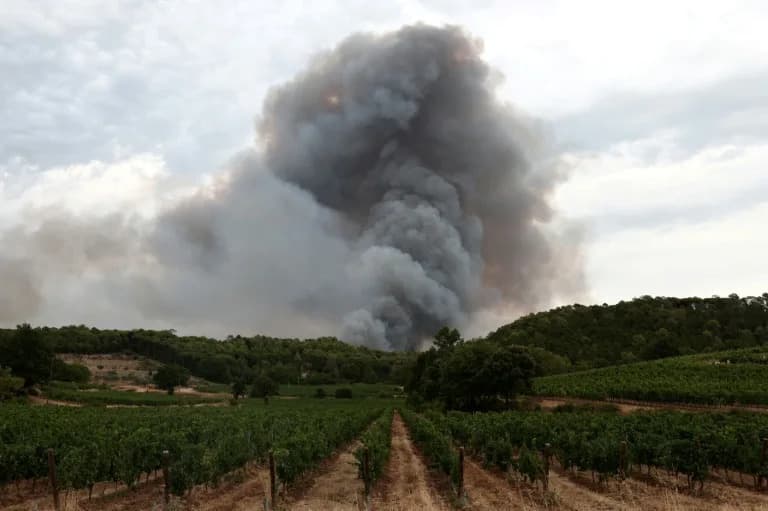
Winemakers are worried about the effect of the wildfires on this year's vintage (Thibaud MORITZ)
Brushing his hand over crackling vine leaves, French winemaker Gregory Guibergia breathed a sigh of relief that a wildfire this summer only singed the edge of his 25-hectare estate near Correns — yet he still fears the smoke may ruin this year’s vintage.
In the last row of vines, browned leaves told the story of heat from a blaze that swept southeastern France. Further into the fields, however, green foliage remained on enough vines for grapes to continue ripening ahead of next week’s harvest.
Several wildfires in the Var region forced thousands to flee — including Hollywood actor George Clooney and his family — and destroyed more than 6,000 hectares (about 15,000 acres) of land. Estimates of vineyard damage vary across the broader region, with some figures suggesting as many as 30,000 hectares may have been affected.
“The big question is whether or not we will have a burnt taste during the winemaking,” Guibergia told AFP. “We won't know straight away.”
Lab Tests and Smoke Taint
Winemakers across France’s main rosé-producing area are sending grapes for laboratory analysis to detect smoke taint compounds before fermentation. Oenology consultant Clément Prélat, advising producers locally, warned that smoke can bind quickly to grape sugars.
“An hour or two of exposure is enough to trigger glycosylation, or the binding of smoke to the sugars in the grapes,” Prélat said. “This smoky taste will only reveal itself after fermentation.”
Because the flavour often only appears once fermentation is complete, some growers are waiting on lab results before committing to harvest costs. Lucie Demirdjian, a winemaker in nearby Pontevès who lost 11 of her 18 hectares to fire, said she didn’t want to spend on harvesting if the surviving fruit would be tainted.
Retardants, Remediation and Market Risk
Agricultural engineer Gregori Lanza noted that grapes exposed to chemical fire retardants dropped by firefighting planes have been declared unfit for winemaking in the area. While the aroma of burnt wood blended with grapes might not make wine unsafe to drink, it would likely harm commercial prospects.
“It's not a sought-after taste in wines, so even if they're still drinkable, they won't be marketed,” Lanza said.
Some producers have tested remediation methods. Fabien Mistre of the Correns cooperative said winemakers in other parts of southern France used activated charcoal to remove smoke taint from rosé and white wines after last year’s fires. Such treatments may help recovery but can affect style and marketability — and organic producers may be limited in their options.
Guibergia plans to harvest and vinify grapes in separate batches to isolate any contaminated fruit. Still, he fears the worst: portions of his 25-hectare output could be declared undrinkable, potentially leaving some 90,000 bottles unsellable. “I would not sell wine that smelled of smoke — it would be like smoked ham,” he said.
The region now waits for lab results and the final outcome of vinification, while many winemakers prepare for economic losses and long-term uncertainties about climate-driven wildfire risks.
Help us improve.