New Mexico's State Veterinarian warns the state's single confirmed New World screwworm case is unlikely to remain isolated as infections rise in Texas and northern Mexico. Sterile-fly production is currently about 20% of the 1950s–60s eradication capacity, though new facilities in Chiapas and Texas are expected to boost output. Officials have set a containment zone around a Lea County dog case and stress continued surveillance as regional animal and human cases climb.
New Mexico Warns Screwworm Cases Likely to Rise As Parasite Spreads Across Border
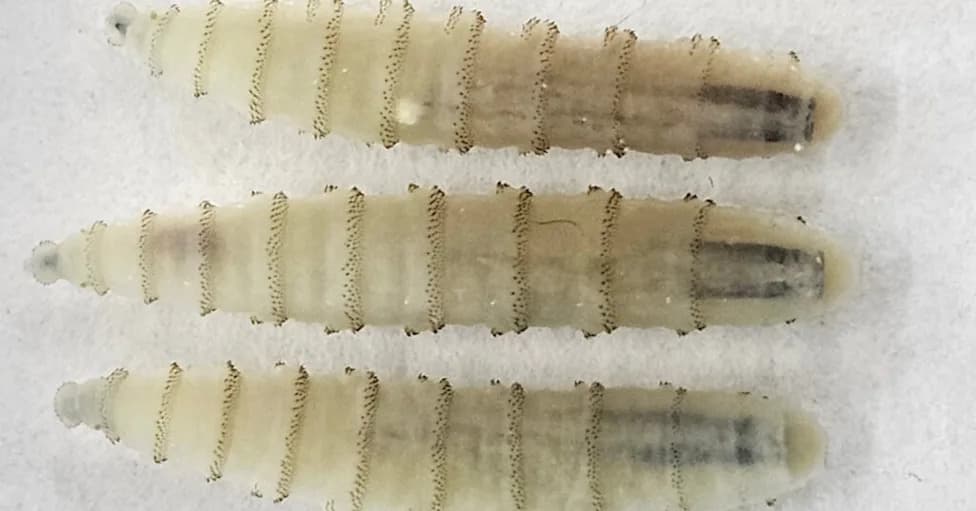
A close-up of three New World screwworm larvae (Image courtesy of Sohath Yusseff-Vanegas, USDA-Agricultural Research Service)
New Mexico officials are preparing for additional detections of New World screwworm as the parasite spreads through northern Mexico and Texas. State Veterinarian Dr. Samantha Holeck told lawmakers this week that the state's single confirmed case is unlikely to remain isolated.
Current Situation
New Mexico has confirmed one case of New World screwworm—a dog in Lea County identified in early June after a trained veterinarian recognized the parasite. Officials quickly established a containment zone and released sterile flies in response to prevent further spread.
"At the time that we eradicated screwworm in this country in the 50s and 60s, we were producing 500 million flies a week, so we are at 20 percent of that capacity right now," Dr. Samantha Holeck told a legislative panel.
Sterile-Fly Production And Planned Facilities
Sterile-fly production remains well below historical levels that helped eliminate screwworm from the U.S. decades ago. A sterile-fly facility in Chiapas, Mexico, is expected to start operations by the end of August and will join an existing Panama facility to produce roughly 200 million sterile flies per week combined. The U.S. Department of Agriculture is also planning a new production plant in Texas, due in early 2027, expected to add about 300 million sterile flies per week.
Regional Pressure And Case Counts
Officials told the state briefing that Texas has reported more than 40 confirmed cases, while Chihuahua, Mexico, has reported dozens more, showing continued northward pressure along the border. Across Mexico and Central America, official tallies have climbed to more than 189,000 animal cases and over 2,300 human cases, underscoring the need for vigilant surveillance and rapid response.
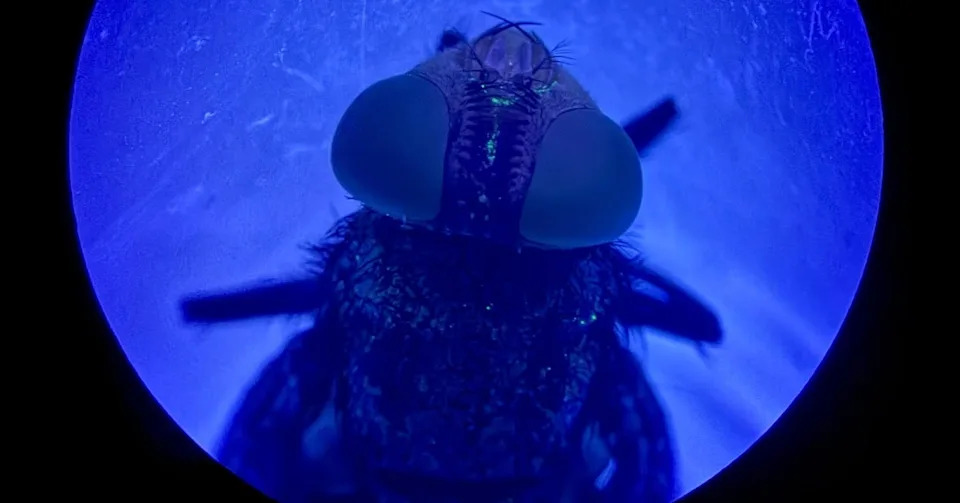
These specially raised flies are coated with a fluorescent dye that glows under a blacklight, allowing scientists to distinguish them from wild flies after they're released as part of eradication efforts. (Image courtesy of the USDA)
The sterile flies used in eradication efforts are specially reared and marked with a fluorescent dye that glows under a blacklight, enabling scientists to distinguish released sterile insects from wild flies during monitoring. (Image courtesy of the USDA)
Historical Context
The USDA formally declared the United States free of indigenous, self-sustaining screwworm populations in 1966 after extensive use of the Sterile Insect Technique (SIT). However, historical records show that imported outbreaks continued for years, requiring ongoing binational cooperation with Mexico and targeted sterile-fly releases.
The most serious resurgence occurred in 1972 when Texas recorded roughly 90,000 cases after just 444 cases in 1971. Other states—including California, Arizona, New Mexico, Oklahoma and Arkansas—also reported infestations, prompting the creation of the Mexico–United States Screwworm Eradication Commission to push the eradication barrier farther south. USDA records indicate cases fell sharply after that outbreak; northern Mexico was declared free of self-sustaining screwworm by 1980, and the USDA lists 1982 as the last reported U.S. case before the current re-emergence, apart from occasional imported detections.
What Officials Recommend
Authorities emphasize continued training for veterinarians and livestock producers, prompt reporting of suspicious wounds or maggot infestations on animals, and cooperation with containment and surveillance measures. With production of sterile flies ramping up internationally and additional U.S. capacity planned, officials say coordinated monitoring and rapid local responses remain critical.
Help us improve.