In Hebron, New York, residents and families suspect long-term paraquat spraying is linked to an unusually high number of Parkinson’s cases. Decades of laboratory and epidemiological studies report associations between paraquat exposure and Parkinson’s risk; recent research shows people near spray sites may face roughly double the risk. While more than 70 countries have banned paraquat, the US is still reviewing its risks as states and communities press for stronger restrictions amid industry pushback and ongoing lawsuits.
“Parkinson’s Valley”: Farmers and Families Blame Paraquat for a Town’s Surge in Parkinson’s
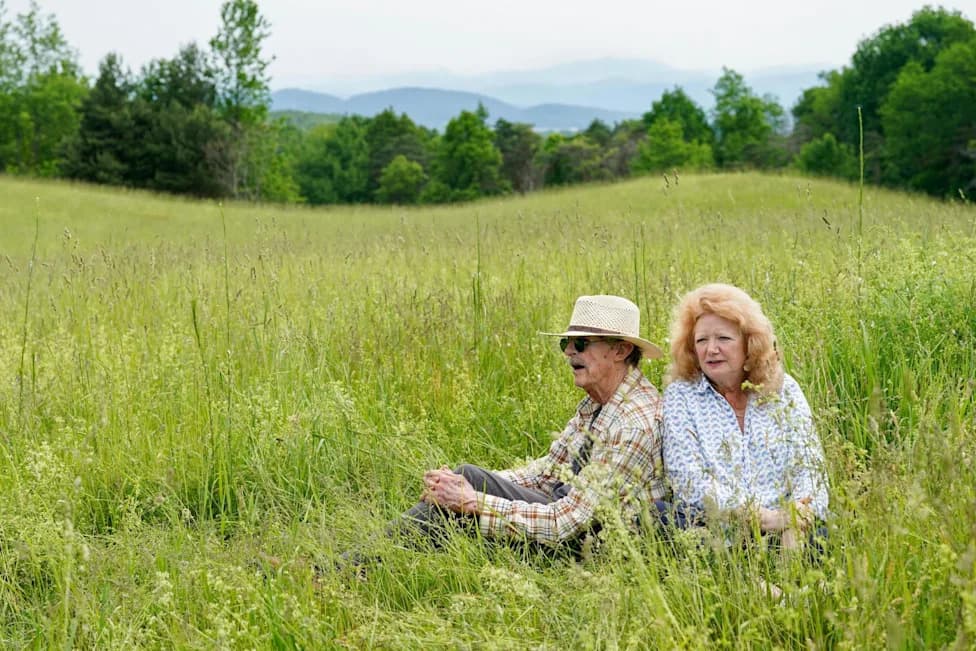
Gordan Chaplin and his wife, Sarah Teale, at their home in Hebron, New York.Photograph: Cindy Schultz for New York Focus
Gordon Chaplin steadied himself at the crest of the steep rise behind his farmhouse, a bandage on his hand and a cane at his side. He paused often as he crossed the knee-high grass, looking out toward the Adirondacks and Catskills and remembering when he could run up this slope without effort. Nearly a decade after symptoms began, doctors diagnosed the 81-year-old Hebron farmer with Parkinson’s disease — a progressive neurological disorder that affects movement and cognition.
Local Concern: A Cluster Emerges
Chaplin and his wife, Sarah Teale, suspect the problem stems from decades of herbicide use on their 200-acre cattle and corn farm. Tenant farmers, they say, sprayed paraquat — a powerful herbicide increasingly linked in scientific studies to higher Parkinson’s risk. After Chaplin’s diagnosis, Teale identified more than a dozen others nearby with the disease and calls the seven-mile stretch of road through Hebron “Parkinson’s Valley.”
Voices From Hebron
“Things just don't work as well as they used to. In fact, sometimes they don't work at all,”
— Gordon Chaplin
Sharon “Sally” Giambatista, who grew up working in her family’s strawberry fields, recalls crop-dusters spraying overhead and farmers handling pesticides without protective gear. She was diagnosed with Parkinson’s at 56; later, one of her sisters received the same diagnosis. Residents describe similar stories of exposure and loss, and a 2024 town meeting drew far more affected families than organizers expected.
What the Science Says
Research over several decades has found consistent associations between paraquat exposure and Parkinson’s or Parkinsonian brain changes. Laboratory work dating to the early 2000s showed neuron loss in animals exposed to paraquat. Epidemiological studies have reported elevated risks among applicators and people who live near sprayed areas: a 2011 study found farmworkers who used paraquat had about 2.5 times the risk of Parkinson’s, and a 2024 study reported roughly double the risk for people living or working near paraquat spray sites.
Experts emphasize these findings as strong evidence of an environmental contributor. Deborah Cory-Slechta, a neurotoxicologist at the University of Rochester, called the body of work linking paraquat to Parkinson’s “one of the strongest databases out there linking a chemical exposure to a disease.” Neurologist Ray Dorsey noted that most Americans with Parkinson’s lack a known genetic risk, underscoring the importance of environmental causes.
Regulatory And Industry Responses
More than 70 countries — including China, Brazil and all members of the European Union — have banned paraquat. In the United States the herbicide remains legal, though scrutiny has increased. US Geological Survey data indicate nationwide paraquat use rose to at least 11 million pounds annually between 2014 and 2018; New York growers sprayed nearly 149,000 pounds in 2018.
The Environmental Protection Agency (EPA) has warned about paraquat’s acute toxicity (noting that “one small accidental sip can be fatal”) and requires certified applicator training. Under the Biden administration the agency signaled it needed more time to review long-term health risks and in late 2023–2024 asked manufacturers to study how far paraquat vapors travel after spraying.
Syngenta, a major global producer of paraquat (sold as Gramoxone), has disputed claims that the product causes Parkinson’s, citing internal and external studies and regulatory reviews. In March the company announced it would stop manufacturing paraquat by the end of June, attributing the decision to competition from generics and denying the move was driven by litigation or safety concerns.
Lawsuits, Politics And The Path Forward
Thousands of Americans have sued Syngenta, alleging the company failed to warn users about paraquat’s risks. In 2025 Syngenta reported setting aside $792 million to cover settlement costs. Advocates warn that company exits do not eliminate risk because generic producers can continue supplying the chemical.
Policy efforts in the US have been mixed: in 2024 lawmakers in 14 states proposed restrictions or bans, and Vermont became the only state to enact a ban. New York lawmakers attempted to follow but the bill stalled during a budget impasse. The New York Farm Bureau and other farm groups have opposed bans, arguing that proper safety precautions protect applicators and farmworkers.
Personal Losses And Community Questions
Chaplin sold his cows when mobility became too difficult, gave up long walks in the woods, and struggles with writing and memory. Giambatista — once a singer and painter — worries about what she has lost to a disease that crept into every corner of daily life. Families in Hebron want answers, policy change and protections for future generations.
What To Watch
- EPA reviews and vapor-dispersion studies that could reshape federal regulation.
- State-level legislation and potential new bans or restrictions on paraquat use.
- Ongoing litigation and settlement developments related to manufacturer responsibility.
This story originally appeared in New York Focus, a nonprofit newsroom investigating power in New York.
Help us improve.