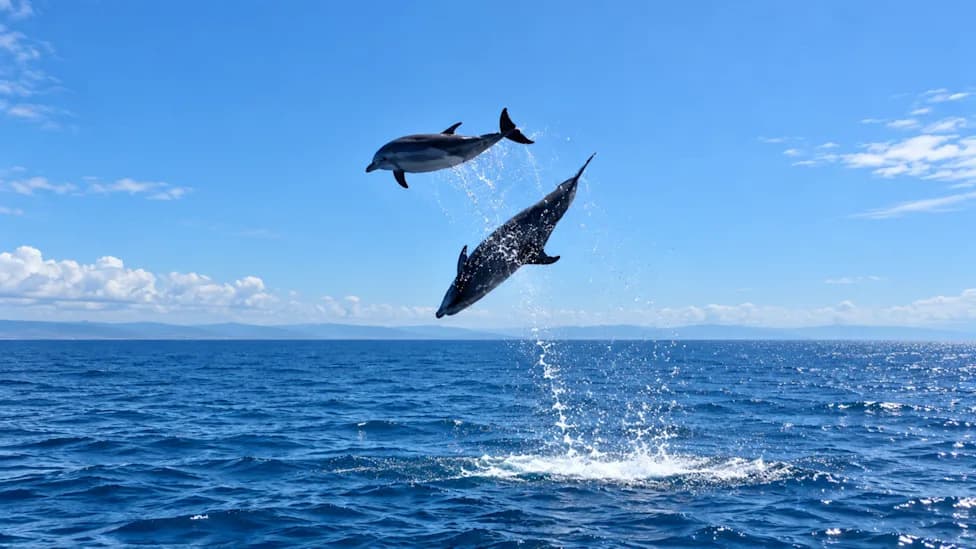
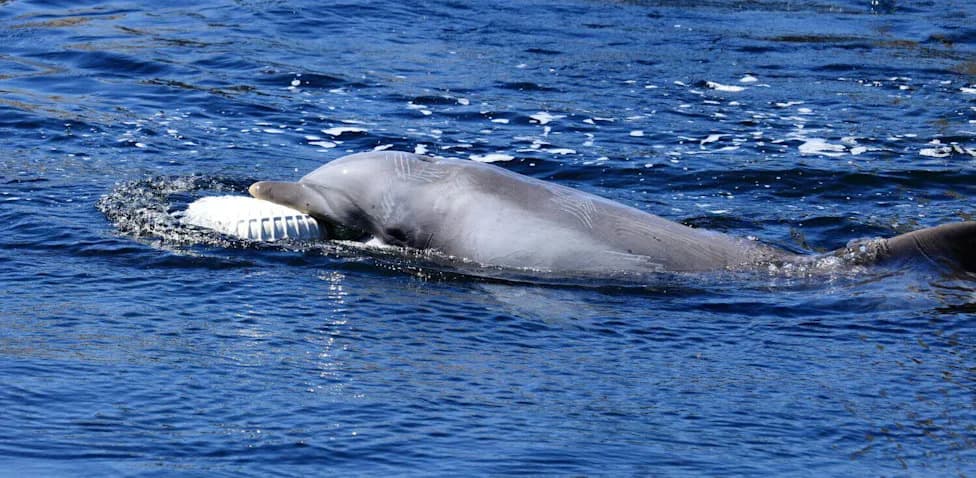
Researchers filmed a pronounced uptick in marine activity in the New York Bight this summer, documenting dolphins and multiple whale species feeding and breaching about 25–35 miles south of Long Island. The Wildlife Conservation Society and Ocean Giants teams recorded behaviors including bow-riding, breaching, bubble-feeding, and active foraging. Experts say these sightings, along with protections since the 1972 Marine Protection, Research, and Sanctuaries Act, signal a recovering and more functional coastal food web.
Whales and Dolphins Return to the Recovered New York Bight — A Clear Sign of Ecosystem Recovery
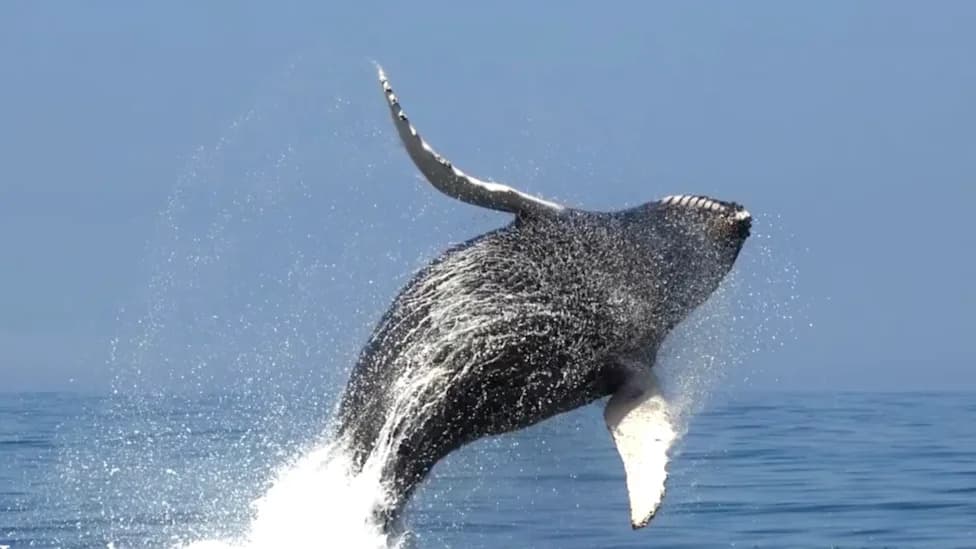
Photo Credit: Wildlife Conservation Society
Researchers monitoring waters off New York and New Jersey report an unusually active summer in the New York Bight, where multiple species of whales and dolphins have been filmed feeding and socializing in an area once devastated by pollution and ocean dumping.
Rich Wildlife Observed at Sea
During a field expedition roughly 25–35 miles south of Long Island between Montauk, NY, and Cape May, NJ, the Wildlife Conservation Society's New York Bight Program and the Ocean Giants research team captured photos and video documenting an array of marine life. Observers recorded common dolphins riding the vessel's bow, humpback calves practicing breaches, humpbacks bubble-feeding, fin whales pushing through dense schools of fish, and minke whales likely feeding just below the surface.
What These Sightings Mean
Taken together, the encounters point to the New York Bight functioning as an important foraging hotspot. Dr. Howard Rosenbaum, executive director of the Wildlife Conservation Society's New York Bight Program, said the animals "were feeding, taking advantage of an incredibly productive foraging hotspot." The National Oceanic and Atmospheric Administration (NOAA) has noted that the return of large marine animals is a strong indicator that the local food web is recovering and functioning more effectively.
"When we began our research more than a decade ago, these waters weren't widely recognized as important whale habitat," Rosenbaum told NewsNation. "But days like this help bring our long-term science to life, and remind us why protecting these waters has never been more important."
How Policy Helped
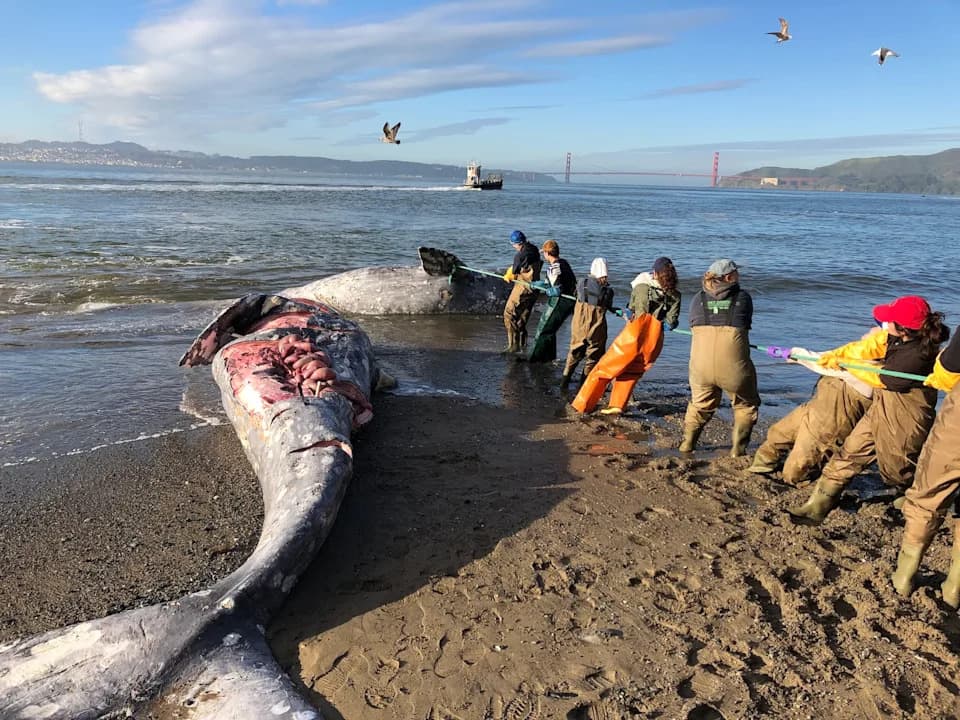
Decades of pollution and ocean dumping once harmed the New York Bight, but improvements began after the Marine Protection, Research, and Sanctuaries Act of 1972 helped reduce dumping and strengthen habitat protections. The presence of multiple large marine species now suggests a measurable environmental recovery in this heavily trafficked marine ecosystem.
Credits: Observations and media were recorded by the Wildlife Conservation Society's New York Bight Program and the Ocean Giants research team; initial coverage reported by NewsNation.
Help us improve.