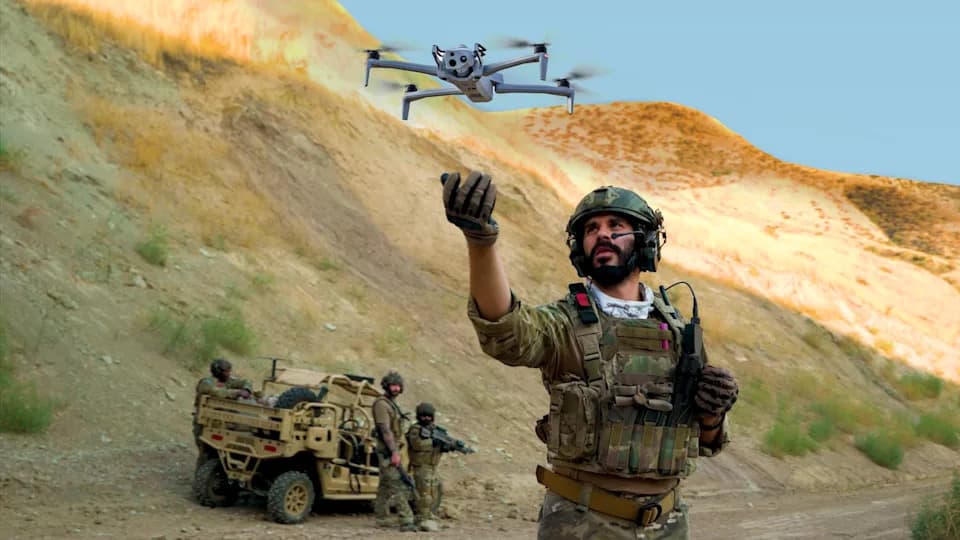
France is converting automotive factories and suppliers into drone manufacturers to build scalable surge capacity informed by lessons from Ukraine. Multiple partnerships this year target high-volume production — from roughly 100 drones per day lines to plans for 1,000 interceptor or kamikaze units per month. Officials emphasize readiness and sovereignty, while industry leaders warn that sustained funding and firm orders are needed to make large-scale production viable.
France Turns Auto Plants Into Drone Factories — Scaling Military UAV Production for Surge Capacity
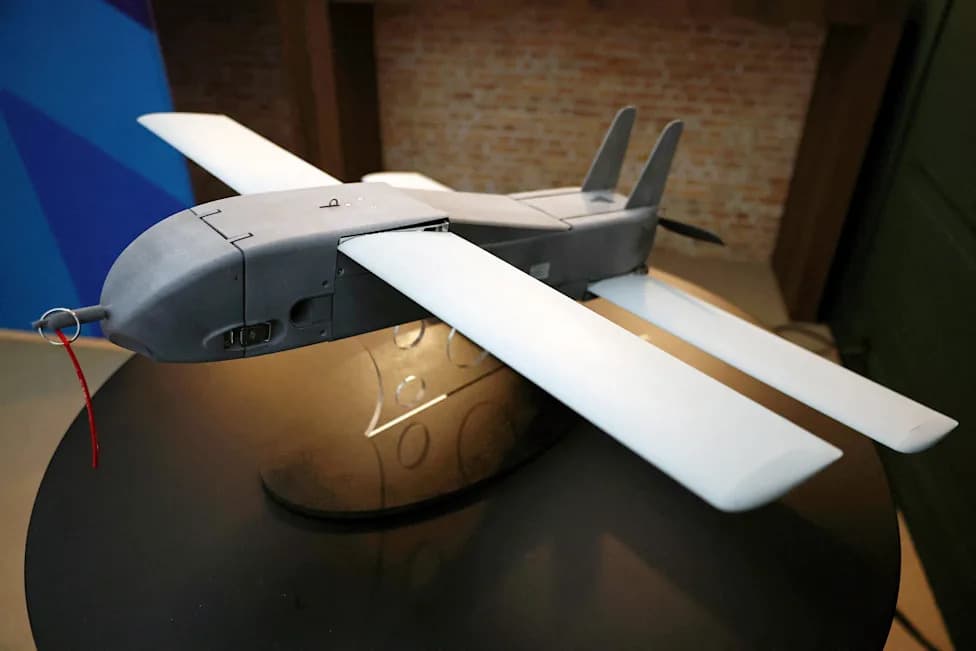
A model of the MTO Toutatis drone, a remote-controlled loitering munition, designed by the defense technology company Thales, June 16, 2026. (Alice Sacco/Reuters)
France is moving from policy ambition to industrial delivery by tapping its automotive sector to mass-produce military drones. Partnerships between automakers, car-parts suppliers and defence contractors are transforming battlefield lessons from Ukraine into functioning production lines and surge capacity.
From Strategy To The Factory Floor
Since the start of the year, at least six defence-automotive collaborations have been announced as President Emmanuel Macron's government looks to combine the scale, automation and cost discipline of France's car industry with one of the fastest-growing areas of military technology. The Ukraine war — and diplomatic pressure from allies to bolster European military capabilities — has added urgency to the effort.
Key Projects And Production Targets
Several initiatives announced this year aim to produce drones at volumes that defence start-ups struggle to reach alone:
- Valeo plans to manufacture electric drone motors in France for defence firm Harmattan AI.
- Forvia has unveiled a partnership with a European defence company specialising in AI-powered counter-drone systems and is considering building capacity to produce about 1,000 interceptor drones per month.
- Renault, already working with Turgis & Gaillard on a long-range drone, partnered with Thales in June to industrialise the Toutatis kamikaze drone, targeting up to 1,000 units per month from 2027.
- Delair and German supplier Schaeffler plan a French production line capable of assembling roughly 100 drones per day by November.
If the capacities announced by Renault, Schaeffler and Forvia are realised, combined output could approach about 60,000 units per year — a manufacturing scale that remains smaller than current Ukrainian and Russian production in wartime, but large for European defence industry standards.
Rationale: Readiness, Sovereignty And Surge Capacity
French defence officials say the objective is not necessarily to keep enormous fleets in peacetime, but to ensure the country can rapidly ramp up production should a crisis occur. A July report by the French Senate's defence committee described France's stock of only a few thousand drones as 'insufficient to achieve a critical mass.'
'Why now? Because the need is now, drones are now,' Christophe Périllat, Valeo's chief executive, told reporters. 'And why in France? Because we're being asked to guarantee our sovereignty.'
Manufacturing Shifts And Design Choices
Officials are working with automotive subcontractors to design drones that can be produced in large volumes on assembly lines rather than in low-rate, artisanal start-up settings. Renault has said the Toutatis design is being simplified with fewer components and a shift from 3D-printed parts to injection-moulded plastic to lower costs and enable higher-volume production.
Challenges And Caveats
Scaling manufacturing quickly raises risks: building large stockpiles of platforms that could become obsolete as technology evolves. Thales CEO Patrice Caine cautioned that drones are 'objects that evolve quickly' and constant technological change must be factored into procurement and production decisions. Industry leaders also warn that funding and firm orders must increase to sustain a new mass-manufacturing ecosystem — France's government pledged €150 million last December to help develop a dedicated drone sector, but some industry figures say more is needed.
Context: Ukraine's Experience
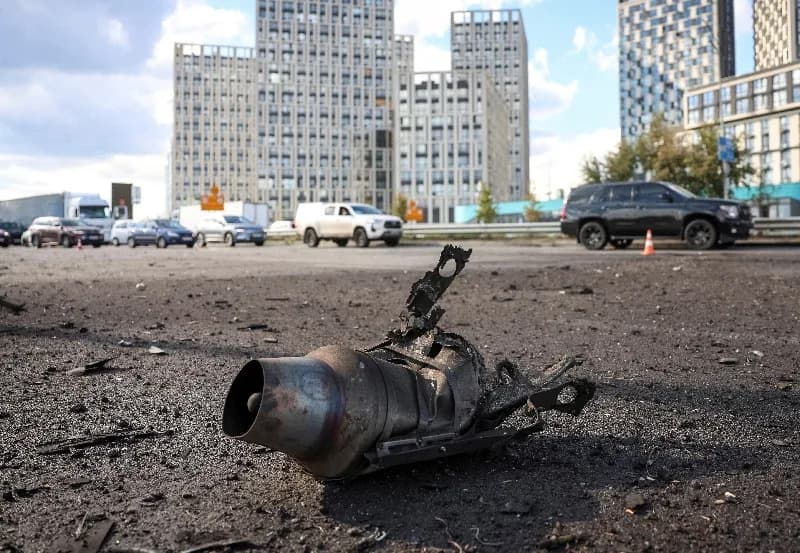
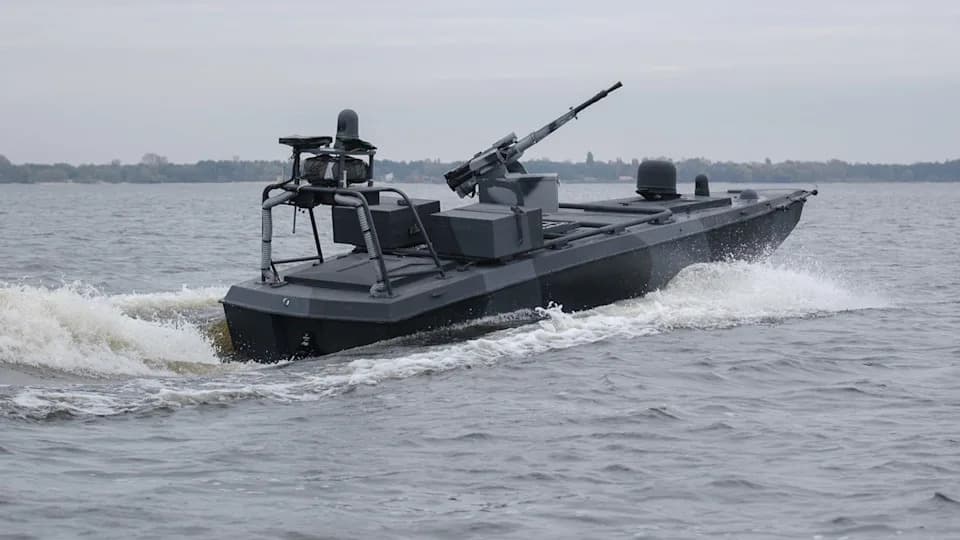
The war in Ukraine has dramatically accelerated drone use for reconnaissance, strikes and loitering munitions. Kyiv has rapidly expanded domestic drone production — President Volodymyr Zelenskiy said in July his country aims to produce up to 10 million units in 2026 — and now hosts hundreds of drone makers of varying size. That scale has helped shape France's push to build a resilient, scalable industrial base.
Bottom line: France is betting that auto-industry know-how — automated assembly, cost control and high-volume production — can be adapted to military drone manufacturing to provide surge capacity and strategic autonomy. The plan is ambitious, but success will depend on secure funding, clear procurement decisions and managing the pace of technological change.
Help us improve.