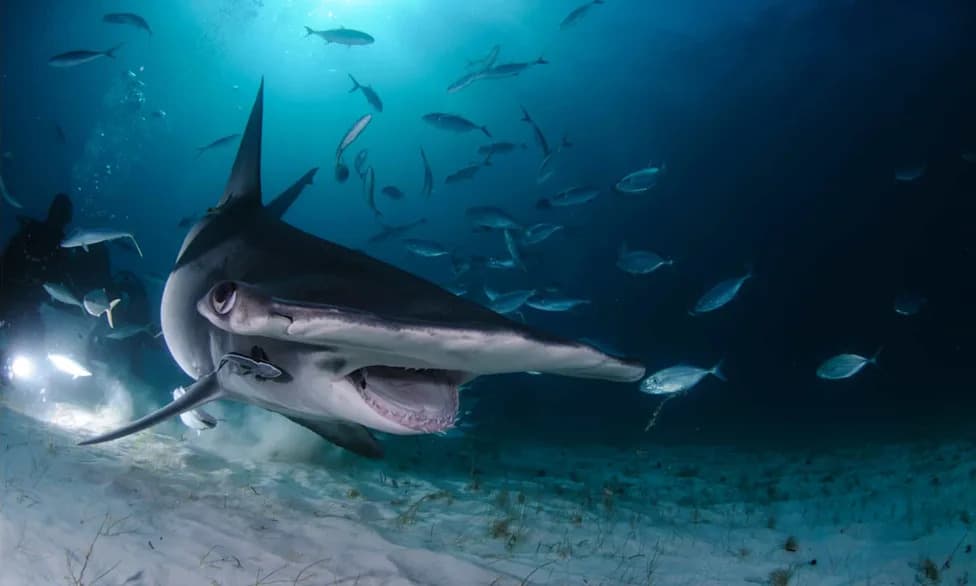
The Atlantic Shark Institute unexpectedly encountered two hammerheads near Block Island and successfully tagged a 6-foot female smooth hammerhead — the first hammerhead tagging recorded off Rhode Island. An earlier attempt to tag a scalloped hammerhead failed. The institute has logged more than 50 sharks in the area, and researchers say the sightings support evidence that warming seas are shifting marine species’ ranges. The tagged shark will be tracked to clarify migration routes and possible changes to breeding patterns.
Unexpected Hammerheads Near Block Island: First Successful Hammerhead Tag Off Rhode Island

Photo Credit: iStock
Atlantic Shark Institute researchers went out near Block Island intending to tag sandbar sharks but instead encountered two hammerheads — a rare sight in New England waters. What began as a routine survey became a milestone for the institute when the team successfully attached a tracking tag to a smooth hammerhead.
The outing used drone reconnaissance to locate sharks when a large scalloped hammerhead was first spotted. An initial attempt to attach a tag to that animal failed because the device would not remain secured. Later the team located a 6-foot female smooth hammerhead; the second tagging attempt succeeded, marking the first successful hammerhead tagging recorded off Rhode Island.
The encounter adds to an active run of shark observations in the region. The Atlantic Shark Institute has recorded more than 50 sharks off Rhode Island, including an 8-foot juvenile great white and a 15-foot shark drawn to the area by a whale carcass near Block Island.
Why This Matters
These sightings and the successful tagging support growing evidence that warming seas are shifting the ranges of marine species. Both smooth and great hammerheads have been reported during especially warm summers around Block Island, Newport, Buzzards Bay, Martha's Vineyard, and Nantucket.
With the smooth hammerhead now carrying a tag, researchers can monitor its movements up and down the coast. Tracking data will help scientists map migration routes, study seasonal movements, and assess how rising ocean temperatures may affect breeding and distribution patterns. If hammerheads continue moving north, continued tracking will make it possible to detect and document changes in their travel routes over time.
Bottom line: An unexpected pair of hammerheads led to Rhode Island’s first successful hammerhead tagging, providing a new data point to understand how sharks are responding to changing ocean conditions.
Help us improve.