Decision Desk HQ projected that Cori Bush lost a Democratic primary rematch to Rep. Wesley Bell in Missouri’s 1st Congressional District. Bush, elected in 2020 as the first Black woman to represent Missouri in the U.S. House, defended her vote against a Biden‑backed infrastructure bill as leverage for priorities like childcare. The race highlighted tensions between progressive activists and establishment‑backed candidates and tested Democratic voters’ attitudes on Israel; Bell again drew AIPAC support. With only 112 Black women running this midterm — down from 134 in 2022 — the defeat is a setback for the group’s push toward equitable House representation.
Cori Bush’s Primary Defeat Narrows Black Women’s Path to Congress
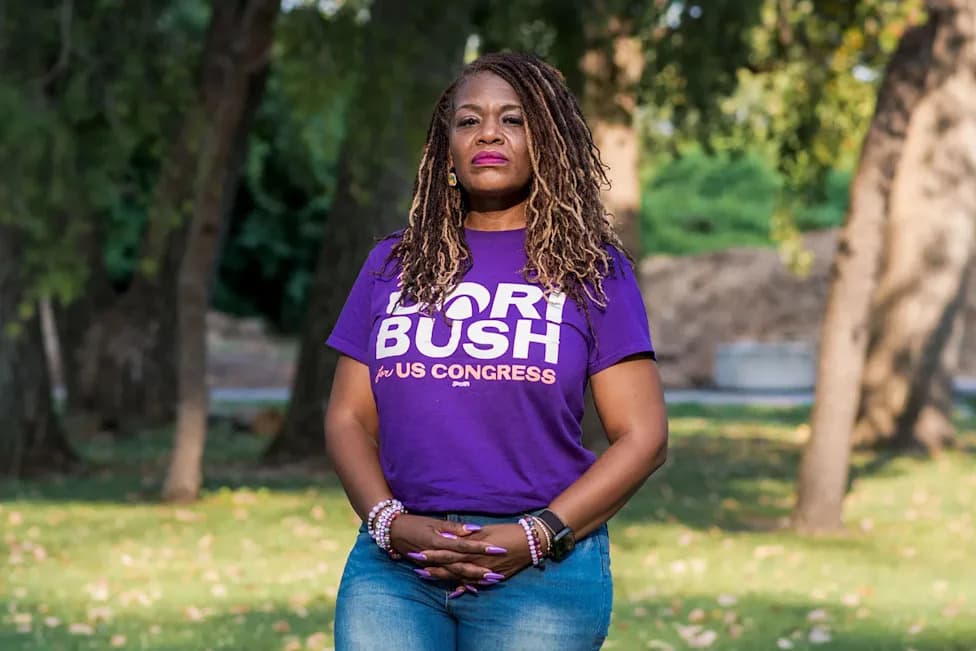
Former Rep. Cori Bush poses for a portrait during a canvassing event in University City, Missouri on July 26, 2026.(Neeta Satam for The 19th)
Projected results from Decision Desk HQ show former Rep. Cori Bush failed to reclaim Missouri’s 1st Congressional District, losing a heated Democratic primary to Rep. Wesley Bell. The outcome is a setback for efforts to expand Black women’s representation in the U.S. House.
Background
Bush was first elected to Congress in 2020, becoming the first Black woman to represent Missouri in the U.S. House after unseating a 10‑term incumbent. She ran as a progressive activist focused on issues such as affordable housing and criminal justice reform.
The 2024 Primary
In this rematch, Bell — the former St. Louis County prosecutor — campaigned as a more conventional, deal‑oriented lawmaker. He criticized Bush’s vote against a Biden‑backed infrastructure package to portray her as unwilling to compromise. Bush defended the vote, saying she used her leverage to press for priorities others had abandoned, citing childcare as a specific example.
"The activist brings that constant push, that moxie, that persistence," Bush said in a recent interview. "The legislator, they have the power of the pen and the purse. They have the letterhead. So when you put the two of them together, then you can actually use that push to bring about the change."
Endorsements and Issues
Bell courted establishment support and campaigned with former House Speaker Nancy Pelosi in the closing weeks of the race. His campaign again drew backing from the pro‑Israel lobbying group AIPAC, though that support was reportedly smaller this cycle. The contest also served as a gauge of Democratic voters’ views on U.S. policy toward Israel nearly three years into the war.
What This Means For Representation
Black women have made meaningful gains in congressional representation over several cycles but remain underrepresented. This midterm cycle, only 112 Black women ran for Congress — down from a record 134 in 2022, according to the Center for American Women and Politics. Bush’s defeat therefore makes it harder for Black women as a group to reach equitable representation in the House.
Both Bell and Bush trace their political origins to the 2014 Ferguson protests after the killing of Michael Brown, underscoring the long‑standing local roots of both campaigns. Errin Haines contributed to this report.
Help us improve.