President Trump unveiled a "historic" Gaza peace framework intended to disarm Hamas, but Israeli Prime Minister Benjamin Netanyahu has not endorsed the plan. Over the weekend, Israeli airstrikes killed at least 28 people in Gaza, while a mass funeral was held for 112 victims of a 2023 strike. Trump administration envoy Nickolay Mladenov warned the renewed violence risks derailing negotiations, and Netanyahu's coalition is pressuring him to reject the deal ahead of October elections.
Trump Unveils 'Historic' Gaza Peace Framework As Israeli Airstrikes Kill Dozens
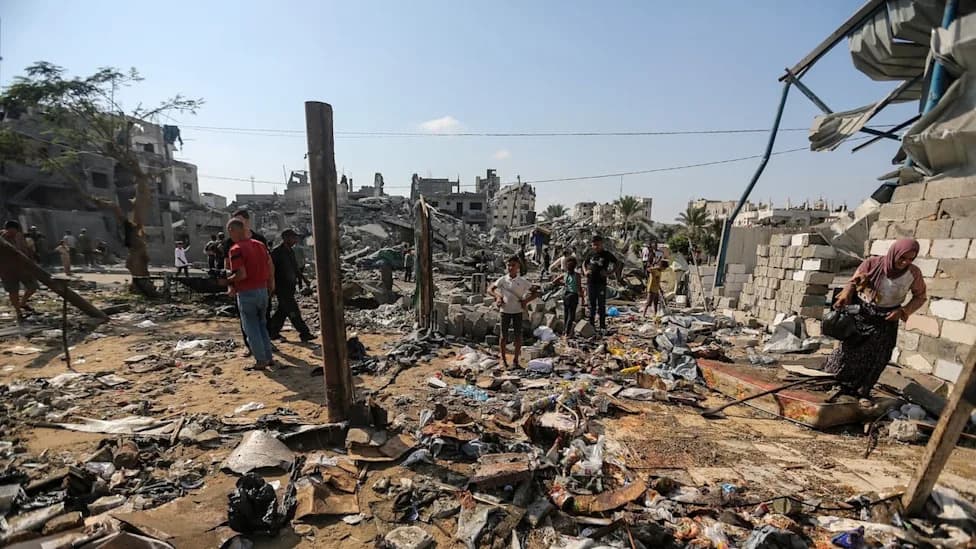
GAZA CITY, GAZA - AUGUST 1: Residents inspect the damage caused by Israeli airstrikes last night on residential buildings in the Safatawi area on August 1, 2026 in Gaza City, Gaza. Israel continues military actions in Gaza during the fragile easefire agreement which is frequently contested, and marred by mutual accusations of violations. (Photo by Ahmad Hasaballah/Getty Images)
President Donald Trump announced what he called a "historic" framework aimed at disarming Hamas and building on a peace plan first unveiled in October 2025. The proposal has not been publicly endorsed by Israeli Prime Minister Benjamin Netanyahu, and it is already facing immediate tests on the ground.
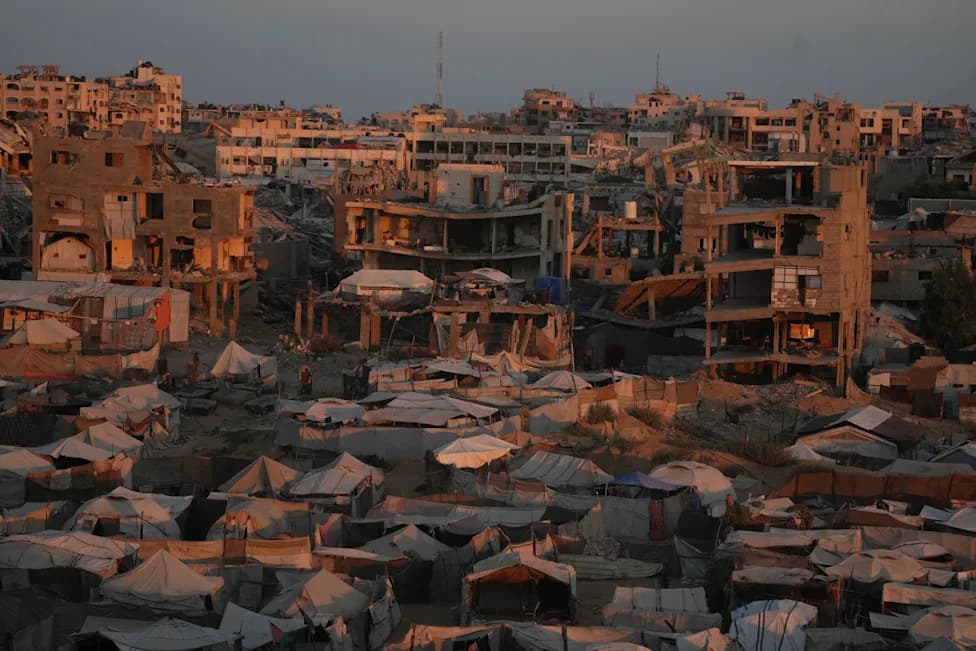
Despite repeated calls to halt military operations, Israeli airstrikes over the weekend killed at least 28 people in Gaza, local officials said — the most intense bout of violence in the area in weeks. The renewed attacks have revived fears that diplomatic efforts could be undermined by ongoing military activity.
On Tuesday, Gaza residents held a mass funeral for 112 people who were killed in a 2023 Israeli airstrike. The event, described by the BBC as one of the largest funerals of its kind in the region, underscored the deep public grief and heightened tensions surrounding the talks.
International mediators have been pressing for rapid implementation of the framework, but officials in the Trump administration warned that the new Israeli strikes could jeopardize negotiations. Nickolay Mladenov, the Trump administration's Board of Peace chief envoy, said the violence killed civilians, damaged medical supplies and undermined momentum for a political solution.
"Achieving a lasting peace is hard but achievable if everyone makes their best efforts," Mladenov wrote on Twitter, adding that negotiations had entered a "hard phase" after talks with Netanyahu and describing the process as "slow" and "grinding."
A Board of Peace readout called the meeting with Netanyahu "constructive and detailed," but an Israeli official later reiterated that Israel would not withdraw from its current military positions in Gaza and would continue operations it deems necessary to protect civilians and soldiers. Under the framework, Hamas is expected to disarm only if Israeli forces return to the proposed ceasefire lines agreed last October.
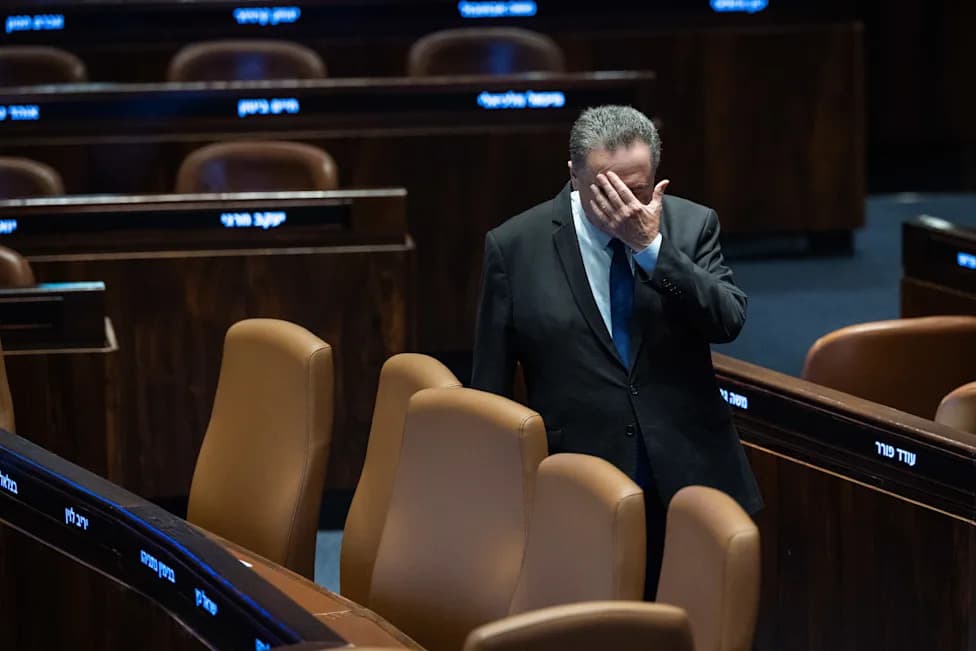
Political pressure inside Israel complicates the picture. Members of Netanyahu's governing coalition have publicly urged him to reject the deal ahead of national elections in October. A source close to Netanyahu told CNN that the prime minister is skeptical Hamas will comply, and that he is reluctant to confront President Trump directly — instead reportedly hoping Hamas fails to meet the terms, which could provide political cover for renewed military action.
Diplomats and aid officials warned that continuing strikes and the resulting humanitarian damage — including harm to medical supplies and civilian infrastructure — would make a negotiated settlement far harder to achieve. The coming days are likely to be crucial for whether the framework can survive escalating violence and political divisions.
Help us improve.