Everglades scientist and creator Jordon (@kidflamesss) explains how ornamental plants introduced for gardens and erosion control became invasive in Florida's wetlands. Birds and routine human activity — vehicles, boats and imported soil — help spread seeds into the Everglades. These invasions outcompete native species, alter habitats and increase restoration costs. Prevention via education, careful gardening choices and coordinated management is essential to protect the ecosystem.
How Ornamental Garden Plants Spread Into the Everglades — An Everglades Scientist Explains
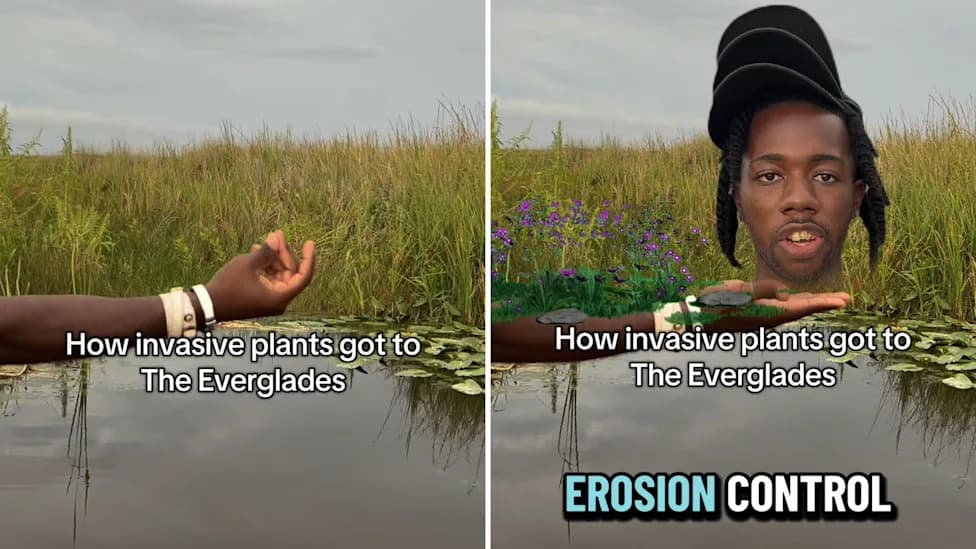
Photo Credit: TikTok
What looks attractive in a backyard garden can become a major threat once it reaches one of the nation's most sensitive ecosystems. In a recent video explainer, Everglades scientist and social creator Jordon (@kidflamesss) breaks down how ornamental plants introduced for decoration and practical uses have become invasive in Florida's wetlands.
How The Plants Got There
Some nonnative species were deliberately introduced because they were considered visually appealing in gardens or useful for erosion control and agricultural purposes. After establishment, these plants spread beyond cultivated areas through both natural and human-assisted pathways.
"The seeds from these plants attach themselves to birds' feet, and then the birds spread it naturally into the Everglades over time," Jordon explains in the video.
Other Vectors Of Spread
Human activity accelerates the problem. Seeds and plant fragments can hitchhike on vehicles, boats, landscaping equipment and even on imported soil. Everyday actions — landscaping, construction, travel and trade — can inadvertently carry invasive species deeper into fragile habitats.
Why This Matters
The Everglades are more than a scenic landscape: they are a living system that supports wildlife, maintains water flow and provides services for local communities. When invasive plants take root, they can outcompete native vegetation, change habitat structure, impede water movement and make restoration efforts slower and more expensive.
What Can Be Done
Prevention and public education are among the most effective tools. For homeowners and gardeners, simple steps can reduce risk: choose native or thoroughly vetted plants, avoid moving soil between properties, clean boats and gear after leaving natural areas, and inspect vehicles and equipment that travel through sensitive zones.
At a broader scale, long-term management typically combines monitoring, targeted removal, public outreach and habitat restoration. While none of these are quick fixes, preventing new introductions early saves time, money and habitat in the long run.
Jordon's clear, approachable explanation resonated with viewers — one commenter wrote, "Better than what my teacher teaches." That response underscores how accessible education can spur better choices and stronger protections for the Everglades.
Help us improve.