South Africa's drive to mine lithium for batteries is clashing with coastal farming communities in KwaZulu-Natal, where prospecting licences now cover about 73,000 hectares and risk displacing generations of farmers. Residents report blast damage, dust-related health problems and homes already demolished as a mine expands, while campaigners warn up to 30,000 agriculture-related jobs could be at risk. The mining company says it has relocated 150 farmers and created over 1,000 jobs, and the government calls critical minerals a major economic opportunity. The dispute underscores tensions between clean-energy goals and local environmental and social costs.
South Africa's Lithium Boom Sparks Clash With Coastal Farmers Over Land, Health and Jobs
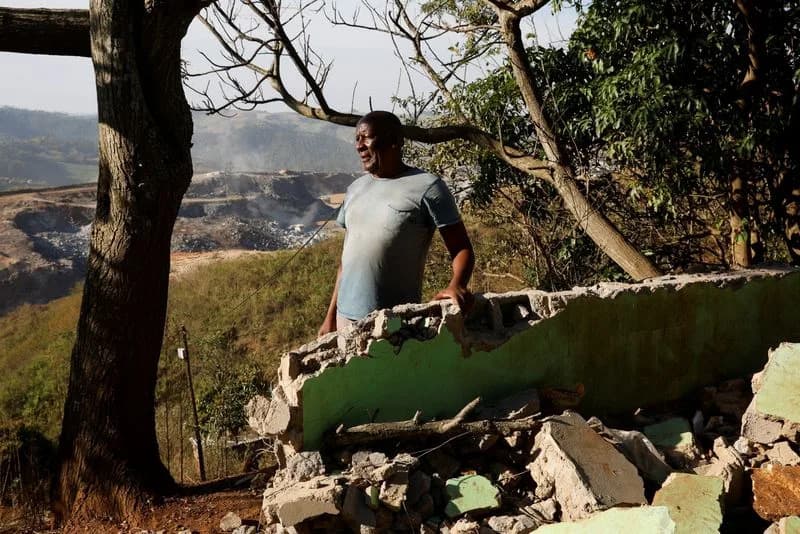
Albert Mthembu stands near a former neighbour's home, which was knocked down to prevent its use after the residents moved away, in Magog, South Africa, June 12, 2026. REUTERS/Rogan Ward
Mining lithium for batteries has become a pillar of South Africa's plan to capture growing global demand for clean energy and to boost its economy. But in coastal KwaZulu-Natal — the country's largest lithium hotspot — that strategy is colliding with generations-old farming communities who fear losing productive land, homes and livelihoods to open-pit mining.
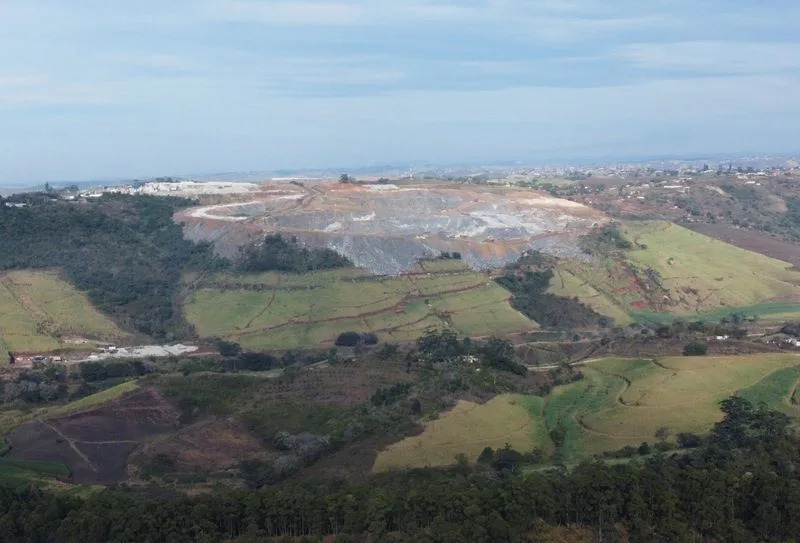
A drone view shows the SA Lithium Mine surrounded by agricultural land in Magog, South Africa, June 12, 2026. REUTERS/Rogan Ward
Scope Of Prospecting And Local Impact
Government data reviewed by Reuters show prospecting licences now claim roughly 73,000 hectares (282 square miles) — an area slightly larger than the city of Pretoria — across about 117 farms, plus some stretches of beach. The current commercial lithium operation occupies roughly 150 hectares of pits and 180 hectares of waste dumps, and the company has signalled plans to expand.
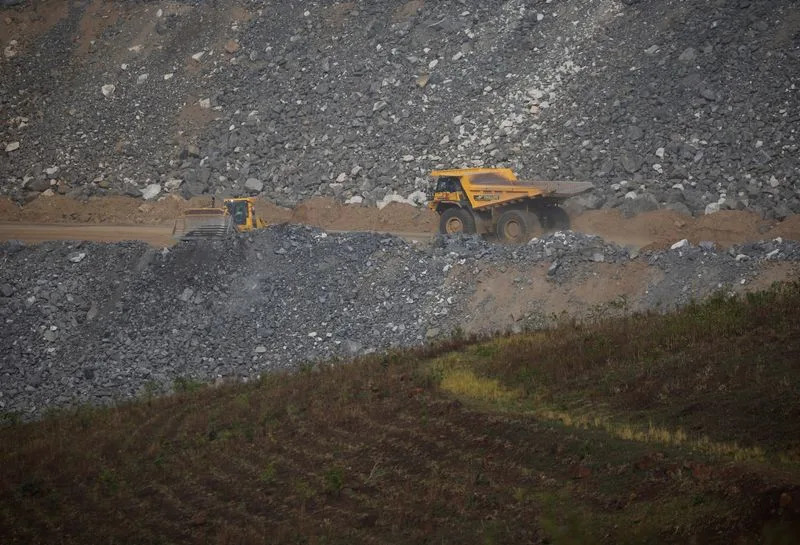
The SA Lithium Mine in Magog, South Africa, June 12, 2026. REUTERS/Rogan Ward
Communities Report Damage, Illness And Displacement
Residents and local campaigners say blasting and heavy machinery have already caused structural damage to houses, raised dust levels linked to respiratory problems, and prompted relocations. In the hillside village of Magog, villagers reported cracked homes, dying trees and at least one house reduced to rubble during mine expansion. Reuters interviewed several farmers and residents who described similar concerns.
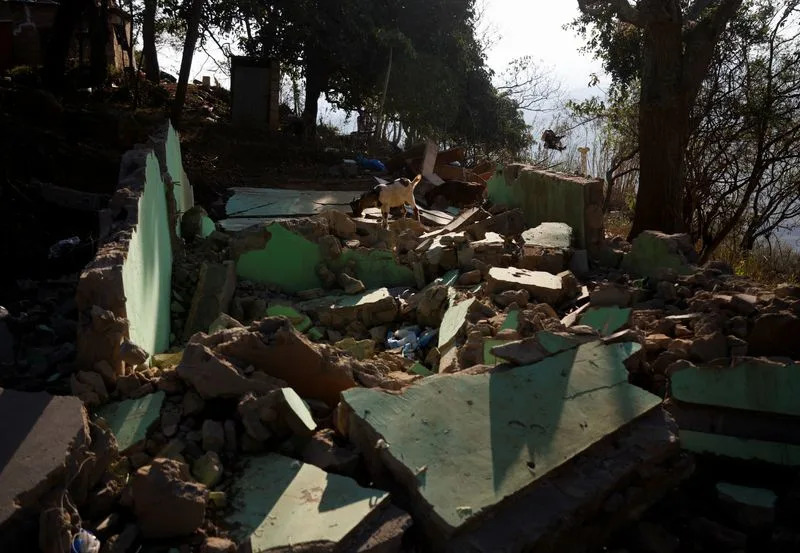
A goat stands on the debris of a home which was knocked down to prevent its use after the residents moved away, in Magog, South Africa, June 12, 2026. REUTERS/Rogan Ward
"Should all these prospecting licences be granted mining licences, the impact would be catastrophic," said Heather McLoed, general manager of the South Coast Guardians Association (SCGA).
The SCGA estimates the proposals could threaten about 30,000 jobs tied to farming, labour and local services in this sugar-exporting and tourism region. Local infrastructure — including a sugar mill that crushes roughly 2 million metric tons of cane a year for some 2,600 growers — is seen as vulnerable to a large-scale mining footprint.
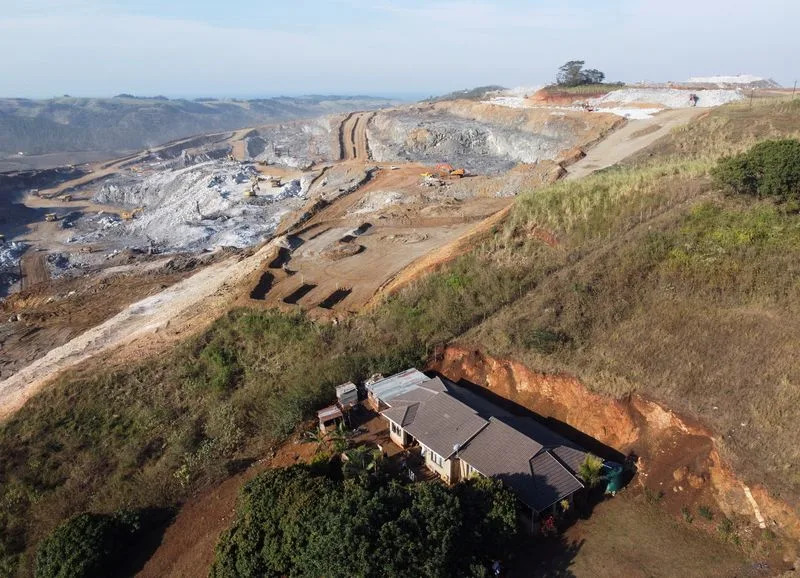
A drone view shows a house bordering the SA Lithium Mine in Magog, South Africa, June 12, 2026. REUTERS/Rogan Ward
Industry Response And Dispute
SA Lithium, the private company operating the mine near Magog, says it has relocated 150 farmers "willingly" and that its operations have created more than 1,000 jobs. Director Ian Harbottle told reporters the company has implemented anti-pollution measures and stores mine water in dams for processing and dust suppression, rather than releasing it into rivers.
Farmers and independent submissions, however, argue that a proposed expansion of more than 6,000 hectares could permanently degrade soil and water quality and undermine long-term agricultural viability in the area. The disagreement underscores tensions over compensation, resettlement quality, and long-term environmental monitoring.
Clean-Energy Transition Trade-Offs
Policymakers note that renewable energy systems typically require less raw-material extraction per unit of power than coal. A 2024 Breakthrough Institute analysis cited in reporting found South African coal averages about 1,180 tons of material per gigawatt, compared with 59 tons for wind and 45 tons for solar — figures that include battery minerals. Still, critical-minerals mining can be landscape-scarring and contested by affected communities from Portugal to China and Australia.
National Stakes
President Cyril Ramaphosa has described critical minerals as a "sunrise industry," telling parliament in February that South Africa holds about 40 trillion rand (roughly $2.39 trillion) in critical minerals. The government sees mineral development as a path to jobs and industrialisation, but local disputes like KwaZulu-Natal's highlight the social and environmental trade-offs that must be managed.
Exchange rate used: $1 = 16.7264 rand.
Help us improve.