Coastal development and seawalls in South Florida have replaced many natural banks, forcing American crocodiles to use docks, jet skis and paddleboards as alternative haul-out sites. An FWC study suggests this adaptability may have helped the species rebound from several hundred animals in 1975 to roughly 2,000 today. Crocodiles are generally timid — FWC records two non-fatal attacks (2014 and 2024) — and officials urge people to give them space, avoid feeding them and keep pets away from water edges.
No Shoreline Left: American Crocodiles in Florida Turn to Docks, Jet Skis and Paddleboards
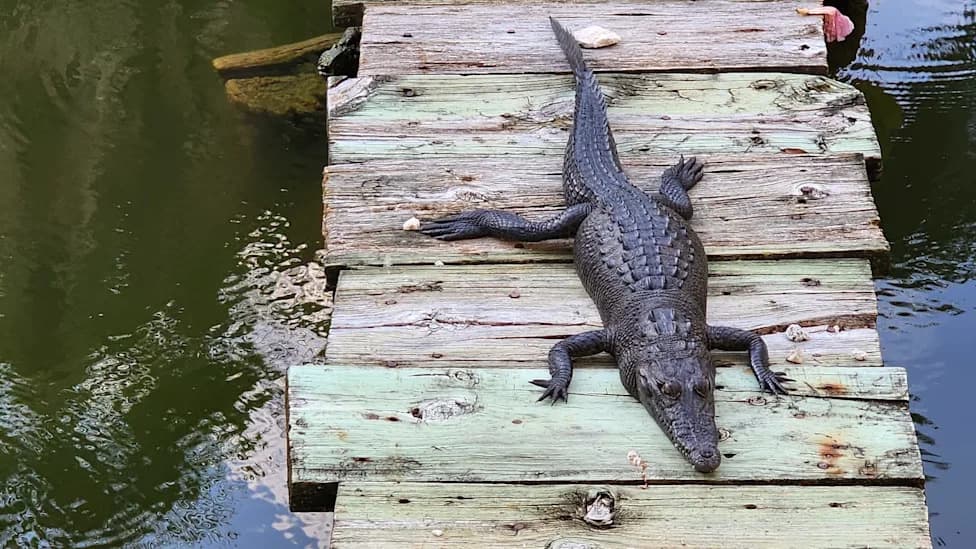
Photo Credit: iStock
American crocodiles in South Florida are increasingly showing up in unexpected places — stretched out on floating docks, perched on jet skis and even resting on paddleboards — as coastal development removes the natural banks these threatened reptiles rely on.
Why Crocodiles Are Using Man-Made Surfaces
Seawalls and other hardened shorelines have replaced many natural haul-out sites where crocodiles bask and rest. With fewer natural options, some animals are using docks, marina platforms, boats and other artificial surfaces to warm up and loaf between feeding or travel periods. A Florida Fish and Wildlife Conservation Commission (FWC) study, American crocodiles on jet skis: Conflict or coexistence, examined this change in behavior and suggested that the species’ ability to tolerate altered habitats may have supported its broader recovery.
Sightings And Population Trends
The study and news reports document sightings across South Florida: crocodiles observed on kayaks and jet skis in Broward County, on a pool shelf in Monroe County, and on marina platforms inside Everglades National Park. These encounters have occurred alongside a substantial rebound in Florida’s American crocodile population — from several hundred animals in 1975 to roughly 2,000 today.
"If a crocodile is in a canal with seawalls, the only place for them to go is a dock, or the back of a jet ski. It's not like they are seeking these items out, that's their only option," said West Palm Beach reptile specialist Ryan Gradney of Scales Exotics.
How Crocodiles Differ From Alligators
Crocodiles can excrete excess salt, so they tolerate brackish and coastal environments better than alligators, which generally prefer freshwater. That physiological difference means crocodiles are more likely to be affected when southern shorelines are hardened, leaving them with fewer safe haul-out alternatives.
Safety, Conservation And Coexistence
Despite these closer interactions with people, American crocodiles are typically shy. The FWC has recorded only two attacks on people in Florida — in 2014 and 2024 — and neither was fatal. Officials stress common-sense precautions: follow posted swimming and access restrictions, give crocodiles plenty of space, never feed wildlife, and keep pets away from canal edges and marinas.
American crocodiles remain protected in Florida. First listed as endangered in 1975 and reclassified as threatened in 2007, populations persist in places such as Everglades National Park, Florida Bay, Biscayne Bay and the Turkey Point cooling canals. Researchers and wildlife managers are studying sightings on docks and watercraft to better define what coexistence looks like in heavily developed coastal zones and to guide public-safety messaging.
What You Can Do
- Observe posted warnings and swim only in approved areas.
- Keep a safe distance from any crocodile and never attempt to move or feed it.
- Keep pets leashed and away from canal edges, docks and marinas.
- Report unusual crocodile sightings to local wildlife authorities so managers can track behavior and hotspot areas.
As South Florida continues to develop, understanding how American crocodiles adapt to altered shorelines will be essential for both conservation and public safety.
Help us improve.