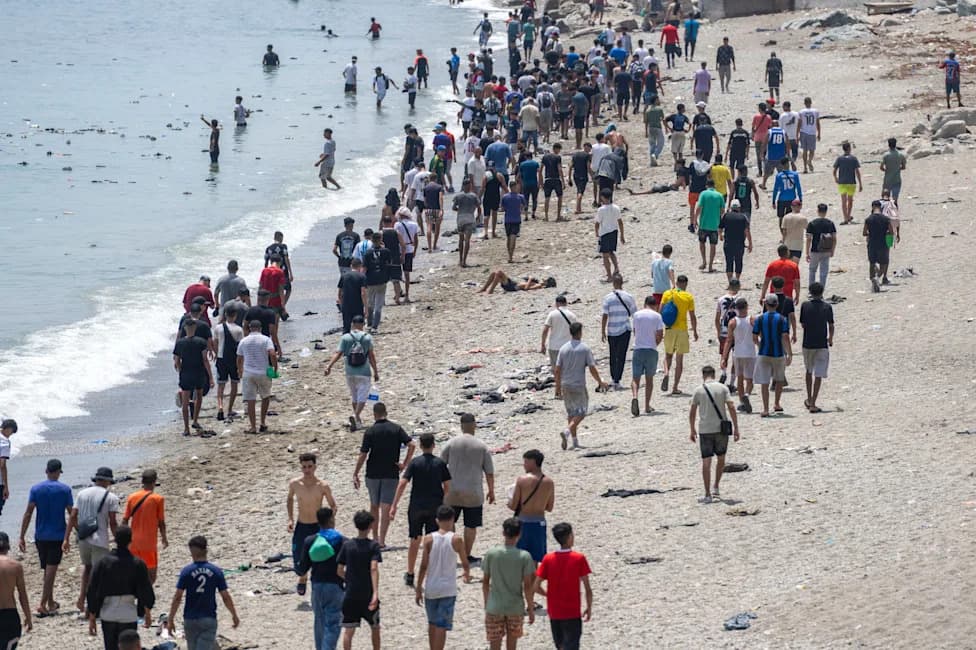
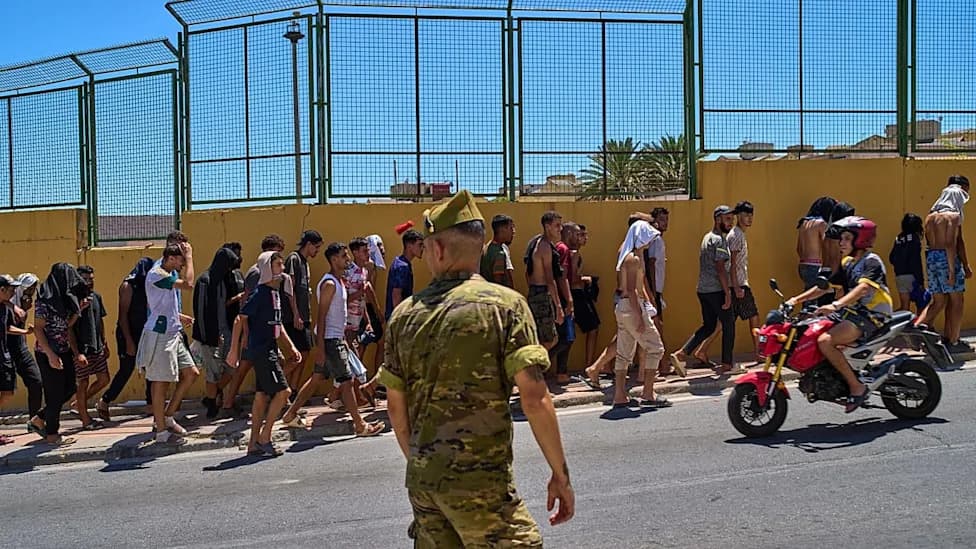
Thousands of migrants entered Ceuta on July 31, underscoring the strategic and political importance of Ceuta and Melilla as Spanish-administered enclaves on African soil. A recent Spain’s Supreme Court ruling narrowed the scope of the so-called "hot return" procedure for people intercepted at sea, a factor that may have influenced migrant perceptions and movements. Longstanding sovereignty claims by Morocco, migration pressures and the interdependence of Spain–Morocco cooperation mean the enclaves regularly become flashpoints during diplomatic tensions. The immediate challenge remains humanitarian management of migration flows while balancing legal, security and bilateral concerns.
Ceuta and Melilla: Why Europe’s African Border Keeps Becoming a Flashpoint
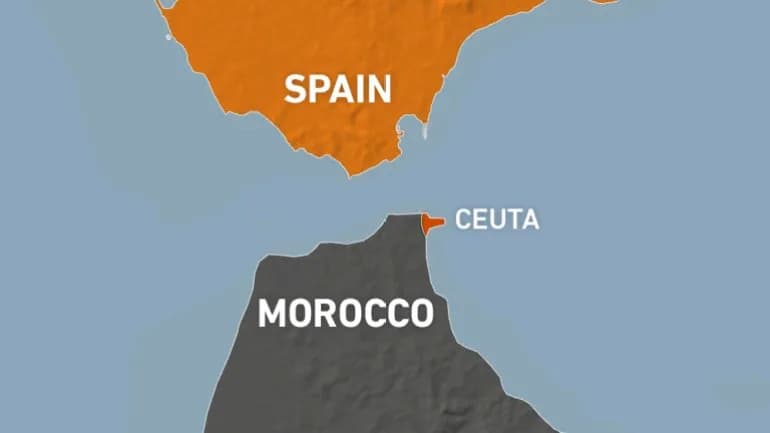
Ceuta map
Thousands of migrants crossed into the Spanish city of Ceuta from neighbouring Morocco on July 31, thrusting one of Europe’s most unusual frontiers back into the headlines. Although Ceuta and nearby Melilla sit on the northern coast of Africa and are surrounded by Moroccan territory, they are administered by Spain and form part of the European Union. Together they create the EU’s only land border with Africa, making them recurring focal points for migration, security and diplomatic tension.
Why These Enclaves Matter
Geography and Law: Because Ceuta and Melilla are Spanish territory, reaching them by land or by entering their waters can be a direct route into the European Union. That geographic anomaly makes the enclaves magnets for migrants seeking to reach Europe without attempting longer sea crossings.
Migration Pressure: The July 31 surge highlighted continuing pressure along this sensitive route. Migrant flows respond to a complex mix of conflict, poverty, smuggling networks and shifting perceptions of enforcement, so the enclaves often see spikes in arrivals when conditions change elsewhere in North Africa.
Legal And Policy Drivers
Observers linked the recent influx in part to a recent ruling by Spain’s Supreme Court. The court clarified that Spain’s so-called "hot return" procedure — which allows rapid returns for people who cross physical border barriers such as fences — does not apply automatically to migrants intercepted at sea while attempting to swim into the enclaves. The ruling did not grant migrants a right to remain or legalise irregular entry, but it was interpreted by some as making immediate removals harder for those who reach Spanish territory from the sea. That perception, combined with broader migration pressures and disinformation circulating through smuggling networks, may have influenced the surge.
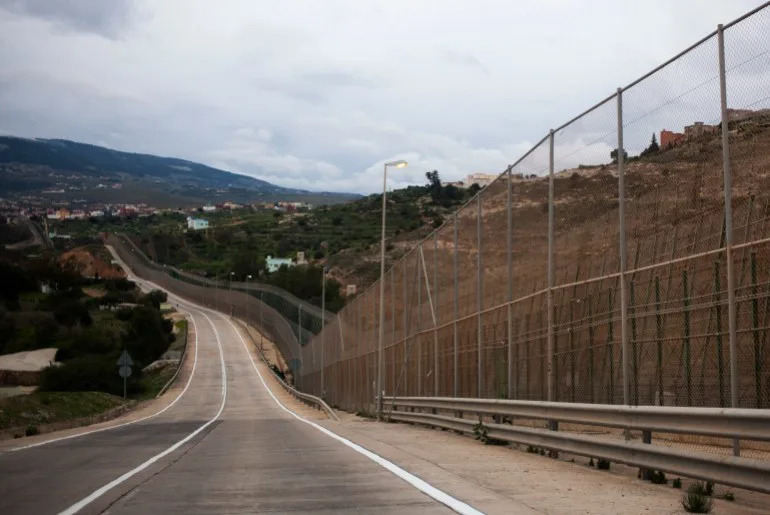
A view of the border fence separating the Spanish enclave of Melilla from Morocco in North Africa [File: AP Photo]
Politics, Diplomacy And Past Crises
Migration cooperation is tightly linked to Spain–Morocco relations. Madrid depends heavily on Rabat to manage migration routes, while Morocco uses its role in controlling flows as leverage in diplomatic relations with Spain and the EU. The link was stark in 2021, when thousands entered Ceuta amid a diplomatic spat after Spain allowed Brahim Ghali, leader of the Polisario Front, medical treatment on Spanish soil. Madrid said the move was humanitarian; Rabat viewed it as a diplomatic affront and was accused by Spain of loosening border controls during the episode.
Sovereignty And Historical Context
Under current international practice, Ceuta and Melilla are Spanish territories under Spain’s sovereignty. They are represented in Spanish political institutions and form part of the EU. They are not listed by the United Nations as Non-Self-Governing Territories, and there has been no international court decision that alters Spain’s sovereignty over them. Spain points to centuries of continuous administration, citizenship rights and constitutional integration as proof the enclaves are integral parts of the state, while Morocco contests that view on historical and geographic grounds.
The dispute has deep historical roots: the Strait of Gibraltar has long linked Europe and Africa, and medieval North African dynasties once ruled parts of the Iberian Peninsula. Portugal captured Ceuta in 1415; after later historical developments Ceuta remained under Spanish administration, and Melilla has been under Spanish control since 1497. Each country reads that shared history differently — Spain emphasises administrative continuity and legal status, Morocco highlights the enclaves' African location and colonial legacy.
Outlook
There is little sign either side wants to reopen formal sovereignty negotiations. Spain considers the status non-negotiable; Morocco maintains its claim but has prioritised practical cooperation in areas such as migration, trade and security. As a result, the dispute typically reappears indirectly during diplomatic rows, legal changes or migration spikes.
In the short term the pressing challenge is humanitarian: managing flows while safeguarding the rights and safety of people trying to reach Europe. Migration may trigger crises in Ceuta and Melilla, but the responses reflect a tangle of legal rulings, border policies and bilateral politics — which is why these small territories continue to generate outsized regional attention.
Help us improve.