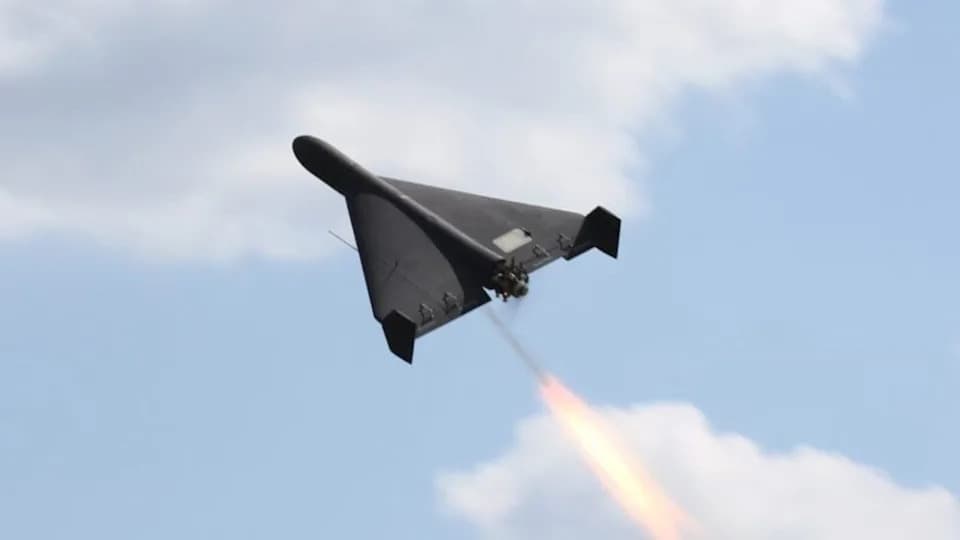
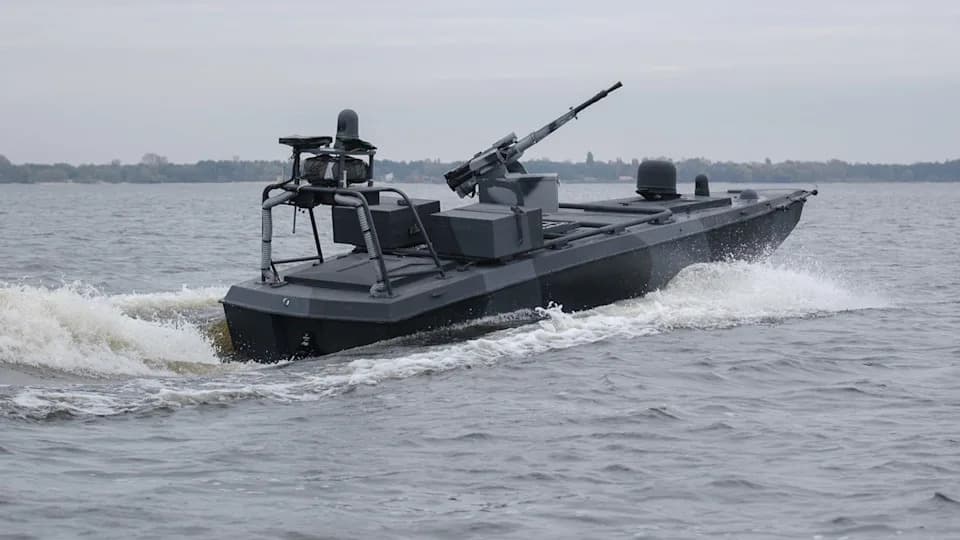
The U.S. Army's Next Generation C-sUAS Missile (NGCM) program seeks an extended-range, quick-response interceptor to defeat Group 2 and Group 3 small drones. Initial goals call for intercepts at 6 km altitude and beyond 16 km range, progressing to 8 km altitude and over 25 km range, with radar-seeker terminal guidance. The missile must be compatible with the Coyote launcher, integrate with existing Army radars, and launch in under five seconds. The program targets TRL 7 by end of FY2027 and a unit cost below $150,000 as part of a roughly 5,000-round buy.
U.S. Army Seeks Extended-Range, Low-Cost Missile To Destroy Small Drones
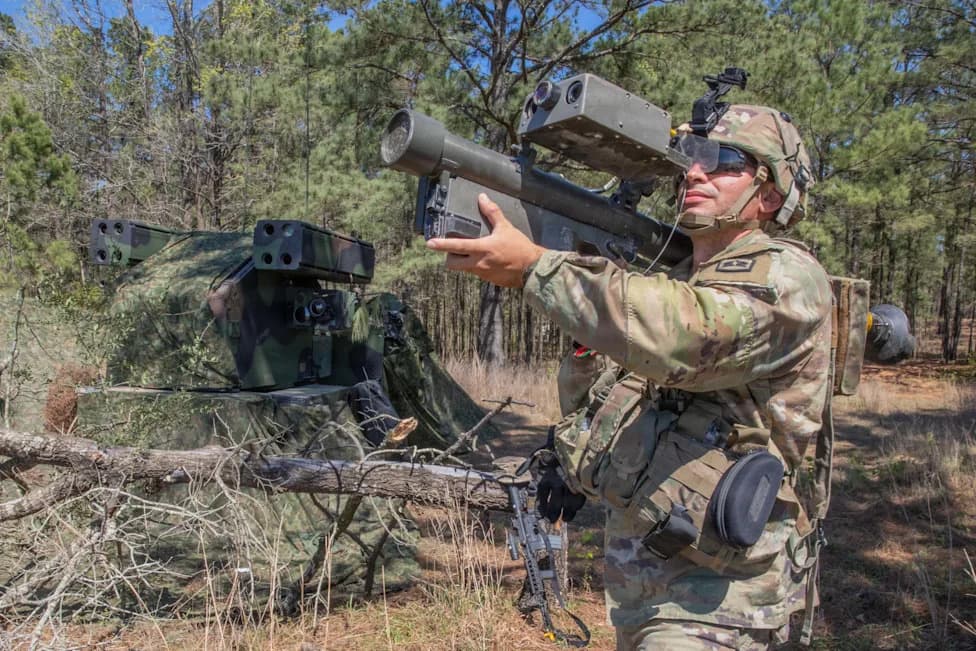
A member of the Florida Army National Guard operates an FIM-92 Stinger at the Joint Readiness Training Center at Fort Polk, Louisiana, on March 19, 2026. The Stinger is a shoulder-fired, short-range infrared homing surface-to-air missile used to destroy low-altitude aircraft, helicopters,= and unmanned aerial systems. (Sgt. Marc Morgenstern/U.S. Army)
The U.S. Army has launched the Next Generation C-sUAS Missile (NGCM) effort to develop an extended-range, quick-response surface-to-air missile specifically designed to defeat Group 2 and Group 3 small unmanned aircraft systems (sUAS).
Program Goals and Key Requirements
The Army's Sources Sought notice asks industry for a missile that can be produced quickly and integrated with existing systems. The notice sets precise performance, integration and timeline goals while seeking an affordable per-unit cost to enable large buys.
- Performance Targets: Initial intercept capability at 6 km altitude and beyond 16 km range; final objective of engaging targets at 8 km altitude and over 25 km range. Terminal guidance is expected to use a radar seeker.
- Response Time: The missile should leave the launcher in under five seconds after the fire command.
- Launcher Compatibility: NGCM must be compatible with the existing Coyote Launch System with minimal or no modifications.
- Sensor Integration: The missile must integrate with current Army air-defense sensors, including Sentinel A3/A4, LTAMDS and TPQ-53 radars.
- Variants: Two planned configurations—fixed-site installations equipped with multiple sensors, and a mobile, vehicle-mounted variant capable of operating at the halt and on the move.
Schedule, Quantities and Cost
The Army is targeting Technology Readiness Level (TRL) 7—prototype field testing—by the end of Fiscal Year 2027. Contractors should have 50 missiles ready for an operational assessment by early 2028. The Army seeks an aggressive cost target: under $150,000 per missile as part of a bulk buy of roughly 5,000 rounds.
For context, that target price is far lower than a typical Patriot interceptor (about $4 million), but critics note that some adversary drones, such as the Iranian Shahed-136, are relatively inexpensive (estimated near $35,000), which helps explain ongoing interest in lower-cost directed-energy options.
From the notice: "The Army is looking for NGCM to be produced and integrated into the existing Coyote Launch System to provide extended range, rapid launch time, and reduced time-to-target over current effectors."
Tradeoffs and Context
Missiles offer weather resilience and proven kinetic lethality, while directed-energy systems (lasers, high-power microwaves) promise near-zero per-shot costs but can be limited by atmospheric conditions and power logistics. NGCM represents a middle path: a lower-cost kinetic interceptor that expands range and response time while fitting into the Army's current systems and tactics.
Industry response deadline: August 20 (per the Sources Sought notice).
Help us improve.