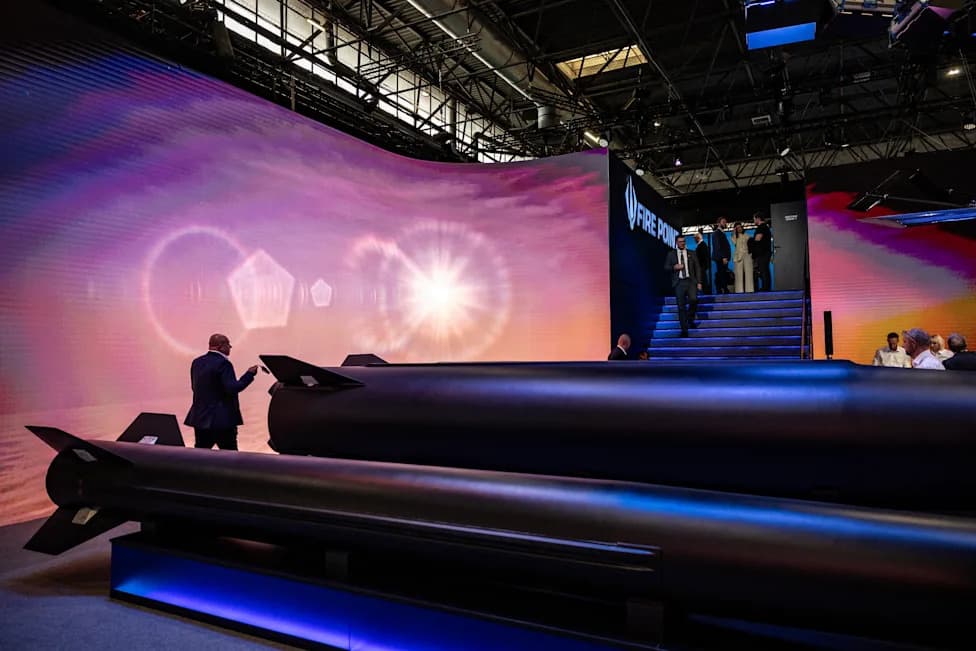
Fire Point has begun integrating European radars, trackers and seekers into the Freyja missile-defence programme, securing 13 industrial partners with the potential to expand to about 20. The company is supplying the FP7.X interceptor and aims for a first successful ballistic-missile interception by mid-2027 with a target unit cost below €1 million. The open-architecture project will allow component substitution, and Fire Point is also developing engines for its FP5 "Flamingo" cruise missile.
Fire Point Integrates European Systems into Freyja Missile-Defense Project, Targets First Interception by Mid-2027
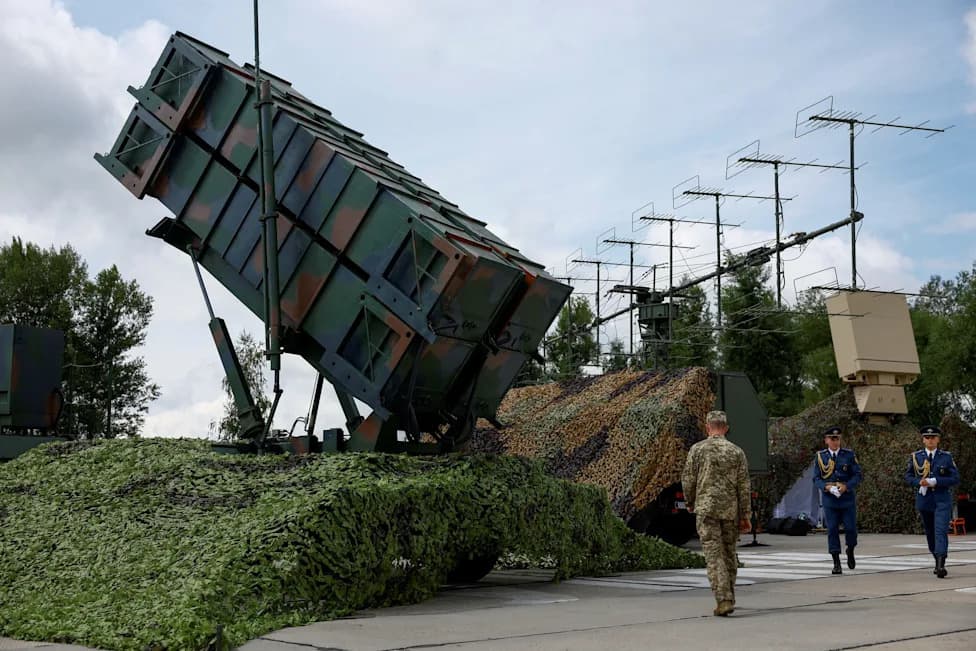
Ukrainian service members walk next to a launcher of a Patriot air defense system, amid Russia's attack on Ukraine, in an undisclosed location, Ukraine, Aug. 4, 2024. (Valentyn Ogirenko/Reuters)
Ukrainian drone and missile manufacturer Fire Point has secured agreements with more than a dozen European defence firms to supply radars, guidance units (seekers) and other subsystems for the Freyja ballistic-missile defence programme, and has begun integrating those components, CEO Iryna Terekh told Reuters.
Integration Under Way With International Partners
Launched last month in Paris by ten governments and a dozen defence firms including Eurosam, Leonardo, Thales and Saab, the pan-European Freyja programme aims to deliver an affordable interceptor capable of countering Russian ballistic missiles. Fire Point says 13 industrial partners have already joined and that number could rise to around 20 to boost production capacity.
Fire Point is supplying the FP7.X — a faster iteration of its FP7 ballistic interceptor — and is currently integrating it with surveillance and tracking radars, seekers and a command centre being developed by Norway's Kongsberg. Industry outlets have reported that Germany's Diehl Defence is in talks to provide a seeker; both Diehl and Fire Point have declined to discuss supplier details publicly.
"Right now we are in the most intense and also in the most complicated stage of finally assembling everything together with surveillance radars, with tracking radars, with the seekers," Terekh said.
Cost, Timeline And Technical Approach
Fire Point aims for a unit cost below €1 million (about $1.2 million) per interceptor — roughly one-quarter to one-sixth of a Patriot interceptor's price — and is targeting a first successful ballistic-missile interception by mid-2027. Participating companies will finance research and development until a minimum viable product (MVP) is achieved; Fire Point defines the MVP as a successful interception of a ballistic missile.
The project will adopt an open-architecture approach, enabling different components to be swapped (for example, a Weibel radar instead of one by Saab). Fire Point has conducted at least five tests of the interceptor missile to date, while an FP7 attack variant has undergone roughly 15 test launches and is in certification with Ukraine's Defence Ministry.
Operational Considerations
Fire Point expects launchers to carry four to six interceptors. Missile-expert Fabian Hoffmann of the Norwegian Institute for Defence Studies noted that to keep the probability of six consecutive misses below a 5% industry benchmark, each interceptor would need an approximate hit probability of 40%.
Fire Point also plans larger systems: the company intends to field the FP7 attack variant in combat in early autumn and the bigger FP9 ballistic missile later in the year, which the company claims will have the range to reach Moscow. Terekh said the FP7 design drew on Soviet-era S-300/S-400 interceptor concepts but now shares only about 20% commonality with those systems.
Propulsion And The FP5 "Flamingo"
Separately, Fire Point is developing an indigenous engine for its FP5 cruise missile, nicknamed the "Flamingo," which has been used to strike high-profile targets inside Russia this year. The company previously relied on recycled second-hand jet engines but is assembling the first ten prototype engines to scale production.
Note: Many technical and procurement details remain under negotiation and some claims (including cost targets and ranges) are company projections rather than independently verified facts.
Help us improve.