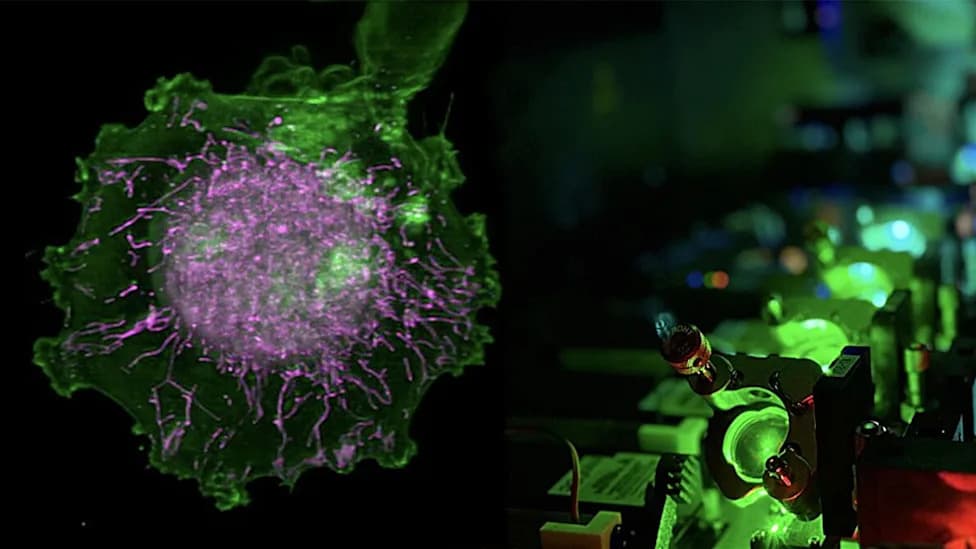
University of Queensland-led research finds mitochondrial fission — the breakup of mitochondria into smaller fragments — strengthens cells' antibacterial defenses across species. Infected mouse and human macrophages and C. elegans showed increased fission after E. coli exposure, which correlated with better bacterial clearance. The response involves antimicrobial lipid droplets and activation of UPRmt, with ATF5 moving to the nucleus to induce antimicrobial genes while limiting excessive inflammation. Inhibiting HDAC6 boosted fission and clearance, identifying a potential therapeutic target, though clinical use remains distant.
Australian Study: Mitochondrial Shape Change Boosts Cells' Ability To Clear Bacteria
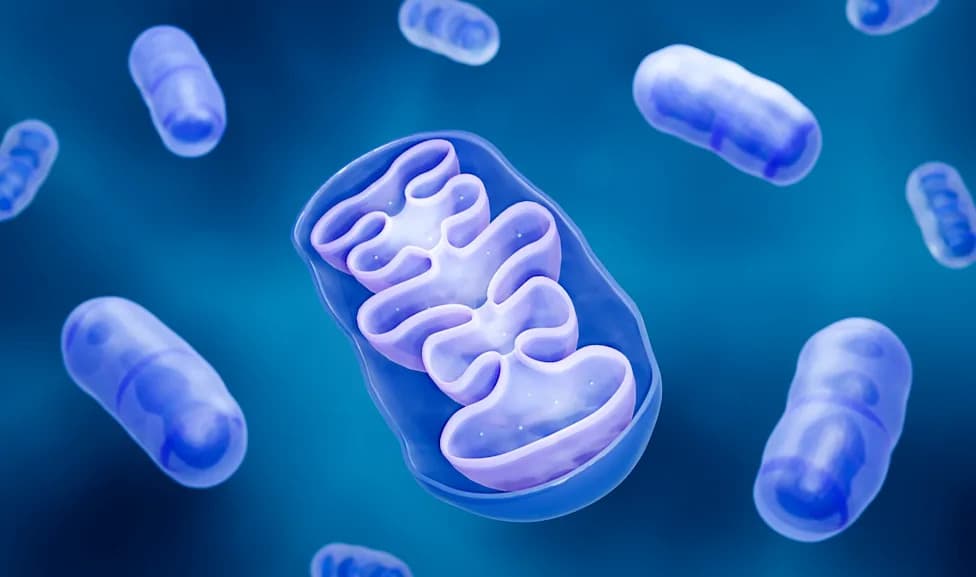
Photo Credit: iStock
Researchers led by the University of Queensland report that mitochondria — best known as the cell's energy producers — can change shape to help cells fight bacterial infection. Published in Science Immunology, the study shows mitochondrial fission (division into smaller fragments) enhances intracellular antibacterial defenses in models ranging from nematodes to mammalian macrophages.
What the researchers did
The team tested mouse and human macrophages and the nematode Caenorhabditis elegans. In each model, exposure to Escherichia coli triggered mitochondrial fission. The change in mitochondrial dynamics correlated with improved clearance of bacteria by the host cells.
How fission helps clear bacteria
The study links mitochondrial fission to two protective responses: increased production of antimicrobial lipid droplets and activation of the mitochondrial unfolded protein response (UPRmt). During UPRmt activation the transcription factor ATF5 translocates to the nucleus, where it turns on antimicrobial genes and helps limit excessive inflammation.
When researchers blocked fission and pushed mitochondria toward fusion instead, infected cells retained higher numbers of E. coli. Not all pathogens behaved the same way: Salmonella typhimurium appeared to interfere with fission, promoting its own survival inside host cells.
Potential molecular targets
The work also highlights candidate control points for future drug development. In experimental systems, inhibition of the enzyme HDAC6 increased mitochondrial fission, stimulated antimicrobial lipid droplet formation and improved bacterial clearance, suggesting HDAC6 could be a pharmacological target for hard-to-treat infections.
Ronan Kapetanovic and colleagues write that mitochondrial fission "is an evolutionarily conserved pathway that provides cell-autonomous control of infection." Claire Olingy, senior editor at Science Immunology, described the findings as revealing "a conserved, targetable axis linking mitochondrial dynamics to innate immune defense."
Implications and caveats
These results broaden our view of mitochondria beyond energy production — positioning them as active coordinators of infection signaling and immune intensity. Because the mechanism was observed in organisms from worms to mammals, it may be evolutionarily conserved, which enhances its appeal as a drug-development target.
However, authors and editors emphasize caution: clinical applications remain speculative. Additional studies are required to establish safety, specificity and efficacy in complex disease settings before any therapies based on mitochondrial modulation reach patients.
Bottom line: Modulating mitochondrial shape — particularly promoting fission — may be a promising non-antibiotic strategy to boost cellular bacterial clearance, with HDAC6 emerging as one actionable lead for future research.
Help us improve.