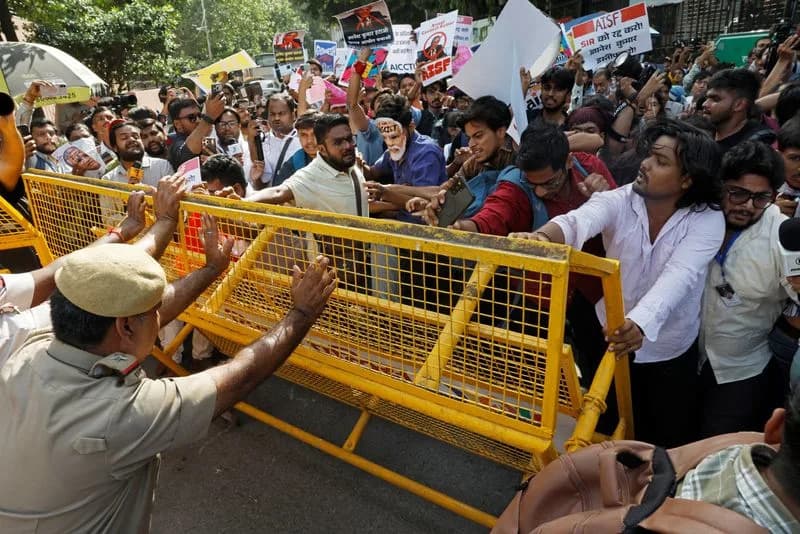
The resignation of Education Minister Dharmendra Pradhan after Gen‑Z protests over repeated exam paper leaks exposed deeper youth frustration in India about jobs and education. The government instituted fast‑track courts and appointed Nandan Nilekani to reform exams, but experts say the core problems are weak labour demand and an education system that fails to deliver employable graduates. Graduate unemployment remains around 35–40%, manufacturing’s share of GDP has fallen, and AI threatens additional job disruption — prompting calls for urgent industrial, education and vocational reforms.
Modi's Toughest Test: Managing Rising Youth Unrest Over Jobs and Education
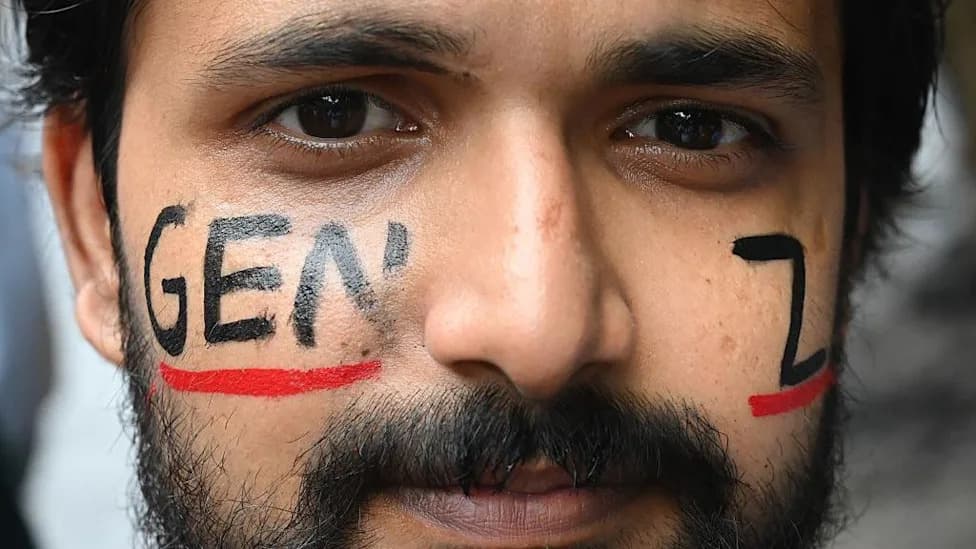
Exam leaks and a shortage of opportunities have sparked some of the biggest youth protests in years in India [Hindustan Times]
Dharmendra Pradhan resigned as India’s education minister after widespread Gen‑Z protests over repeated entrance exam paper leaks — an episode that briefly quelled a political flashpoint but exposed deeper, persistent frustrations among young Indians about jobs and education.
Prime Minister Narendra Modi responded quickly: he ordered fast‑track courts to hear cases linked to the leaks and appointed technology entrepreneur Nandan Nilekani to lead a government review of the examination system. While these steps address immediate outrage, experts warn they do not resolve structural problems that leave millions of young people without viable career pathways.
"The labour market has become brutal in the last 10 years. Non‑farm jobs have not been growing and real wages have stagnated," said Santosh Mehrotra, economist and author of India Out Of Work: Rethinking India's Growth Story.
Structural Gaps: Weak Demand and Low Employability
Mehrotra and other analysts point to two simultaneous challenges: weak labour demand across the economy, and an education system that too often fails to produce graduates with the skills employers need. Policymakers have leaned on rapid GDP growth — largely driven by infrastructure spending — as a defence. But rising unrest suggests the need for deeper reforms in both education and employment policy.
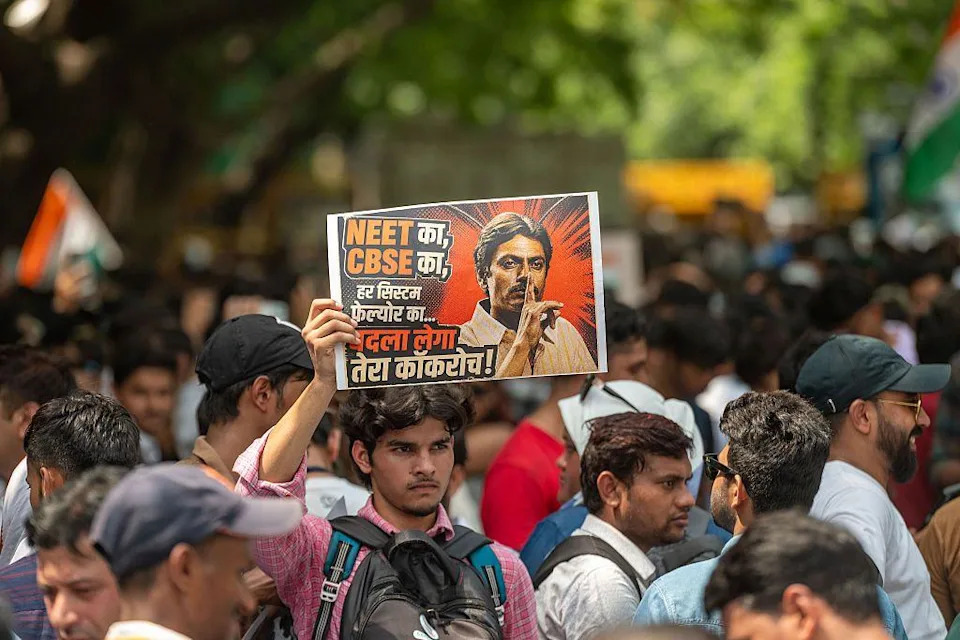
India's Gen-Z protests forced the country's education minister to resign last month [Getty Images]
Key Facts and Trends
India now has the world’s largest youth cohort — more than 360 million people aged 15–29. Enrollment and the number of private colleges and vocational institutes have grown in recent decades, yet the transition from education to steady employment remains problematic.
According to the State of Working India 2026 report (Azim Premji University), youth unemployment rates are roughly four times higher than for older cohorts and exceed global averages. Graduate unemployment has hovered around 35–40% for the past 25 years, and the expansion of graduates has outpaced graduate job growth.
Historical comparisons highlight the scale of the problem: in 1983, 4% of 20–29‑year‑olds were graduates and 13% of those graduates were unemployed. By 2023, 28% held degrees and 67% of those graduates were not in employment. Between 2004–05 and 2023, India produced roughly five million graduates annually, but only about 2.8 million found jobs each year; an even smaller share secured salaried employment.
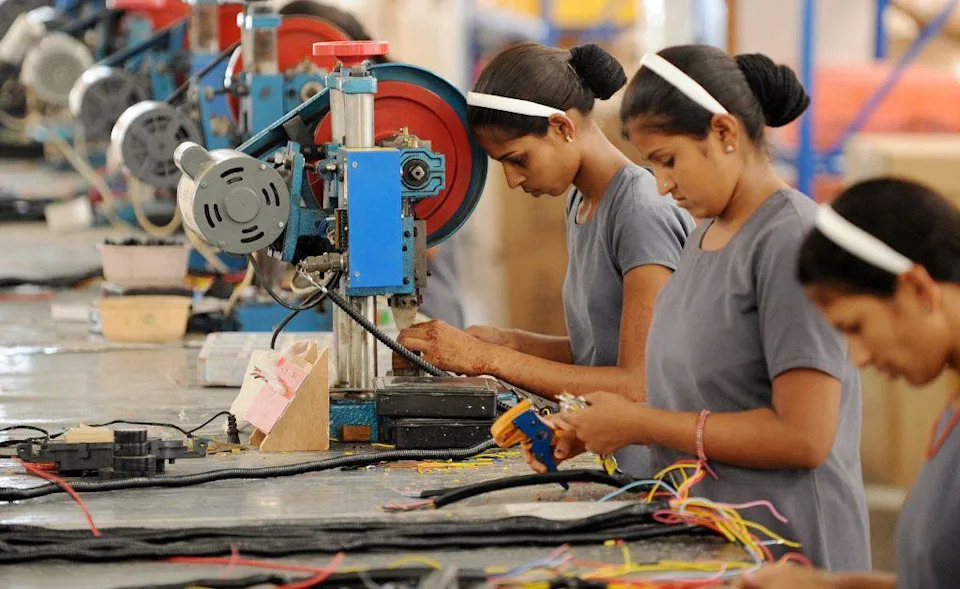
Share of manufacturing in India's GDP has fallen in recent years, feeding into the jobs crisis [Getty Images]
Jobs Composition, Manufacturing Decline, and Disguised Unemployment
Manufacturing’s share of GDP has fallen from around 17% in 2015 to roughly 14% today, limiting the creation of stable, higher‑paying jobs typically available to graduates. Meanwhile, total employment in agriculture rose by about 80 million people after 2020 — a sign of disguised unemployment as workers remain in lower‑productivity sectors instead of moving into manufacturing or services.
Small and medium enterprises (SMEs) have also struggled to recover from policy shocks — including demonetisation in 2016 and uneven implementation of the goods and services tax — constraining job creation in the sectors that historically absorb large numbers of workers.
Technological Disruption and the Future of White‑Collar Jobs
New technological headwinds complicate the picture. Goldman Sachs estimates that 8–12% of India’s non‑farm jobs could be substituted by artificial intelligence, and indicators from the IT sector show early signs of stress: single‑digit hiring growth, a rise in unstable contract work, and stagnant wages. A recent protest by HCL Technologies employees in Chennai, chanting for higher pay, highlighted worker frustration in an industry long seen as a reliable path to the middle class.
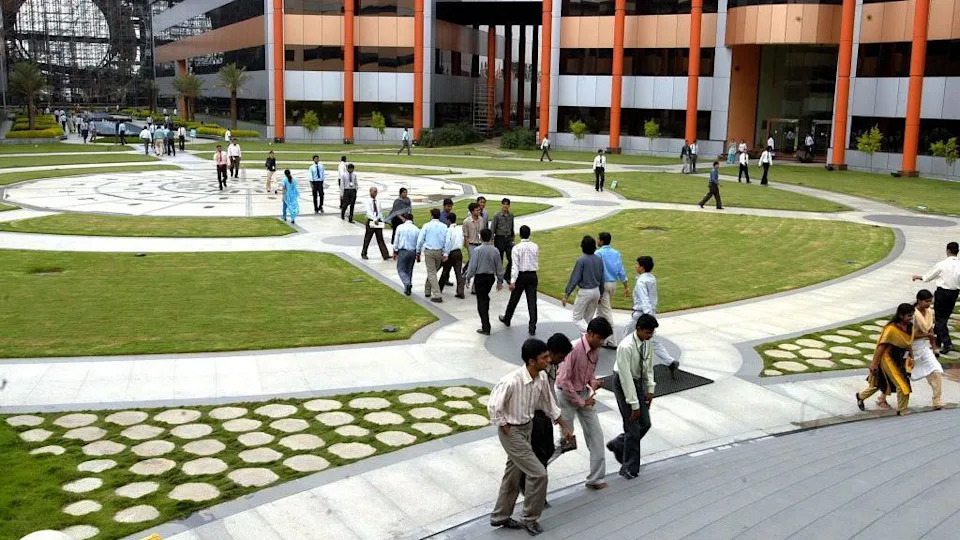
India's $300bn software industry is feeling the heat because of AI [The The India Today Group via Getty Images]
Neeti Sharma, CEO of TeamLease Digital, argues that employers increasingly hire for demonstrable skills rather than degrees. This implies universities and training institutes must pivot toward vocational instruction, apprenticeships, and skills‑based curricula to improve employability.
Policy Choices Ahead
Analysts say the government faces a multi‑front task: reforming examinations and higher education, scaling vocational and technical training, supporting SMEs, and designing an industrial strategy to revive manufacturing and create mass employment. While the expansion of direct cash transfers and welfare programs suggests recognition of the problem, structural change will demand sustained policy action, investment, and private‑sector engagement.
If left unaddressed, persistent youth unemployment and underemployment could fuel further unrest and erode social mobility for a generation that expects better living standards than their parents. Experts warn that short‑term fixes may ease political pressure but only deeper reforms will prevent recurring crises.
Follow‑up: Policymakers must align education with market realities, incentivise manufacturing and SME growth, and expand high-quality vocational pathways to ensure that India’s demographic dividend becomes a genuine economic advantage rather than a source of social strain.
Help us improve.