Ian Bremmer highlights a widening gap between President Trump’s threats to strike Iran and his repeated reluctance to follow through. The risk that Iran could retaliate against vulnerable Gulf energy and water infrastructure frequently deters U.S. escalation. With the Strait of Hormuz effectively impassable and Iran feeling advantaged, Washington faces a choice: accept a deal that looks like a loss or bear the costs of a prolonged stand-off. Bremmer argues that American restraint is shaping the outcome.
Why Trump Keeps Backing Down on Iran — Bremmer on U.S. Restraint and the Stakes in the Strait of Hormuz
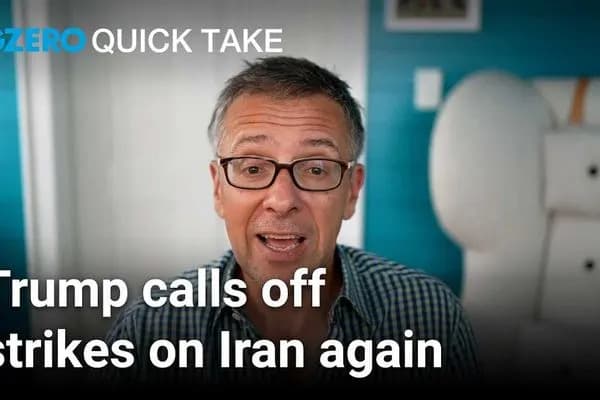
Why Trump keeps backing down on Iran
In his latest Quick Take, political risk expert Ian Bremmer examines a widening gap between President Donald Trump’s repeated threats to strike Iran and his consistent reluctance to authorize military action. Bremmer argues that whenever the risks to Gulf infrastructure rise, U.S. policymakers pull back from escalation.
Why Threats Have Not Turned Into Strikes
Trump has warned several times that he could target Iran’s critical infrastructure, but the prospect of Iranian retaliation against fragile Gulf energy and water systems appears to check those impulses. That restraint is consequential: it signals limits to U.S. willingness to endure the risks and costs of direct military confrontation.
"The more meaningful thing is not that the ceasefire broke down, but that the Americans are very reluctant" to escalate, Bremmer says.
Iran’s Leverage and the Strait of Hormuz
Iran appears to believe it holds the stronger hand in the standoff around the Strait of Hormuz. With the waterway still effectively impassable, Tehran has an incentive to wait for a better settlement rather than accept terms immediately. That posture forces Washington into a difficult calculus: accept an agreement that "clearly looks like a loss," or continue shouldering the economic and political costs of a prolonged stand-off.
The dynamics matter beyond diplomacy: they affect global energy markets, regional stability, and the political risks for leaders weighing whether to escalate. Bremmer frames American restraint as a decisive factor shaping how the confrontation unfolds.
Help us improve.