Britain's brick-and-concrete homes store daytime heat and release it overnight, keeping indoor temperatures high and endangering vulnerable people who need nighttime cooling. Urban heat islands can make nights up to 12.6°F warmer and were linked to roughly half of 130 heat-related deaths in a West Midlands event. Experts recommend prioritising passive cooling (shade, reflective roofs, ventilation and fans) while also pursuing emissions reductions. A £2,500 subsidy for reversible heat pumps exists but has low uptake and excludes social housing.
Brick Homes Trap Heat Overnight in Britain, Putting Vulnerable People at Risk
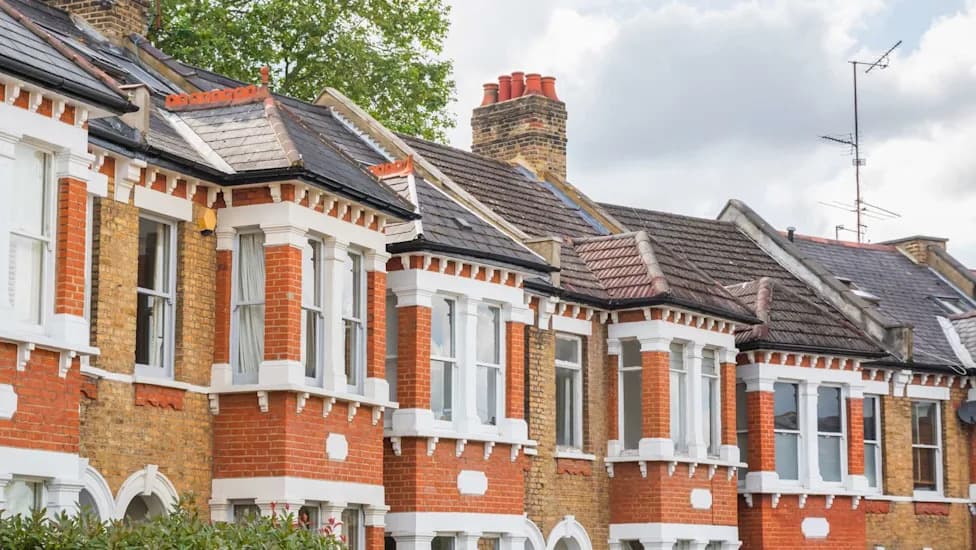
Photo Credit: iStock
Britain's traditional brick-and-concrete homes — built to hold in warmth during cold months — are increasingly a hazard during summer heatwaves. These materials absorb heat by day and radiate it back at night, keeping indoor temperatures high when people most need cooling to recover.
Why Nighttime Heat Is Dangerous
When buildings retain heat overnight, it prevents the body from cooling down and makes sleep difficult. Nighttime heat is particularly hazardous for older adults and people with pre-existing health conditions. One resident, Mandy Bourne, described the effect on her health: "I've got COPD and sometimes I can't breathe."
The Urban Heat Island Effect
In built-up areas the urban heat island effect can leave nights as much as 12.6°F warmer than nearby rural locations, amplifying indoor heat exposure in cities. Researchers who studied a past West Midlands heatwave estimated that the heat-island effect contributed to roughly half of the 130 heat-related deaths recorded during that event.
Cooling Options: Trade-Offs and Gaps
Only about 5% of homes in England have air conditioning. Experts are divided on widespread AC adoption: some argue that air conditioning should be a last resort because passive measures (reflective roofs, shading, ventilation and fans) are cheaper and less power-intensive; others point out the tension between efforts to insulate homes tightly for winter and the need to cool them in hotter summers.
Equity Concerns: Baroness Brown (Julia King), who chairs the Climate Change Committee's Adaptation Committee, warns that the poorest neighbourhoods face harmful heat exposure at more than seven times the rate of other areas. Social housing tenants may therefore be among those living in the hottest indoor conditions while having the fewest options to improve them.
Financial Support — Limited Reach
Since April, households in England and Wales can apply for up to £2,500 (about $3,360) toward a reversible air-to-air heat pump that provides cooling in summer and heating in winter. Uptake has been low, and the scheme excludes social housing and new builds, leaving many of the most vulnerable residents without access to this support.
What Experts Recommend
Many researchers advocate prioritising passive cooling measures—shade, reflective roofs, improved natural ventilation and ceiling fans—because they lower indoor temperatures without adding major strain to the electricity grid. At the same time, experts increasingly argue Britain needs both stronger heat adaptation and continued emissions reductions rather than relying on one approach alone.
Bottom line: As heatwaves become more frequent and intense, Britain faces a dual challenge: adapting existing homes to keep people safe in summer while continuing to reduce emissions. Policies and funding that reach low-income and social housing residents will be crucial to protect those most at risk.
Help us improve.