The Antrim Shale — an ancient, organic‑rich gas field — hosts a diverse deep subsurface community including fungi, rotifers, segmented worms and tardigrades. Researchers recovered DNA from water pumped from wells 247–556 meters deep and identified signatures of 689 likely fungal species, culturing 205 strains (13 possibly new). Dominant fungi groups appear adapted to degrade tough carbon compounds, suggesting an important role for fungi in subsurface carbon cycling and raising concerns that industrial drilling and biocide use may threaten these isolated biodiversity hotspots.
Deep Hidden Life: Rock‑Eating Fungi, Tardigrades and Worms Discovered in US Gas Shale
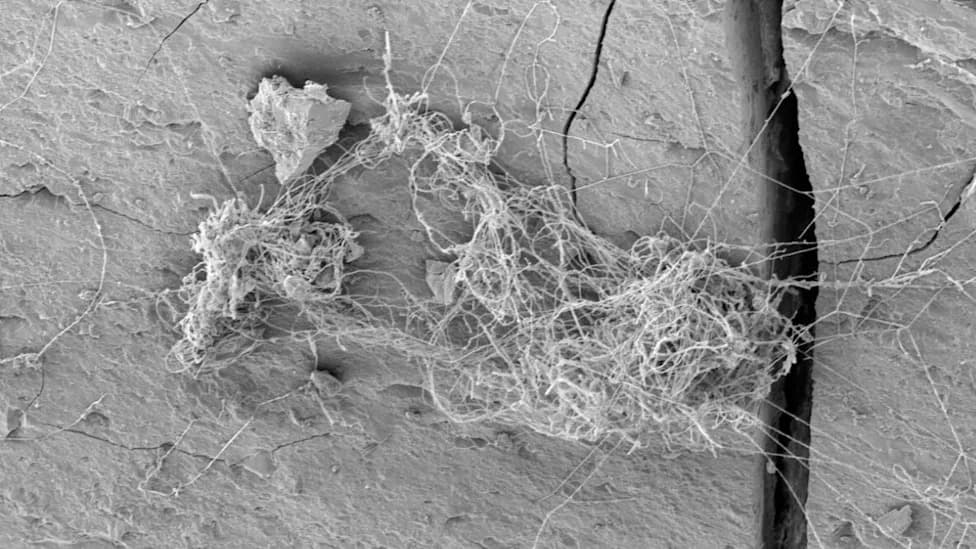
Researchers have cultured hundreds of fungal strains from water samples pumped out of gas wells. (Quinn Moon, University of Michigan)
Life persists in nearly every corner of Earth — even far below the surface. Scientists exploring the Antrim Shale, an organic‑rich gas field in the United States, have uncovered a surprisingly complex subterranean ecosystem containing fungi, microscopic animals and parasites thousands of meters below ground.
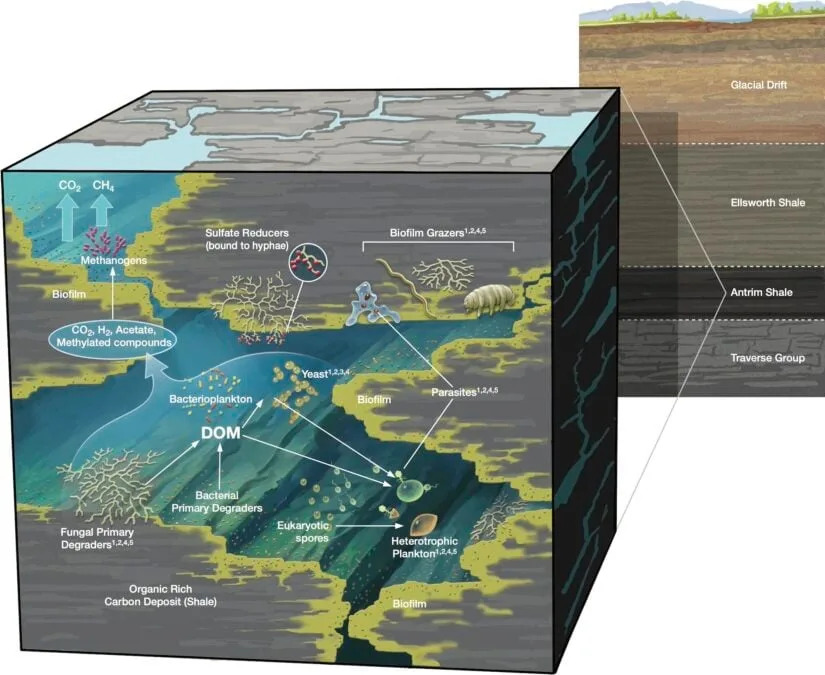
Organic-rich rocks and water deep within the Antrim Shale teem with life. They are packed with fungi and other tiny organisms. (John Megahan/University of Michigan)
What the Researchers Did
Teams collected water produced from wells drilled 247–556 meters (810–1,824 feet) into the Antrim Shale. They filtered large volumes of that produced water, extracted DNA for metabarcoding, plated samples on nutrient media to culture organisms, and used microscopy and staining to count cells.
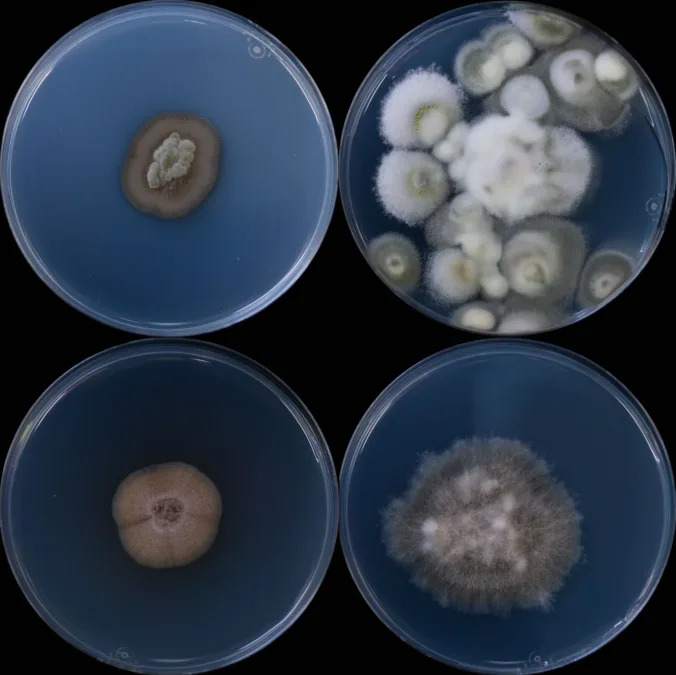
The researchers isolated and grew more than 200 kinds of fungi from the deep subsurface to better understand how fungi survive in extreme environments, how underground ecosystems function, and what happens to carbon stored in Earth's crust. (Ronan Montgomery-Taylor/University of Michigan)
Key Findings
The DNA analyses revealed signatures consistent with 689 likely fungal species. The team was able to culture 205 fungal strains, of which 13 appear to be previously undescribed. Two fungal classes dominated the community: Agaricomycetes (many mushroom‑forming relatives) and Dothideomycetes. Fungi accounted for roughly one‑sixth of the microbial biomass in the water samples—about 250 fungal cells per drop.
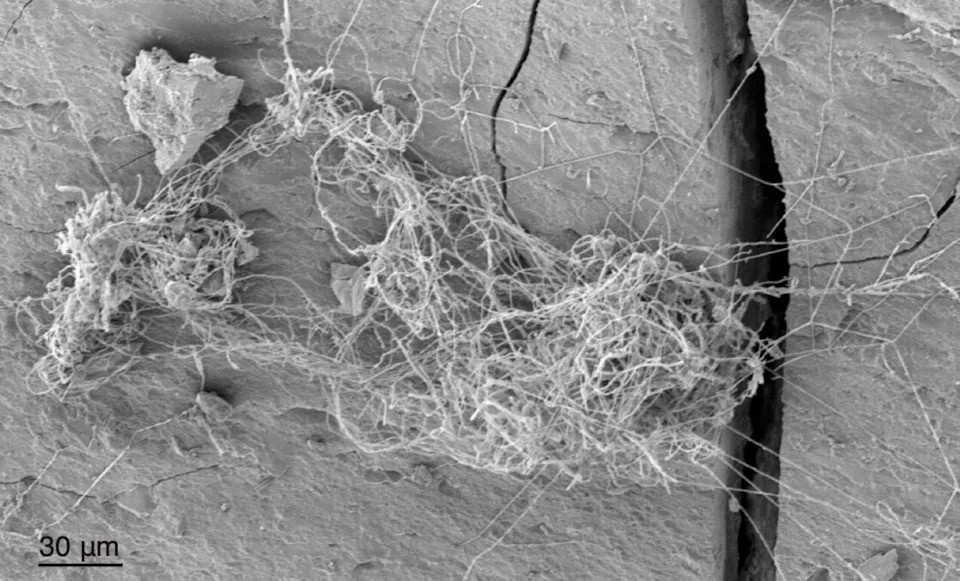
Research is ongoing to screen the fungi's ability to break down coal, shale, oil, plastic and other difficult substrates. (Quinn Moon, University of Michigan)
Beyond fungi, the surveys detected DNA from microscopic animals and parasites including rotifers, segmented worms, tardigrades, and roundworms, plus intracellular parasites such as Ichthyosporea (animal parasites) and Rozellomycota (fungal parasites).
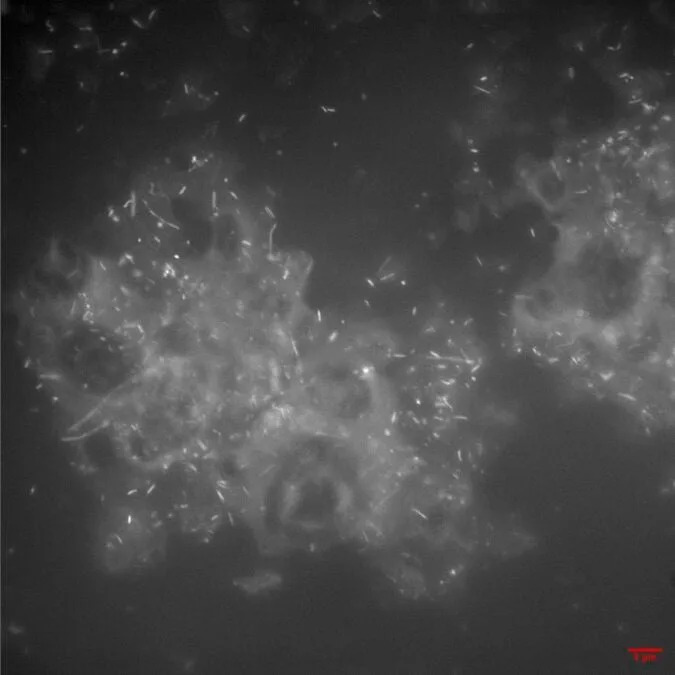
The researchers used a stain to count the number of fungi cells within each sample taken from Earth's subsurface. (Quinn Moon/University of Michigan)
How They Might Survive
Many of the dominant fungi are known on the surface to degrade lignin and cellulose — carbon compounds that are difficult for other organisms to digest. The authors suggest these fungi likely employ extensive enzyme toolkits to break down lignin‑ or cellulose‑like compounds in shale, giving them an advantage deep underground.

Subscribe to ScienceAlert's free fact-checked newsletter
Oxygen conditions at depth remain uncertain because pumping groundwater to the surface can introduce dissolved oxygen into samples. Previous studies of the Antrim Shale reveal methane‑producing archaea, consistent with low‑oxygen conditions. Some researchers have proposed that dark oxygen production by certain microbes is possible, but more work is needed to resolve how these communities obtain the oxygen they need, if at all.
Age, Origin and Human Threats
Isotope data and salinity gradients suggest the sampled waters have been geochemically stable since the Late Pleistocene. Much of this water has been isolated for roughly 11,000 years, likely introduced when melting ice caps percolated into shale fractures and pore spaces. That long isolation implies these communities may have adapted to unique subterranean conditions over millennia.
However, industrial activity already disturbs these habitats. The Antrim Shale contains many wells, and some are treated with biocides. The authors warn that these sites could be both hidden biodiversity hotspots and vulnerable to anthropogenic destruction.
Implications for Carbon Cycling
About 90% of Earth's organic carbon is stored in the deep subsurface. If fungi and other organisms actively degrade that carbon, it could reduce the permanence of subsurface carbon stores and increase the potential release of methane and other gases to the atmosphere. The study argues that fungi should be included in models of deep carbon cycling and sequestration.
Methods and Publication
The research combined DNA metabarcoding, laboratory cultivation, and microscopy/staining. The findings were published in The ISME Journal, and the work highlights the need for further study of deep subsurface ecosystems and the conservation implications of subsurface resource extraction.
Note: While the study documents genetic evidence and cultured fungi, uncertainties remain about the physiology, activity levels, and life cycles of the organisms detected; further experiments are underway to test substrate degradation (including coal, shale, oil and plastic) and oxygen dynamics in these environments.
Help us improve.