The Porto degli Angeli Berico Maritime Amphitheater near Arcugnano, Italy, was marketed as an ancient Roman site but investigators found it to be a modern construction. Franco Malosso was convicted of art forgery and illegal construction and sentenced to two years and four months in prison, with fines and court orders to restore the site. Satellite imagery, modern building materials and fabricated historical claims helped prosecutors prove the fraud. The 53,000-square-foot site has been sealed since 2016 but remains standing while legal requirements are not yet fully implemented.
How a Fake 'Ancient' Roman Theater Fooled Tourists — Owner Convicted in Italy
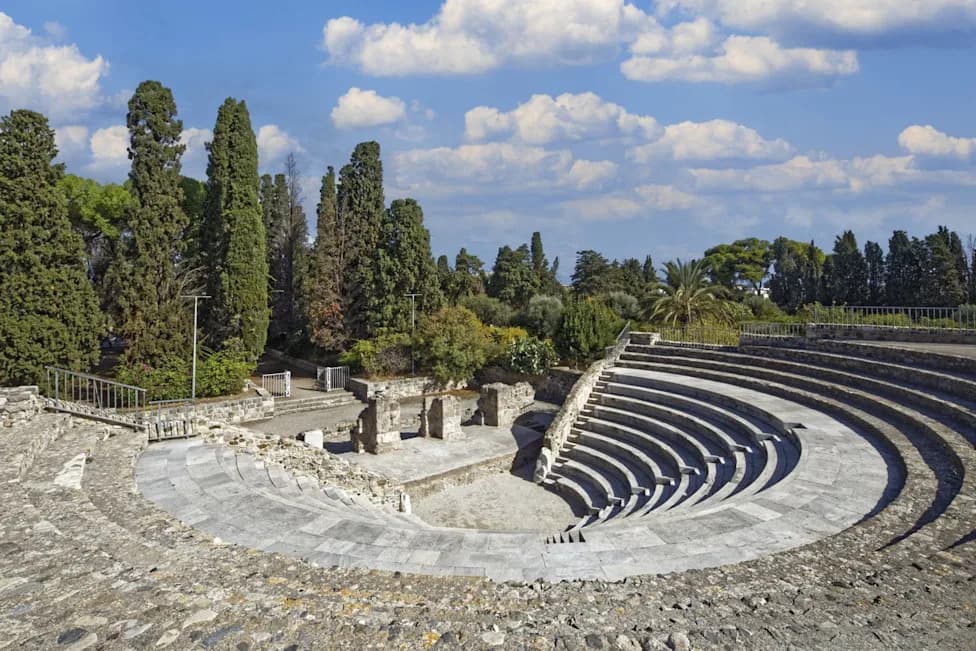
Italy's 'Ancient' Roman Theater Was FakeimageBROKER/Norbert Probst - Getty Images
An elaborate tourist attraction near Arcugnano in the Italian province of Vicenza that was marketed as an ancient Roman amphitheater has been exposed as a modern fabrication, court records and investigators show. The promoter, Franco Malosso (also known by the full name Franco Alessandro Molosso Maltarel von Rosenfranz), constructed and sold the site to visitors as the so-called Porto degli Angeli Berico Maritime Amphitheater — commonly referred to as the Berico Amphitheater — charging admission for guided tours.
Investigation and Conviction
Italian prosecutors determined that the 53,000-square-foot hillside site was not archaeological but recently built using contemporary materials. The Vicenza Public Prosecutor's Office charged Malosso with counterfeiting works of art and illegal construction. After a trial, an appeal, and a later request for probation, judges upheld his conviction and sentenced him to two years and four months in prison, along with fines and court orders to restore the landscape. Authorities say the restoration and dismantling orders have not been fully carried out.
How the Fraud Was Constructed
Investigators found that the site combined concrete pillars, modern masonry blocks, fiberglass components, papier-mâché overlays and statues made in the 2000s. Builders masked these contemporary elements with putty and artificial weathering to simulate age, and an artificial pond was added to complete the staged setting. Satellite imagery and land records contradicted Malosso’s claim that the site was revealed by a 2005 landslide; instead they show deliberate earthworks and a leveled slope consistent with new construction.
False Historical Claims and Red Flags
Malosso reportedly told visitors the complex dated to 393 C.E. and even claimed that Julius Caesar visited it with Cleopatra — a chronological impossibility. He also linked a small onsite church to Juliet Capulet, a fictional character from Shakespeare, and conflated Vicenza with Verona in the process. Experts pointed out another basic error: an amphitheater is typically an elliptical arena (like the Colosseum), while the Berico site is semicircular and more accurately described as a theater.
Visitors, Accountability and Broader Lessons
For several years some visitors enjoyed the theatrical atmosphere and paid admission fees (reports indicate up to €40), while others recognized inconsistencies and raised questions. The episode highlights how modern materials and skillful staging can create convincing forgeries and underscores the need for due diligence by tourists, platforms that promote attractions, and heritage authorities. Although the constructed theater has been under judicial seal since 2016, it remains physically in place while legal and restoration processes continue.
Bottom line: This case is a high-profile example of cultural fraud that combines illegal construction, fabricated history and commercial exploitation of tourists.
Help us improve.