Republicans are divided over President Trump’s push to cancel the August congressional recess to force a vote on the SAVE America Act. Some senators warn that staying in Washington would cost the GOP precious campaign time in competitive races, while others say they will remain if it could change votes. With the Senate short on support, most acknowledge the bill faces steep odds without persuading holdouts or flipping Democrats.
Trump's Push To Cancel August Recess Puts Vulnerable Republicans Between Campaigning And A Stalled Bill

President Donald Trump announces the Freedom Haulers initiative on West Executive Avenue in Washington, D.C., on July 30, 2026.
Republican lawmakers face a high-stakes choice: return to their districts to campaign ahead of the midterms or stay in Washington to try to advance former President Donald Trump’s top legislative priority, the SAVE America Act. The dispute has exposed a growing rift in the GOP over whether cancelling the August recess would help enact the bill or simply cost the party critical seats this fall.
Background
With lawmakers preparing to leave Washington, Trump has urged Republicans to remain in session until the SAVE America Act — a package that includes voter ID provisions and other election measures — is passed. Many Republican operatives and incumbents worry that staying in town could deprive candidates of crucial face time on the campaign trail and send the wrong message to voters.
What's at Stake
The GOP enters the midterms with several vulnerable incumbents and a narrow path to retaining Senate control. Opponents of cancelling the recess say the political cost could be steep: members would miss district events, town halls and local outreach that are essential in tight races.
Senators' Positions And Political Calculus
Sen. Thom Tillis (R-N.C.) warned that cancelling the August recess would be "tone-deaf," comparing it to calls in 2020 to keep members off the trail after the party lost competitive Senate seats. "If we don't keep majorities, people are gonna regret it," Tillis told Fox News Digital.
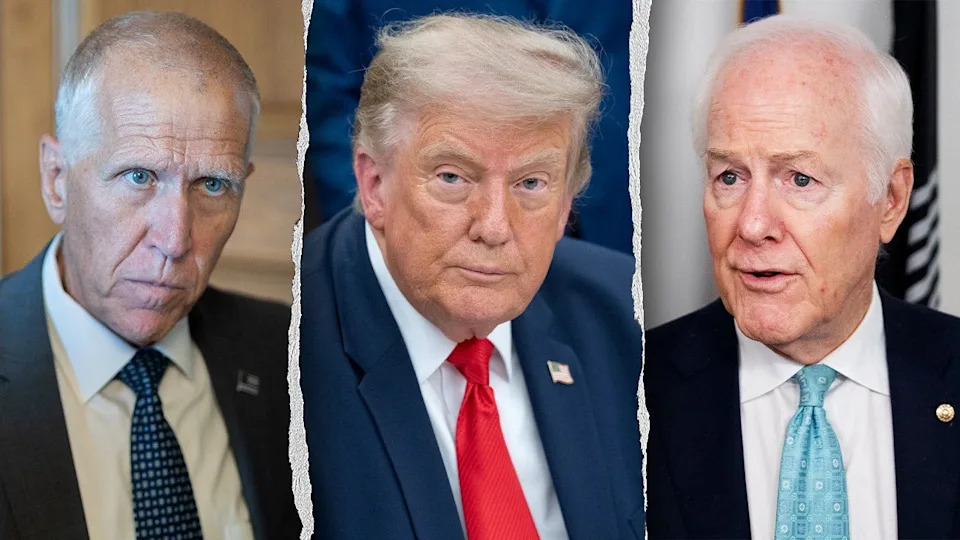
Republican Sens. John Cornyn and Thom Tillis are obstructing President Donald Trump's attorney general nominee Todd Blanche.
"Canceling August recess...is about as tone-deaf as telling everybody to stay home in 2020 when we lost [Kelly] Loeffler and [David] Perdue." — Sen. Thom Tillis
Other Republicans, however, back staying in session until the legislation advances — even if that means trying reconciliation or pushing to change Senate rules. Senator John Cornyn (R-Texas) called the effort futile if it would not change votes, but acknowledged his own position might have differed had he been running for re-election.
Several Republicans in competitive contests have publicly supported the bill, while also admitting the Senate faces a straightforward arithmetic problem: without persuading a bloc of GOP holdouts or flipping multiple Democrats, the SAVE America Act is unlikely to pass.
Legislative Reality
Supporters argue short extensions in session — a week or 10 days — could be worth it if there is a realistic chance to change the outcome. Opponents emphasize the optics and on-the-ground political cost of keeping incumbents away from voters, especially in districts and states where retail politics and local outreach matter.
Sen. Roger Marshall (R-Kan.) summed up the dilemma: he would remain in Washington longer if he believed it would change votes, but he also acknowledged the downside of returning home empty-handed. "The base would be mad if we don't make the best effort possible to get this voter ID across the finish line," Marshall told Fox News Digital.
Bottom Line
The debate over cancelling the August recess highlights a broader tension in the GOP between pursuing a major legislative objective and safeguarding vulnerable seats ahead of the midterms. With the Senate math stacked against easy passage, many Republicans say their decision will come down to whether extra days in session could realistically flip holdouts — a prospect many view as unlikely.
Help us improve.