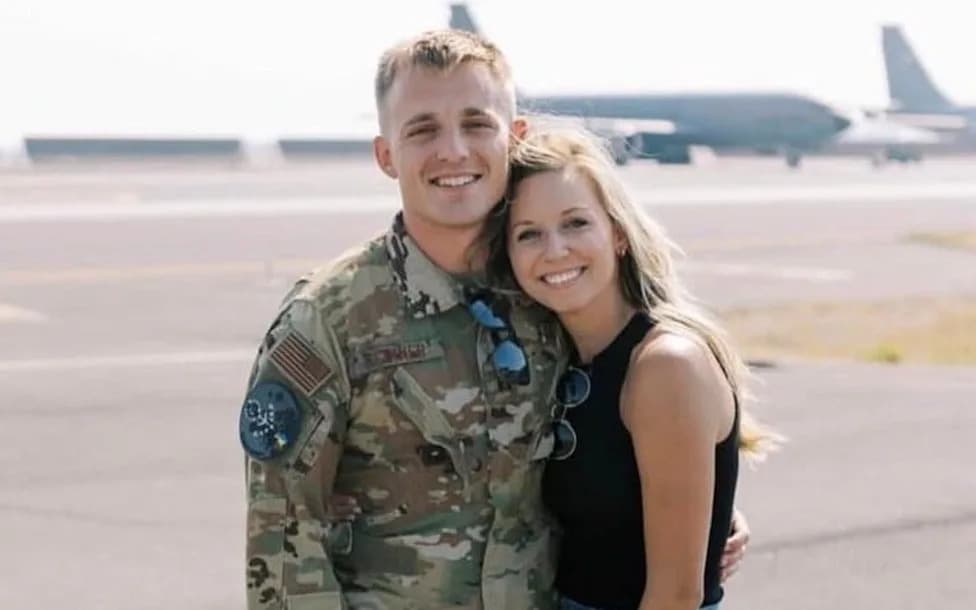
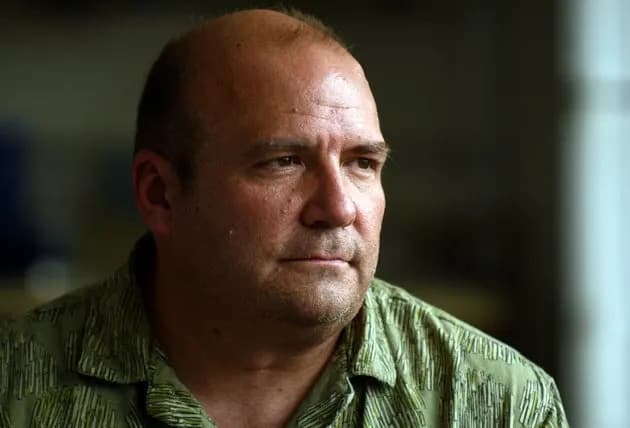
The article recounts how explosively formed penetrators and other weapons—found by federal courts to be supplied and supported by Iran’s IRGC and Quds Force—killed and wounded U.S. service members in Iraq. Families of victims, including Sgt. Robert Bartlett and the families of Capt. Shawn English and Maj. Stuart Wolfer, sought legal recognition under the FSIA terrorism exception and won judgments that Iran has not paid. While the court findings confirmed Iran’s role, survivors and relatives continue to grapple with lasting trauma and unresolved accountability.
Decades-Long Campaign: How Iranian-Supplied Weapons Shaped the War Against U.S. Troops
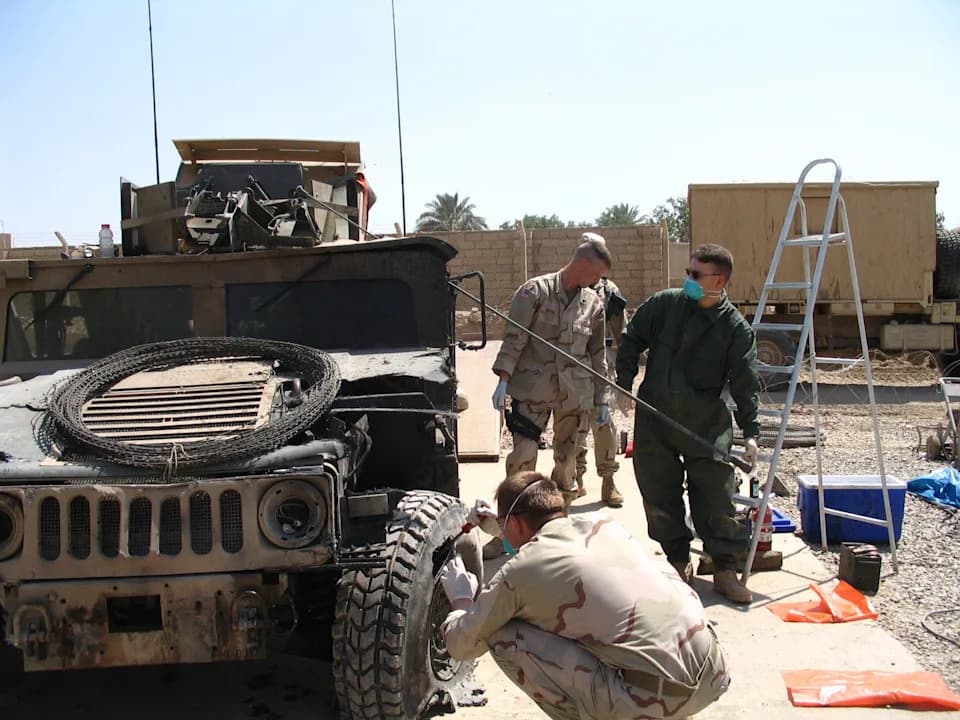
The vehicle driven by Sgt. Robert Bartlett after it was struck by an explosive device on Route Pluto in Baghdad on May 3, 2005. Staff Sgt. William Brooks was killed, while Bartlett and two other soldiers were wounded.
Nearly two decades before the most recent hostilities with Iran, explosively formed penetrators (EFPs) and other weapons ripped through U.S. armored vehicles and struck personnel in Iraq. Federal court findings later tied many of those attacks to an organized Iranian campaign that armed, funded and trained proxy militias—leaving families with lifelong losses and unanswered questions.
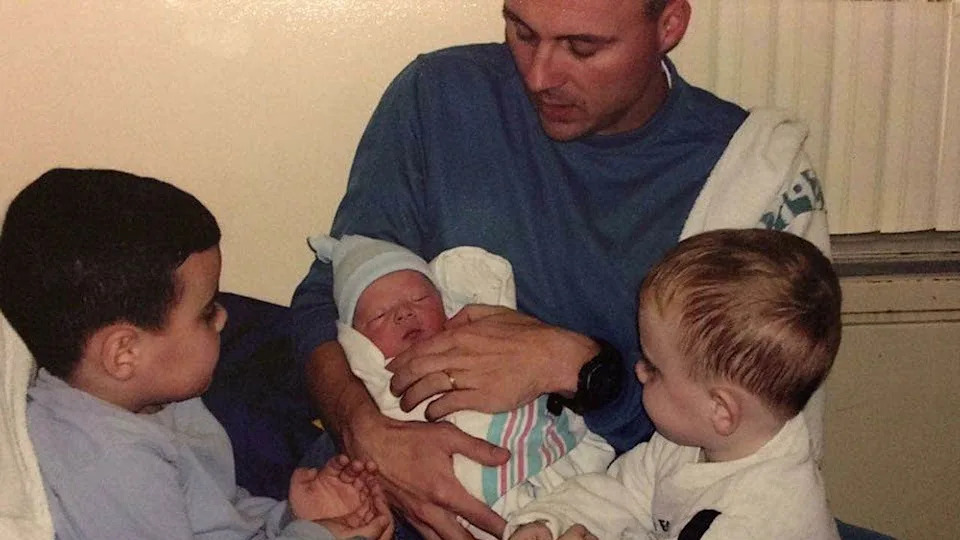
Capt. Shawn English with his three sons. English was killed in Baghdad on Dec. 3, 2006, when an Iranian explosive device struck his vehicle.
The Attacks and the Survivors
On May 3, 2005, retired Staff Sgt. Robert Bartlett was driving an armored Humvee on Route Pluto in Baghdad when an EFP tore into the vehicle. Staff Sgt. William Brooks was killed, and Bartlett and two other soldiers were grievously wounded. Bartlett suffered catastrophic facial and dental trauma and underwent four years of surgeries, reconstruction and rehabilitation at Walter Reed.
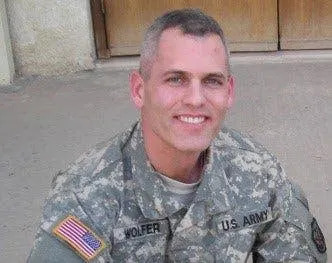
Maj. Stuart Wolfer, who was killed in Baghdad on April 6, 2008, when an Iranian rocket struck a gym on a U.S. base.
Capt. Shawn English, serving on a military transition team, died after an EFP struck his vehicle on Dec. 3, 2006. Maj. Stuart Wolfer was killed on April 6, 2008, when a rocket struck a gym inside a U.S. base in Baghdad’s International Zone, mortally wounding him and another officer.
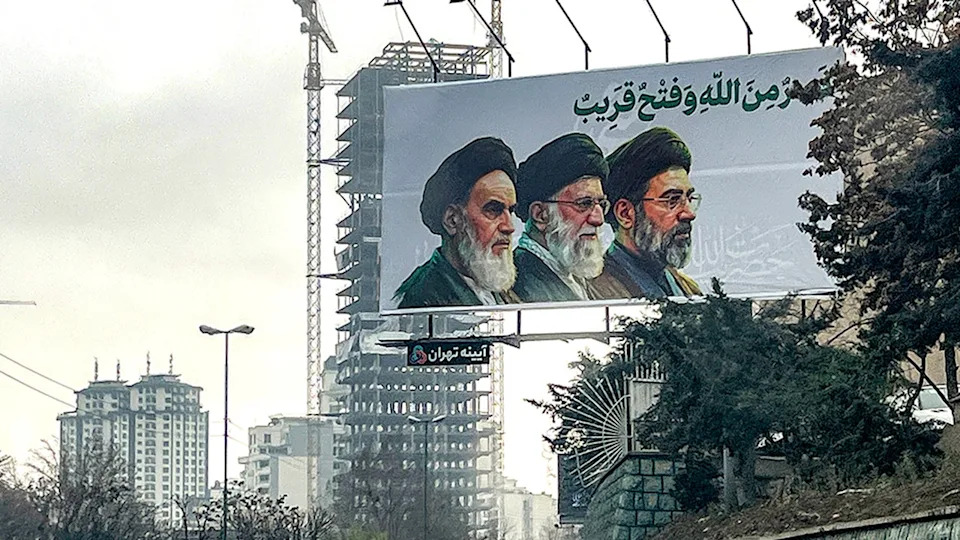
A billboard depicting Iran's supreme leaders since 1979 is displayed above a highway in Tehran on March 10, 2026.
Court Findings and Legal Actions
In federal litigation brought under the terrorism exception to the Foreign Sovereign Immunities Act (FSIA), judges concluded that Iran—acting through the Islamic Revolutionary Guard Corps (IRGC) and its Quds Force—provided weapons, training, financing and technical assistance to Iraqi militia groups that attacked U.S. forces. Many defendants did not appear, and courts entered default judgments, but judges required plaintiffs to show that Iran’s material support was a substantial factor in the attacks.
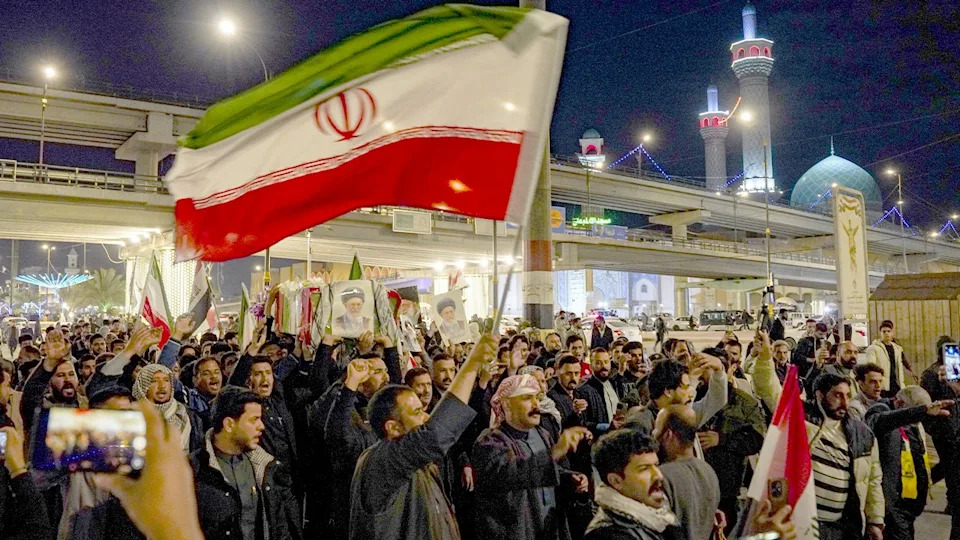
Protesters gather in Najaf, Iraq, on March 1, 2026, to denounce the killing of Iranian leader Ayatollah Ali Khamenei in U.S. and Israeli airstrikes.
Although plaintiffs won judgments, Iran has not voluntarily paid those awards. Families and survivors continue to face practical and legal obstacles in trying to collect the damages the courts awarded.
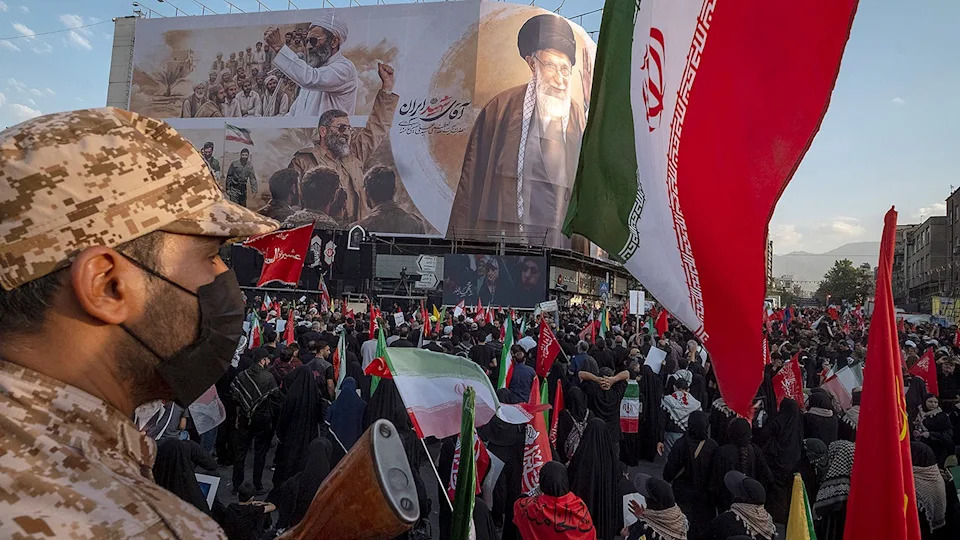
An armed member of the Islamic Revolutionary Guard Corps (IRGC) monitors the area while mourners participate in the funeral for the late supreme leader, Ayatollah Ali Khamenei, and his family in Tehran, Iran, on July 6, 2026.
The Human Cost
“It cut me in half from my temple down through my jaw... I would end up dying three times,”
—Robert Bartlett, describing the injuries he survived. Bartlett, the widows and siblings of the fallen describe a common thread: legal recognition of Iran’s role offered formal acknowledgment but did not end their grief or provide full accountability.
Beverly Wolfer Nerenberg said her brother Stuart was central to her life—so much so that he stood as her "man of honor" at her wedding. Tricia English said the courtroom revelations about EFPs and Iranian support were traumatic but necessary to understand what killed her husband.
Why Iran Turned to Proxy Warfare
After Saddam Hussein’s fall, Tehran viewed Iraq both as an opportunity and a strategic threat with U.S. forces nearby. The Quds Force cultivated militia networks to advance Iran’s regional goals and to pressure U.S. forces without direct, conventional confrontation. The U.S. Treasury has identified the Quds Force as Iran’s principal mechanism for supporting militant proxies abroad.
Lasting Implications
For families and survivors, the conflict with Iran did not begin with the latest headlines—it has been a long-running chapter in their lives. Court findings, military reports and litigation helped clarify how the attacks were organized, but legal victories have not fully translated into accountability or closure for victims. The cases also complicate public understanding of the Iraq war by highlighting state-directed proxy tactics rather than solely organic insurgency.
Key factual points: federal courts linked EFPs and other sophisticated anti-armor weapons to Iranian supply and support; litigation used the FSIA terrorism exception to hold Iran liable in civil court; and families remain dedicated to preserving memory and seeking justice despite limited redress.
Help us improve.