SAMHSA’s 2025 NSDUH finds about 21.4 million Americans now use marijuana daily or nearly every day, surpassing daily cigarette smokers (19.9M) and daily drinkers (17.2M). Frequent cannabis use rose about 21% from 2022 to 2025, driven mainly by adults, particularly those 26 and older. Though alcohol remains the most-used substance monthly (~129M people), general marijuana use increased from 13.2% to 15.1% between 2021 and 2025. Experts warn that rising THC potency and more daily use raise public-health and safety concerns.
Daily Marijuana Use Now Exceeds Daily Drinking and Smoking, Federal Survey Finds

couple smoking marijuana at home
New federal data show marijuana has become the most commonly used daily or near-daily drug in the United States.
The 2025 National Survey on Drug Use and Health (NSDUH), released by the Substance Abuse and Mental Health Services Administration (SAMHSA), estimates that about 21.4 million Americans used marijuana daily or nearly every day. That figure surpasses the roughly 19.9 million daily cigarette smokers and about 17.2 million people who reported drinking alcohol daily.

The number of Americans using marijuana daily or almost daily rose about 21% between 2022 and 2025.
How "Daily or Near-Daily" Is Defined
SAMHSA classifies daily or near-daily marijuana use as consuming cannabis on 300 or more days in the past year. For cigarettes, "daily" corresponds to smoking on all 30 days of the most recent month.
Trends Behind the Numbers
Frequent marijuana use climbed roughly 21% between 2022 and 2025, increasing from about 17.7 million to 21.4 million — an addition of roughly 3.7 million frequent users. SAMHSA noted the single largest year-to-year jump occurred between 2021 and 2022, when frequent marijuana use rose by about 2.8 million users.
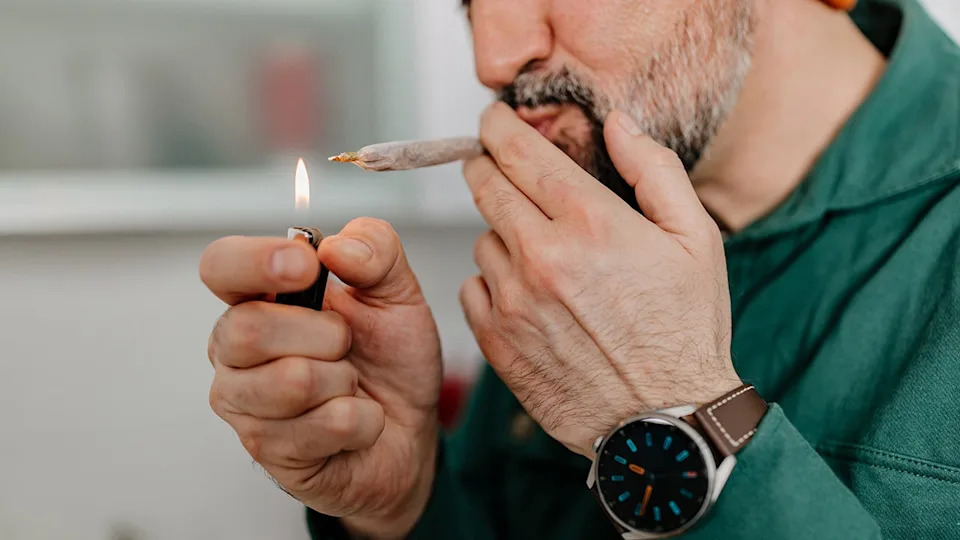
General marijuana use rose from 13.2% to 15.1% from 2021 to 2025.
The increase has been driven mainly by adults rather than teenagers, especially those aged 26 and older. Among adults 18 and older, daily or almost-daily marijuana use rose about 22% from 2021 to 2025, climbing from 17.2 million to 20.9 million.
Context: Monthly Use and Other Substances
Despite the rise in daily cannabis use, alcohol remains the most widely used substance on a monthly basis. In the past month, roughly 129 million Americans reported drinking alcohol, while about 43.8 million reported using marijuana.

A survey of 1,000 full-time employees in April 2026 found that 63% of the workforce engages in at least one form of self-medication after the workday.
Broader measures also shifted: overall cannabis use increased from 13.2% of the population in 2021 to 15.1% in 2025, while cigarette and other tobacco product use fell from 20.1% in 2021 to 15.9% in 2025.
Workplace Self-Medication Trends
Separate workplace research from San Francisco–based mental health platform Modern Health (April 2026 survey of 1,000 full-time employees) found that 63% of workers used some form of self-medication after work and 52% reported self-medicating during the workday. Among Gen Z workers, after-work use of THC products exceeded alcohol use (59% vs. 50%), and 51% of Gen Z respondents reported using THC during the workday.
Expert Reaction and Public-Health Concerns
Dr. Marc Siegel, a senior medical analyst, called the trend "very disturbing," warning that overstated claims about marijuana’s benefits have obscured risks—particularly for people with underlying mental-health issues. He also pointed to rising THC potency across cannabis products and argued higher concentrations can impair memory, judgment and performance and have been linked to an increased share of fatal motor-vehicle crashes.
Public-health experts say these shifts highlight the need for clear education about risks and safer-use guidance as consumer patterns evolve. Policymakers, clinicians and employers may need updated resources to address daily-use risks, workplace impairment, and mental-health impacts.
Help us improve.