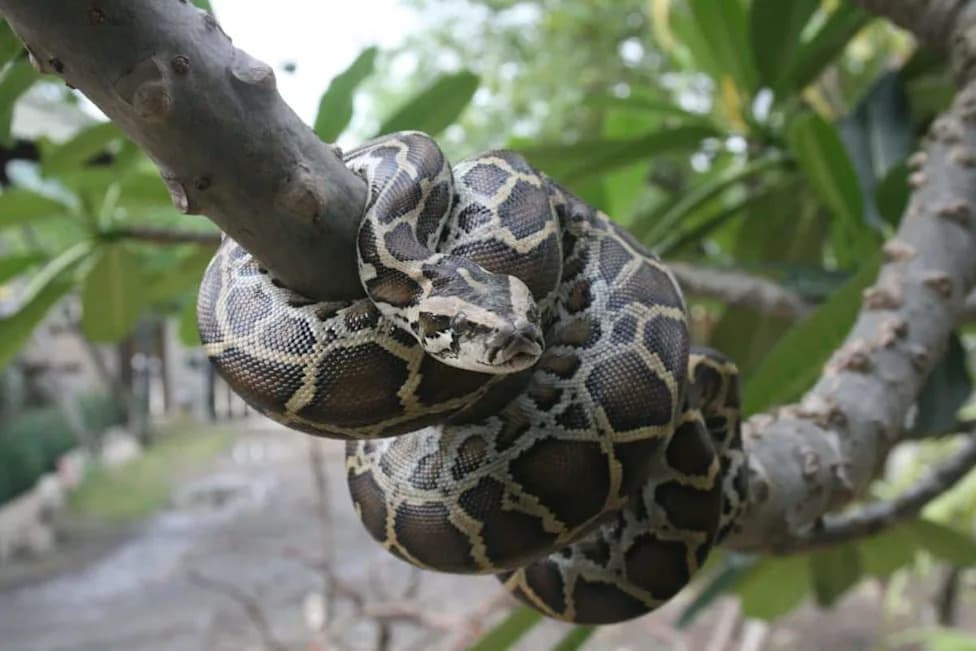
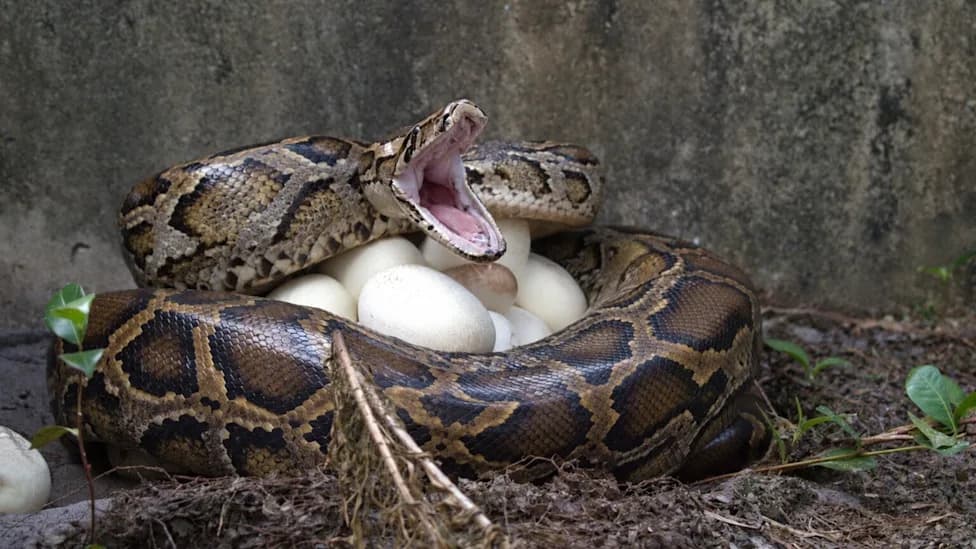
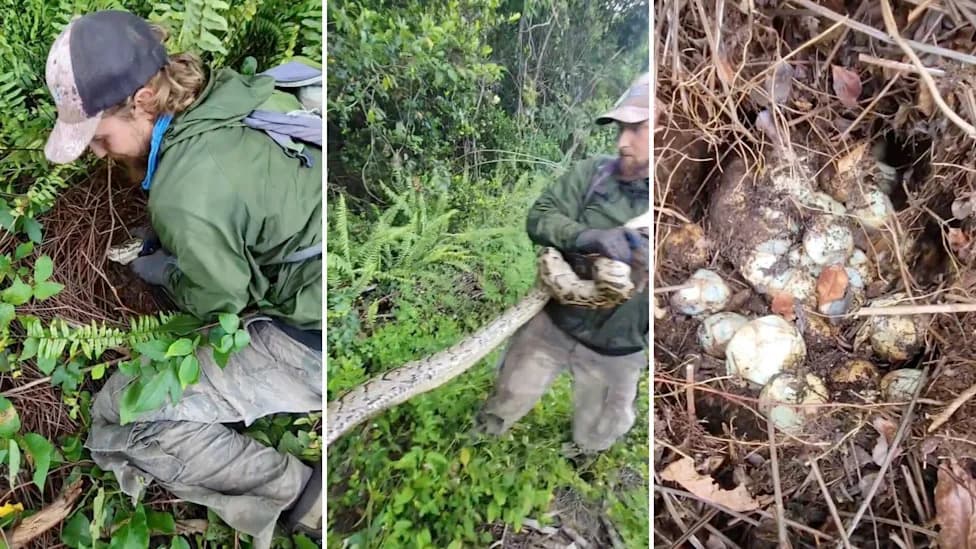
Florida researchers are implanting radio transmitters in male Burmese pythons and tracking them to locate hidden females, mating groups and large nests. The "scout snake" program has used 25 tagged snakes to find 30 additional pythons, and one nest was reported to contain 111 eggs. Tagged snakes are checked every other day to map movements—one male traveled about 40 miles in six months—and researchers warn that canals may act as dispersal corridors into developed areas.
Florida Scientists Radio-Tag Male Pythons to Locate Hidden Females and Massive Nests
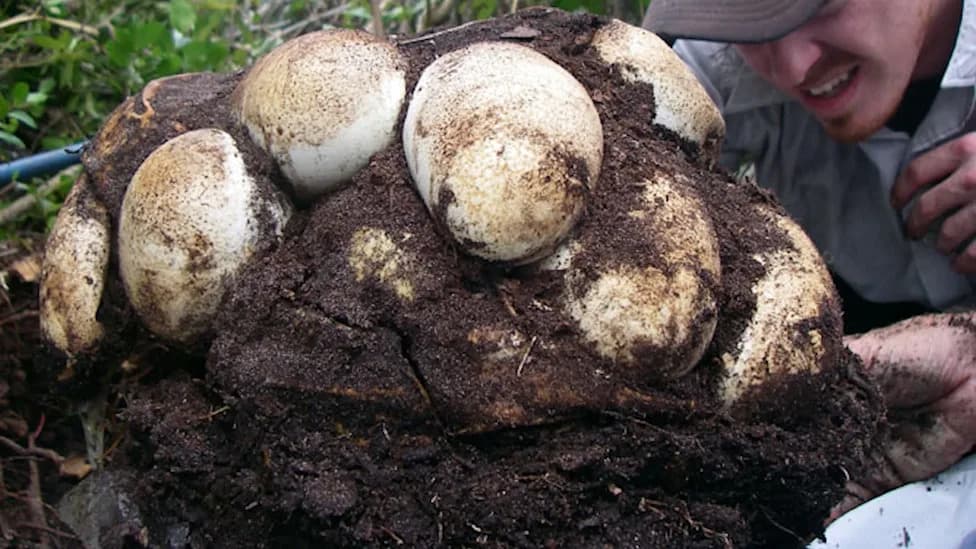
Photo Credit: The Croc Docs
Florida researchers are surgically implanting radio transmitters in male Burmese pythons and following their movements to find elusive females, mating aggregations and nests that can contain huge clutches of eggs. The tactic — part of a broader "scout snake" program led by the University of Florida Croc Docs team — is helping removal crews target pythons more efficiently across the Everglades.
How the Scout Snake Program Works
Captured pythons are fitted with surgically implanted radio transmitters and monitored regularly. Because males actively seek out females during breeding season and may remain close to them for extended periods, following tagged males often leads researchers to previously hidden females and nests.
Notable Finds and Field Methods
In one recent case, researchers tracked a 10-foot female on a man-made island near Everglades Holiday Park for months using a transmitter and trail camera before finding her guarding a nest. The team routinely checks tagged snakes every other day to map movement patterns; some snakes stay in a small home range, while one tagged male moved roughly 40 miles over six months.
When a nesting female is located, researchers take blood samples, collect eggs for laboratory study and carefully search the surrounding area to ensure no additional eggs or hidden snakes remain. These efforts improve detection in remote, waterlogged zones that are difficult to access by road or vehicle.
Scale Of The Problem
Python nests can be strikingly large: the Florida Fish and Wildlife Conservation Commission reported one nest in the Everglades and Francis S. Taylor Wildlife Management Area that contained 111 eggs. This reproductive capacity, combined with a lack of natural predators in South Florida, has allowed Burmese pythons to severely disrupt local ecosystems by preying on native wildlife from birds and marsh rabbits to deer.
"They're finding these nesting females more frequently than they were previously," said Jenna Cole, an invasive-animal biologist with the South Florida Water Management District, describing the program's growing effectiveness.
Researchers are also concerned that pythons may use connected canals and waterways as dispersal corridors into more developed areas. "We suspect they're probably using the canals as a path of least resistance," said Melissa Miller, assistant professor of invasive wildlife ecology at the University of Florida. "They could be used like highways for pythons to disperse."
Support, Funding and Next Steps
So far this year, 25 tagged snakes have led researchers to 30 additional pythons. The project receives funding from the Florida Fish and Wildlife Conservation Commission and the South Florida Water Management District. Political interest is growing: Rep. Debbie Wasserman Schultz joined a field trip in March and raised the possibility of additional funding to protect billions invested in Everglades restoration.
"As time goes on, the people who are doing the removals and our boots on the ground are getting better," Cole said. Brandon Welty of the UF Croc Docs team added, "There's so much to do, but we're getting this little picture of what's actually happening." The data from tagged snakes help removal teams refine search areas and prioritize efforts to protect native species and long-term restoration investments.
Help us improve.