Israeli authorities have raised alert levels after assessments suggested President Donald Trump is close to ordering renewed U.S. strikes on Iran. Israeli officials say they are "on high alert" but have not been asked to join any strikes. U.S. embassies across the region updated travel advisories urging citizens to consider leaving. Separately, U.S. European Command warned the Pentagon it lacks sufficient naval assets to both defend Israel and prioritize homeland defense without additional destroyers.
Israel on High Alert as U.S. Weighs Resuming Strikes on Iran; Embassies Urge Citizens to Consider Leaving
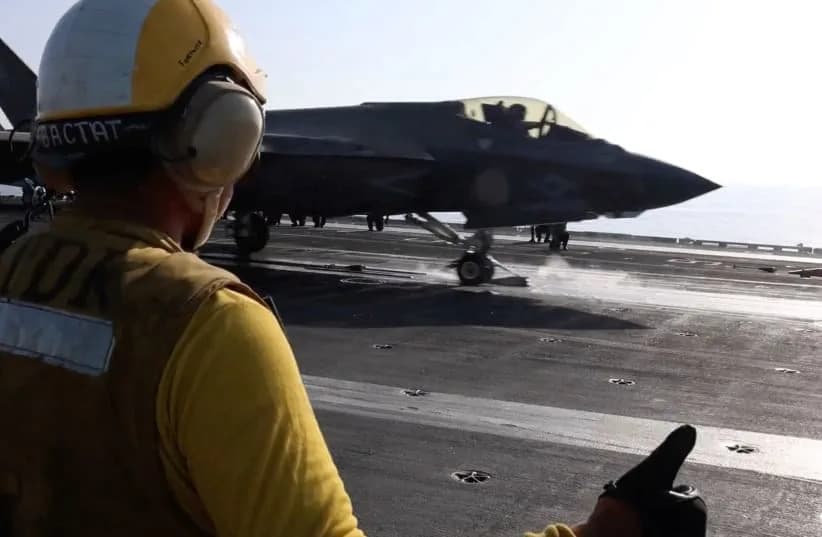
A screengrab from a video released by U.S. Central Command (CENTCOM), which accompanied a press release describing the operation dubbed "Epic Fury", an attack by the United States and Israel on Iran, shows a flight deck crew member signaling an F‑35 jet on an aircraft carrier (photo credit: US CENTCOM/Reuters)
Israeli authorities have raised their alert level and increased military readiness after assessments indicated that U.S. President Donald Trump is close to deciding to resume military strikes against Iran, possibly on a larger scale, two Israeli sources told The Jerusalem Post.
Israeli Position and Concerns
Israeli officials say they are "on high alert and awaiting the president's final decision." While it remains unclear whether any initial U.S. operation would include Israeli forces, Israel's working assumption is that a major strike on Iran—even if carried out without direct Israeli participation—could draw Israel into a wider regional conflict.
Official Statements
An Israeli official told CBS: "Israel is not aware of a decision to fully resume military activity, and has not been asked to join any military action against Iran."
Diplomatic Warnings and Travel Advisories
Throughout the day, the U.S. Embassy in Israel updated its travel advisory, advising U.S. citizens to consider leaving the country or be prepared to depart quickly if tensions escalate. U.S. embassies in Jordan, Egypt, Qatar, Saudi Arabia and Iraq issued similar advisories, reflecting growing concern across the region about the potential for spillover violence.
U.S. Naval Strain and Defense Priorities
Separately, The Washington Post reported that Gen. Alexus Grynkewich, head of U.S. European Command, privately warned Pentagon leaders this week that he does not have sufficient naval forces to continue protecting Israel from Iranian ballistic missile threats while also meeting other defense priorities. According to the report, Grynkewich sent a written message saying that without an additional U.S. Navy destroyer, he might have to prioritize defending the U.S. homeland over continuing missile-defense support for Israel.
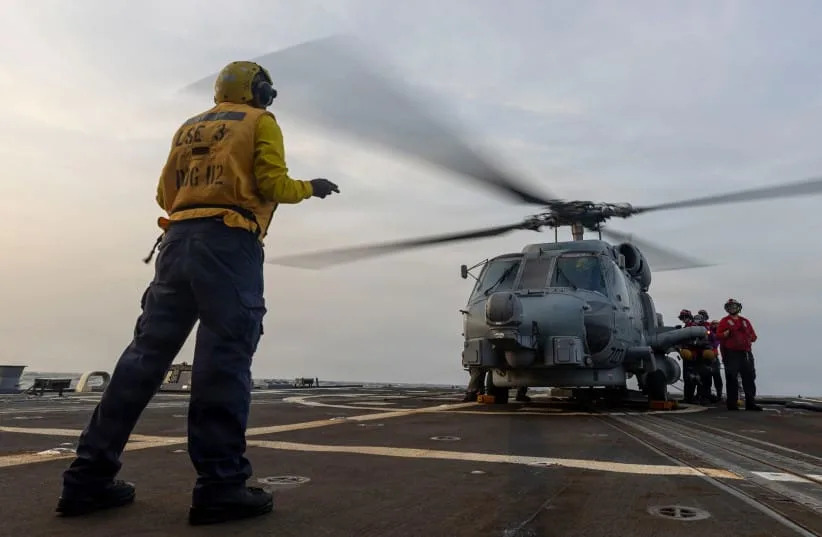
A US Navy MH-60R Sea Hawk helicopter is prepared for flight aboard USS Michael Murphy (DDG 112) as the warship supports the U.S. blockade against Iran while sailing in regional waters. (credit: X/CENTCOM)
The report linked the strain on U.S. naval assets to a recent U.S.-ordered blockade of Iranian ports in response to Tehran's closure of the Strait of Hormuz. That confrontation disrupted the movement of Middle Eastern oil and other cargo through the strait and unsettled global markets.
Role of U.S. Destroyers in the Eastern Mediterranean
The Washington Post also noted that U.S. destroyers operating in the eastern Mediterranean have long been integrated into Israel's layered missile-defense network. Equipped with advanced radar systems and a wide range of interceptors, those vessels have intercepted projectiles launched toward Israel from both Iran and Houthi militants in Yemen.
What This Means: The combination of U.S. deliberations over renewed strikes, regional travel advisories and warnings about limited naval capacity raises the risk of rapid escalation. Citizens and travelers in the region are advised to monitor official advisories and prepare contingency plans.
Reporting contributed by Amit Avitan; original sources include The Jerusalem Post and The Washington Post.
Help us improve.