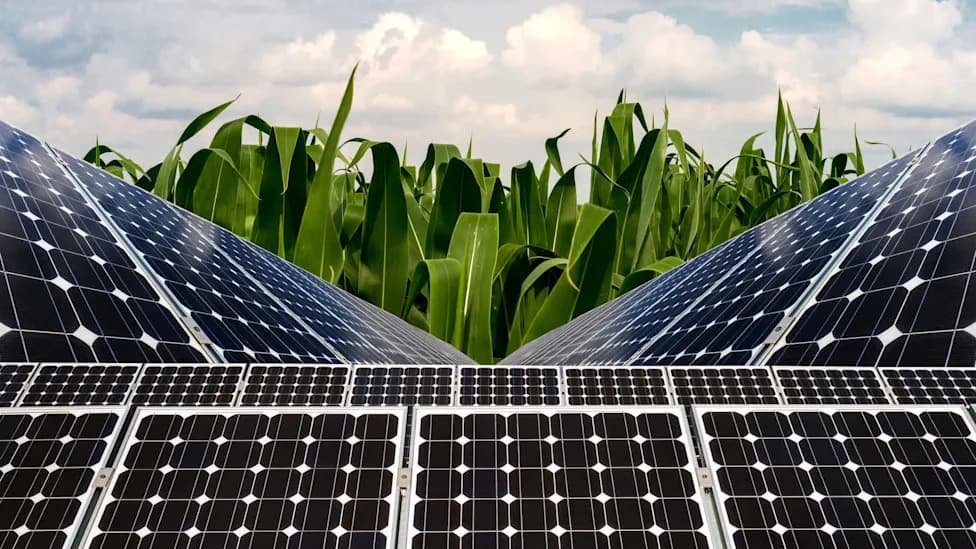
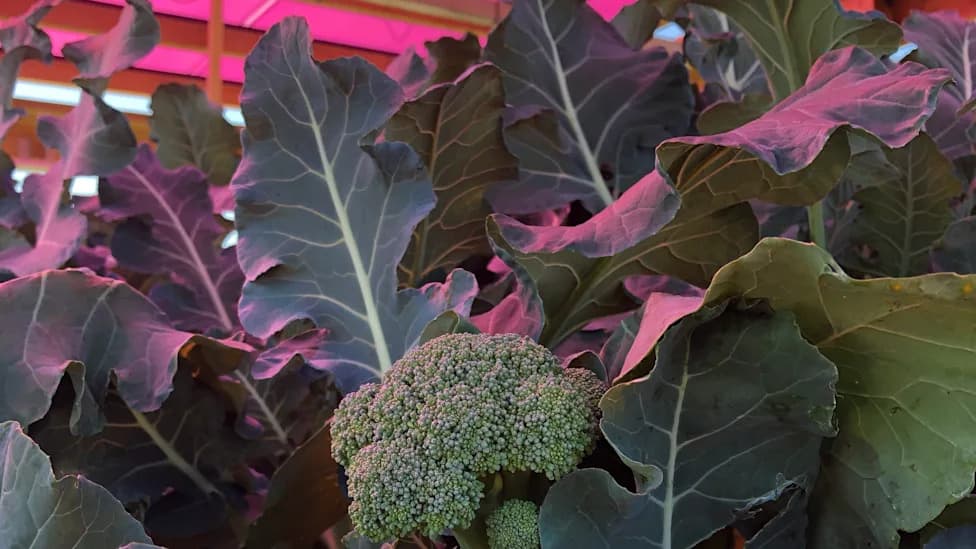
Jack’s Solar Garden in Longmont, Colorado, has installed 3,276 solar panels across 24 acres and produces roughly 2 GWh of electricity annually to help offset farm costs. The shaded arrays create cooler microclimates that support heat-sensitive crops and reduce soil evaporation. Although upfront costs (Kominek estimates about $2 million) and operational adjustments remain, agrivoltaics, solar grazing, and innovations like Biohuts show how solar projects can benefit both farmers and ecosystems.
How Solar Panels Are Helping a Colorado Farm Boost Income and Protect Crops
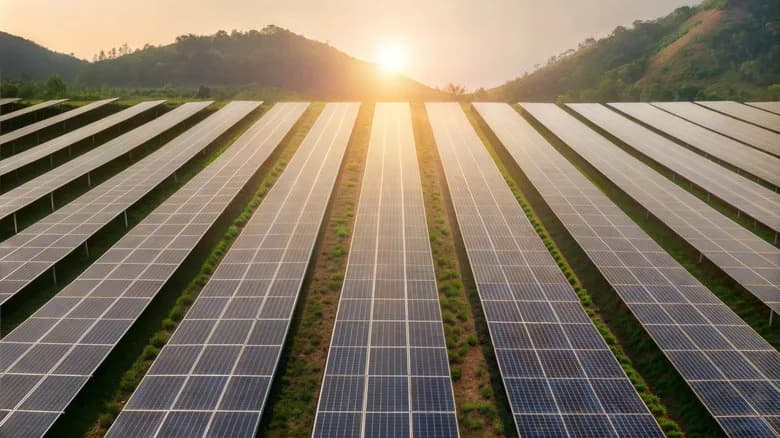
VectorStockbd/Shutterstock
As summers get hotter and droughts become more frequent due to human-driven climate change, farmers are experimenting with new ways to keep crops productive while managing rising costs. One promising approach is agrivoltaics — the combined use of land for both agriculture and solar power. Jack's Solar Garden in Longmont, Colorado, offers a real-world example of how this can work.
Agrivoltaics in Practice
On his family's 24-acre farm, Byron Kominek installed 3,276 solar panels. The array produces about 2 gigawatt-hours (GWh) of electricity a year, which Kominek sells to a local utility to offset the farm’s operating expenses. Beyond the revenue, the panels create shaded microclimates that help sensitive crops survive extreme heat — for example, flax prefers germination temperatures around 65–70°F, while clary sage can wilt above 95°F.
Benefits and Trade-Offs
Solar panels do more than generate electricity. By blocking direct solar radiation they reduce evaporation and help soil retain moisture, creating conditions favorable to plants and soil microbes. However, adopting agrivoltaics requires adjustments: the elevated panels’ metal supports can complicate planting and fieldwork, and researchers working with farms like Jack’s Solar Garden are still refining scalable best practices.
Karl-friedrich Hohl/Getty Images
Costs and Economic Opportunities
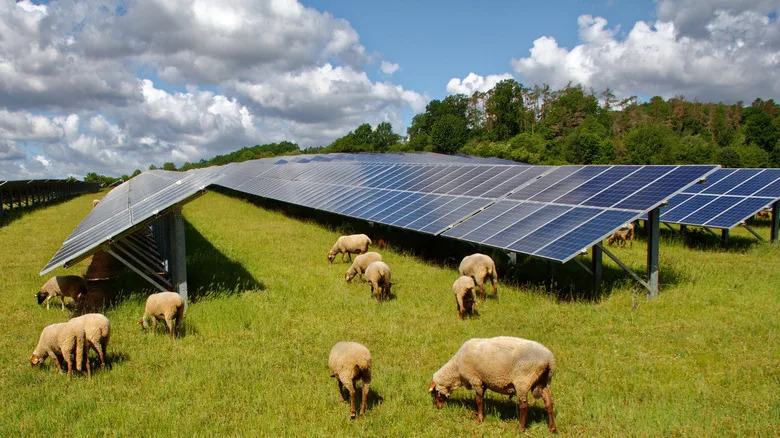
There is a substantial upfront investment: Kominek has said his installation of more than 3,000 panels cost roughly $2 million. That said, farmers do not always need to buy panels themselves to benefit. Many utility-scale solar projects contract local producers to graze sheep or cattle beneath arrays — a practice called solar grazing — which provides low-carbon vegetation management and an additional revenue stream. Some solar shepherds reportedly earn two to three times what traditional shepherds make.
Scaling Ecological Benefits
Large solar installations can also transform degraded landscapes. China’s Gonghe Photovoltaic Park is an example where panels have helped stabilize soil moisture and support vegetation and microbial communities in formerly barren areas. In the Netherlands, a floating solar installation has become a functioning habitat after small structures called Biohuts were installed beneath panels, demonstrating creative ways solar infrastructure can support ecosystems.
While critics point to land-use concerns associated with solar expansion, projects like Jack’s Solar Garden show that careful design and research can make energy production and agriculture complementary.
Outlook: Agrivoltaics is not a one-size-fits-all solution, but it offers a promising path for farmers to diversify income, improve crop resilience to heat and drought, and deliver environmental co-benefits when thoughtfully implemented and studied.
Help us improve.