The BBC’s Bitesize materials recently placed Guy Fawkes among celebrated activists, a move that risks sanitising the Gunpowder Plot’s true aims. The 1605 conspiracy planned to kill hundreds and to abduct nine-year-old Elizabeth Stuart to use as a captive monarch. Portraying the plot as activism — or excusing it as retaliation for persecution — blurs an important moral line and can normalise political violence.
Why Portraying Guy Fawkes As An 'Activist' Misrepresents A Violent Conspiracy
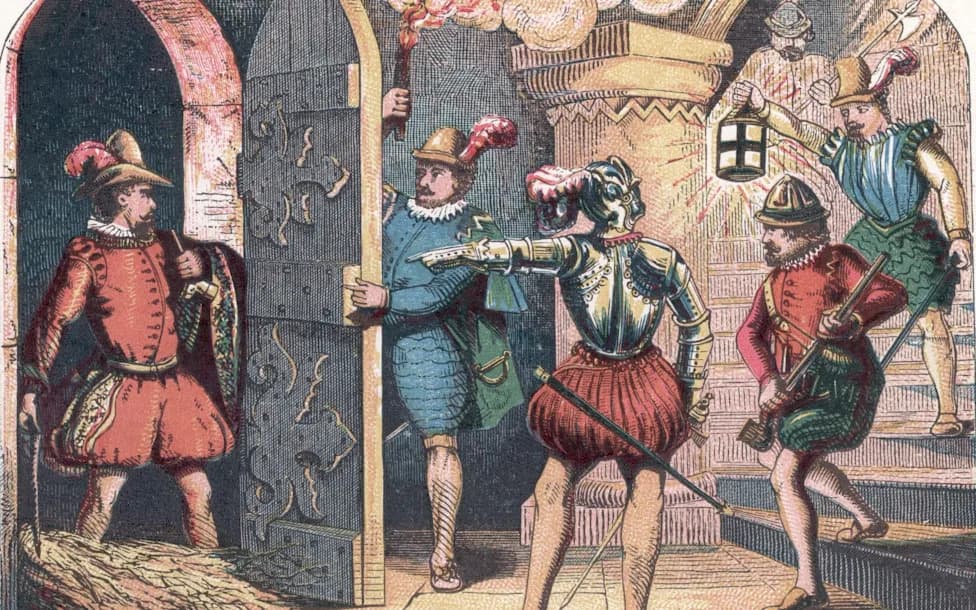
There is a dangerous, historically illiterate myth about the Gunpowder Plot - Hulton Archive/Hulton Archive
The BBC's decision to present Guy Fawkes as one of several "astonishing activists" risks sanitising a violent conspiracy whose consequences would have been catastrophic. The Gunpowder Plot of 1605 was not an act of civil disobedience but a planned massacre and attempted regime change that would have killed hundreds and installed a captive child on the English throne.
The Human Cost Behind The Plot
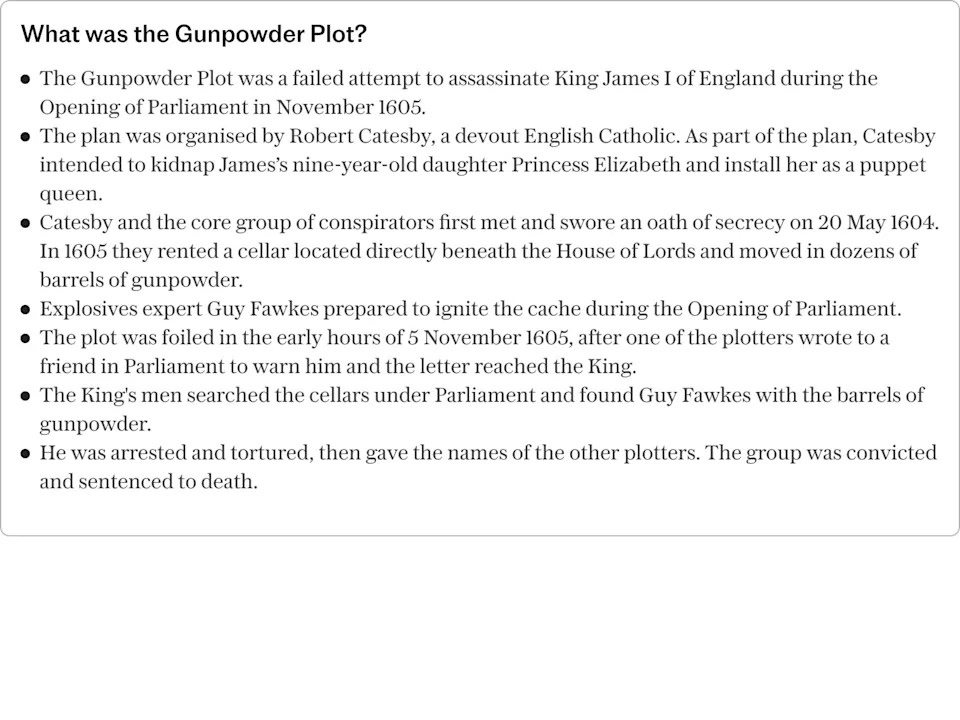
In 1605, conspirators planned to blow up the Houses of Parliament during the State Opening, an explosion that could have killed up to 600 people, including bishops, peers and senior parliamentarians. The plotters intended to abduct nine-year-old Elizabeth Stuart — daughter of King James I and VI — and present her as a captive monarch after slaughtering most of her family. Her younger brother Charles would also likely have been killed if he had posed a future threat. The conspirators stored around 36 barrels of gunpowder beneath Parliament as part of this scheme.
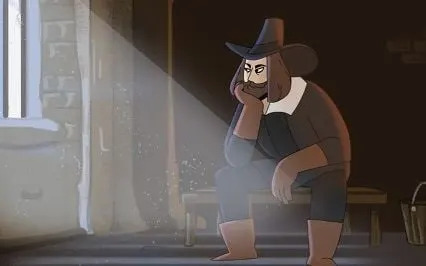
BBC Bitesize depicts Fawkes alongside Rosa Parks and Nelson Mandela as 'people who fought racism, campaigned for women's rights and changed the world forever!'
Why A Game For Children Is Problematic
BBC Bitesize recently included Guy Fawkes alongside figures such as Rosa Parks and Nelson Mandela in a series describing "people who fought racism, campaigned for women's rights and changed the world forever." In one interactive game, players help Fawkes move explosives past guards inside Parliament. Presenting a would-be mass murderer as an "activist" conflates fundamentally different categories of historical actors and risks normalising political violence for a young audience.
Media Portrayals And Historical Sympathy
The BBC's 2017 drama Gunpowder also encouraged sympathy for the conspirators by foregrounding Catholic suffering and depicting Protestant ministers as scheming villains. That narrative choice fed a broader, problematic idea: that the Gunpowder Plot can be excused as retaliation for persecution.
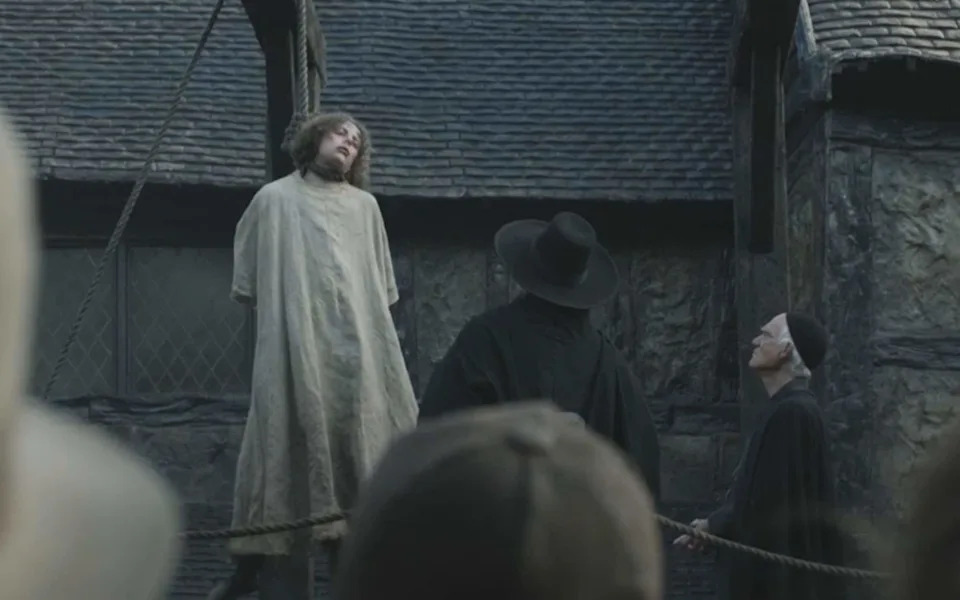
The BBC's 2017 drama Gunpowder offered graphic depictions of violence against Catholics
Victimhood Is Not A Moral License For Murder. Treating terrorist acts as acceptable responses to grievance dangerously echoes modern justifications for atrocities.
Historical Context — Violence On All Sides
There is no excuse for ignoring the genuine pressures faced by Catholics in early 17th-century England. Tensions across Europe were high: the St Bartholomew’s Day Massacre of 1572, in which up to 30,000 French Protestants were killed, and a string of assassination attempts in the 1580s helped harden attitudes on both sides. When James VI and I succeeded Elizabeth in 1603, he disappointed many Catholics' hopes for greater tolerance. English Catholics later faced legal disabilities for centuries, including exclusion from full civil rights and the vote until 1829.
At the same time, a Catholic takeover under the influence of the Papacy would not necessarily have produced liberal freedoms. During Pope Clement VIII’s papacy the Roman Inquisition executed Giordano Bruno in 1600, and the Papal States enforced policies that excluded Jews and restricted the reading of the Talmud.
What was the Gunpowder Plot?
Conclusion
Historical nuance matters. Teaching children to empathise with conspirators who planned mass murder blurs critical moral distinctions. The Gunpowder Plot should be taught as a violent attempt to overthrow a government — a cautionary tale about extremism, not an example of principled activism.
Author: Dr Kate Maltby, writer and academic (PhD on Elizabeth I, University College London)
Help us improve.