Donald Trump's early legal gains against broadcasters have weakened as courts and newsrooms push back. At the end of July 2025 the Justice Department withdrew subpoenas for New York Times reporters after a judge found they violated reporter-source protections. Defamation suits against The New York Times and The Wall Street Journal are struggling, while ABC and CBS settled for business reasons. Experts say Trump’s broader aim is to discredit the press and use costly litigation as leverage rather than to secure lasting legal victories.
Trump's Legal Offensive Against News Media Falters As Courts And Newsrooms Push Back
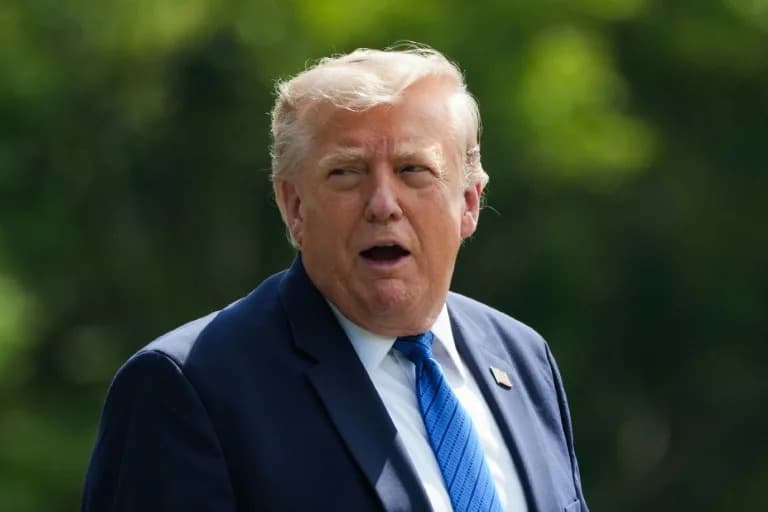
Trump's real objective however is not to win the lawsuits against the outlets he sues, experts agree (POOL)
Donald Trump's early courtroom wins against broadcasters have largely given way to setbacks as judges, newsrooms and federal authorities act to protect press freedom and resist legal pressure.
Court Pushback And A DOJ Withdrawal
At the end of July 2025, the Justice Department withdrew subpoenas it had issued to New York Times reporters who wrote about security vulnerabilities involving the president's aircraft after a federal judge sharply criticized the administration's legal work and found the subpoenas infringed on reporter-source protections.
"News organizations recognize that the only positive outcome to this is prevailing against the president and standing up for the reporters and their newsrooms,"
said Ken Paulson, director of the Free Speech Center at Middle Tennessee State University.
Defamation Suits Struggle
The president has filed defamation lawsuits against The New York Times over reporting and a book examining the origins of his wealth, and against The Wall Street Journal over an item about an allegedly salacious letter to Jeffrey Epstein. Both suits are encountering legal headwinds and have not gained clear traction in court.
"If you're willing to stand up to Trump, you're going to do fairly well in court, given the lack of merit behind the cases that he has filed,"
said Dan Kennedy, a journalism professor at Northeastern University.
Settlements, Business Decisions And Broader Strategy
Two high-profile disputes with broadcasters ended in settlements: ABC reached an agreement in December 2024 and CBS settled in July 2025, with the networks agreeing to pay roughly $15 million and $16 million, respectively. Trump sued ABC over comments linked to a civil judgment in a sexual-assault case and sued CBS alleging it misled viewers by editing interview clips.
Many legal experts say the suits lacked strong legal merit and could have been dismissed, but the networks accepted settlements for business reasons. For example, CBS's parent, Paramount Global, was pursuing regulatory approval for a merger with Skydance while negotiating its settlement.
Pressure Tactics And Emerging Defenses
After ABC retained Jimmy Kimmel — a frequent critic of Trump — and declined to air a live speech alleging electoral fraud, the network faced federal scrutiny that could threaten some local station licenses. Meanwhile, the BBC, which Trump is suing for $10 billion over an allegedly misleading edit of a speech, has sought the president's financial records to quantify damages — a tactic experts say may deter plaintiffs who resist financial disclosure.
"That is the biggest deterrent of all for a man who has constantly resisted efforts to look inside his empire and financial circumstances,"
Paulson said.
Why Experts Say Trump Files Lawsuits
Observers argue Mr. Trump's aim is often less about prevailing in court than about discrediting the press and applying financial and legal pressure. "You go right back to the beginning of his political career... it's been a central part of his strategy to discredit the news media," Kennedy said, noting repeated attacks in rhetoric and litigation.
Paulson added that while Trump and his lawyers may not realistically expect long-term legal victories in many of these suits, protracted litigation can be costly and time-consuming. "That can take years and millions of dollars, and Trump knows from his business experience that if he can apply enough pressure, someone will cough up a check," he said.
As courts and newsrooms push back — by defending reporters, seeking opponents' financial records, and drawing judicial scrutiny — experts say media organizations may be better positioned to resist legal intimidation and protect press freedoms going forward.
Help us improve.