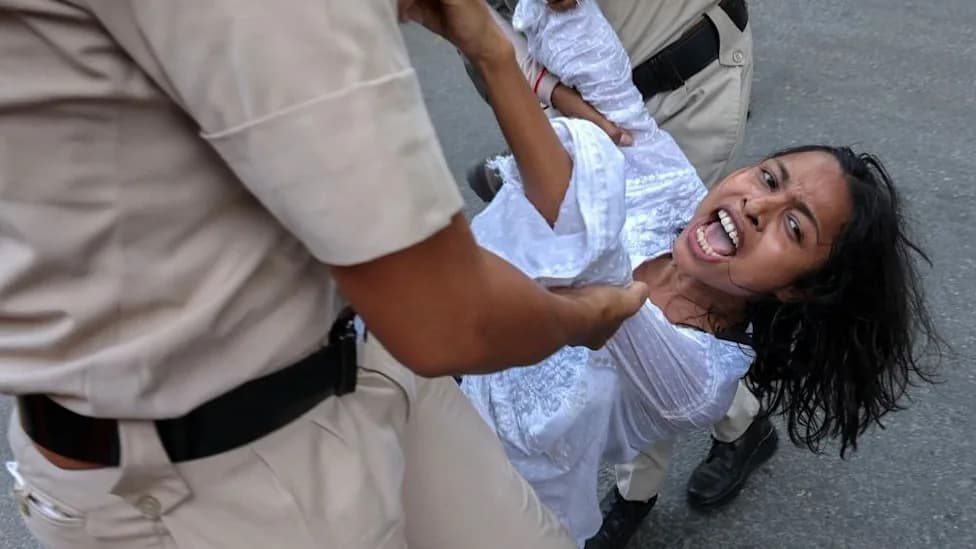
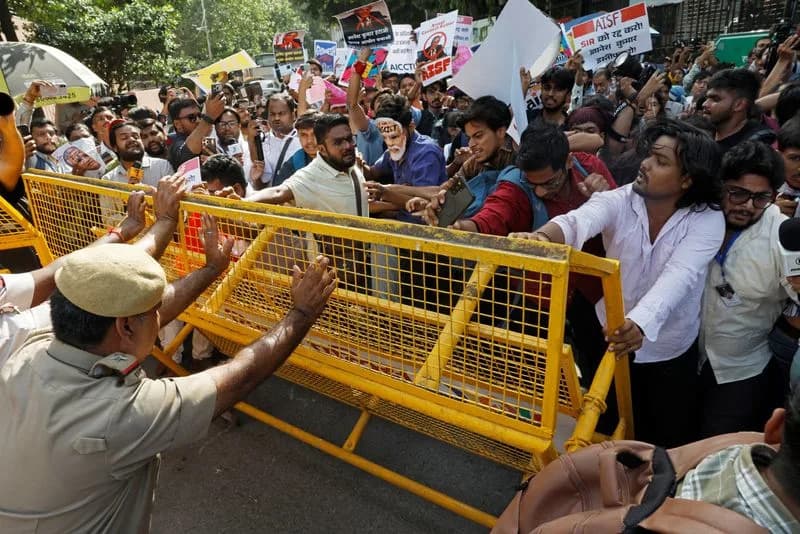
Independent ballistic and forensic experts told the BBC that wounds sustained by some CJP protesters in New Delhi on 20 July are consistent with pellet-gun (birdshot) injuries. At least four hospitalised people showed dozens of small round punctures and embedded fragments; experts identified patterns matching 12‑gauge shotguns loaded with birdshot. Delhi authorities deny using pellet guns and say only tear gas was deployed, while media reports point to the RAF/CRPF. Victims report severe pain, multiple embedded pellets and ongoing medical concerns.
Ballistics Experts Say Wounds From Delhi Protesters Are Consistent With Pellet-Gun (Birdshot) Fire
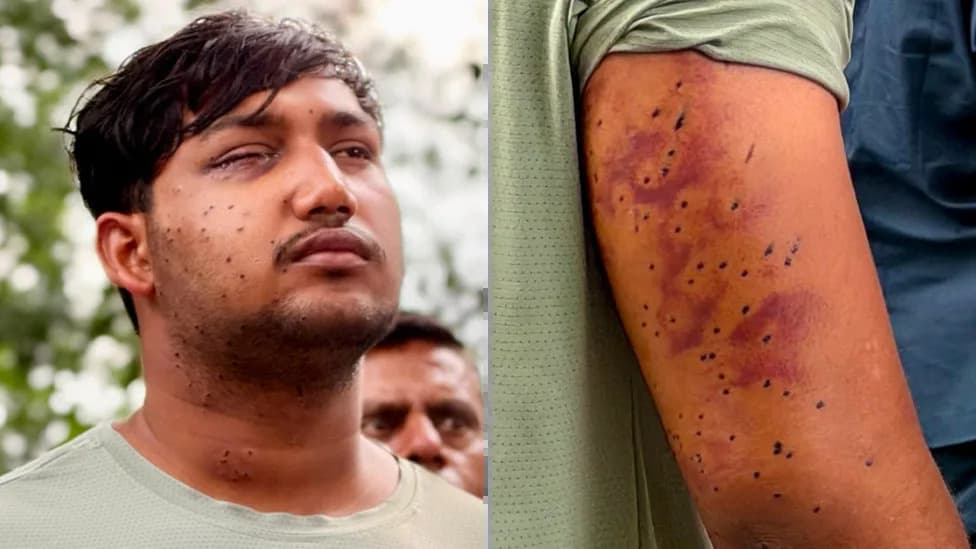
The face and body of Sahil Lochab, who appeared with opposition leader Rahul Gandhi at a press conference, are peppered with tiny holes [Congress Party]
Independent forensic and armament experts told the BBC that injuries suffered by several supporters of the Cockroach Janta Party (CJP) during the mass demonstration in New Delhi on 20 July are consistent with wounds caused by pellet guns (birdshot).
What Experts Found
Two independent specialists who reviewed photographs, videos and X-rays told the BBC that dozens of small, round puncture wounds and embedded metal fragments are characteristic of shotguns loaded with birdshot. UK-based ballistics forensic scientist Philip Boyce identified the likely weapon as a "12-gauge pump-action shotgun" and said the injury pattern is consistent with birdshot fired from tens of metres away.
"The injuries depicted are definitely from a pellet gun," Boyce said. "These pellet injuries can be quite devastating, especially at close range... they can still be potentially life‑threatening even from 100 feet."
NR Jenzen-Jones, director of Armament Research Services (ARES), said images and video show law enforcement using shotguns for crowd control and described the wounds as "strongly consistent with the use of birdshot." He warned that birdshot can cause life-changing injuries and deposit toxic lead that is sometimes difficult to remove.
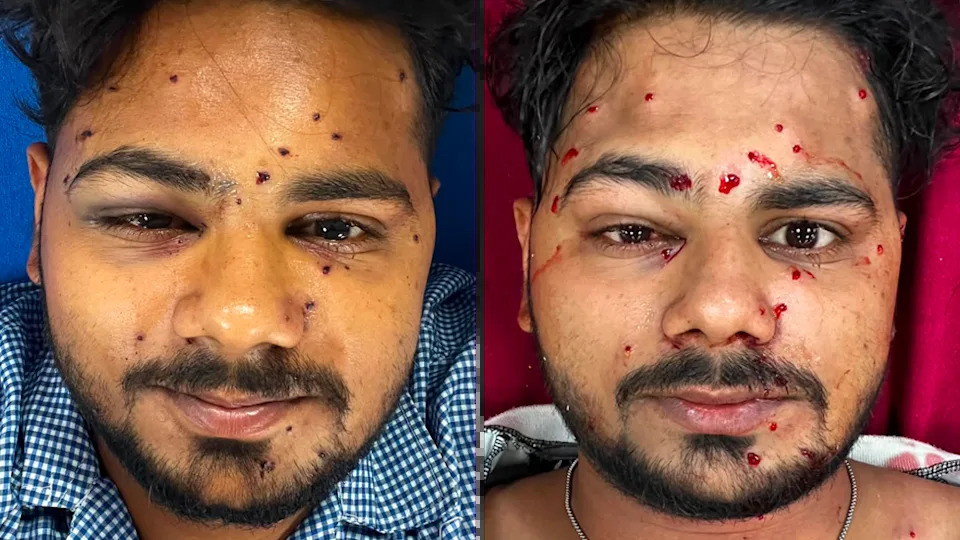
Shaikh Irshad Mansoori said scans showed he had more than 40 pellets in his body [Shaikh Irshad Mansoori]
Victims And Medical Evidence
The BBC confirmed at least four hospital cases with wounds specialists called "pellet-type". Interviews and medical records describe dozens of embedded round fragments and puncture marks:
- Mohit (name changed), a 28-year-old journalist treated at Safdarjung Hospital, had X-rays showing multiple tiny objects in his arm and upper torso. Medical records list 26 pellet wounds on his right elbow and four on his upper back.
- Shaikh Irshad Mansoori was reported to have more than 40 pellets in his body, with scans showing fragments near his neck, left eye muscle and under his nose. Surgeons removed seven pellets but left at least one embedded where extraction was too risky.
- Other patients, including a 19-year-old student Sahil Lochab, showed facial and body wounds consistent with birdshot, with one case at risk of severe eye injury.
A senior hospital official described injuries as caused by "pellet-type small particles" but said forensics would determine whether they were fired from a gun.
Context And Previous Use
Pellet guns (shotguns loaded with birdshot) are commonly used for bird hunting and can contain hundreds of tiny metal pellets. When used against crowds the pellets disperse in a wide arc and can strike indiscriminately. Human Rights Watch and medical records from Indian-administered Kashmir document widespread harm from pellet use there since 2010 — including thousands injured, dozens blinded and multiple deaths.
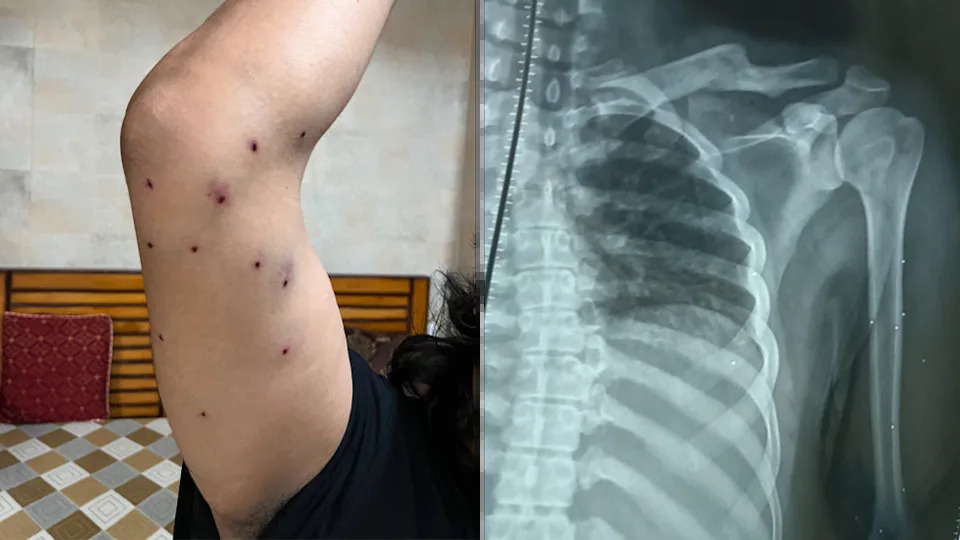
A 28-year-old journalist, who did not want to be named, has shared his photos and X-ray with the BBC [User generated]
Official Response
Delhi Police initially denied that pellet guns were used, saying officers did not possess such weapons. Government minister Jitendra Singh told parliament that no "bullets" were fired and only tear gas was used. Indian media have since reported that shots may have been fired by the Rapid Action Force (RAF), which reports to the Central Reserve Police Force (CRPF). The BBC contacted CRPF leadership but had not received a response at the time of reporting.
Eyewitness Accounts
Protesters and victims described chaotic scenes in Connaught Place and near parliament after security forces moved to stop a march calling for education reforms and the education minister's resignation. Patients recounted sudden burning pain, visible circular wounds and, in some cases, ongoing discomfort and concern about long-term damage from embedded pellets.
What This Means
If forensics confirm that pellet guns were used in central Delhi, it would mark the first verified deployment of such munitions against civilians in India’s capital. Experts say the medical and humanitarian implications are serious: birdshot can cause permanent injury, scarring and lead poisoning concerns when fragments remain in the body.
Note: This report is based on interviews, medical records, images, X-rays and expert analysis available at the time. Investigations and official forensic examinations may provide further clarification.
Help us improve.