A mass stranding at First Light Beach in Brewster, Cape Cod, involved 34 bottlenose dolphins and prompted a large-scale rescue effort. Volunteers and responders kept animals upright and breathing until the tide allowed refloating; rescuers refloated 10 of the 11 dolphins found in shallow water. Several dolphins died, including pregnant individuals, and two survivors were fitted with tracking devices. IFAW reports an increase in bottlenose strandings north of Cape Cod and Long Island over the past decade.
Cape Cod Hit by Northeast's Largest-Ever Bottlenose Dolphin Mass Stranding
Photo Credit: iStock
What began as a routine sunrise walk at First Light Beach in Brewster, Massachusetts, quickly turned into an emergency wildlife rescue when dozens of bottlenose dolphins were discovered stranded along the shore.
Mass Stranding Prompts Rapid Rescue Effort
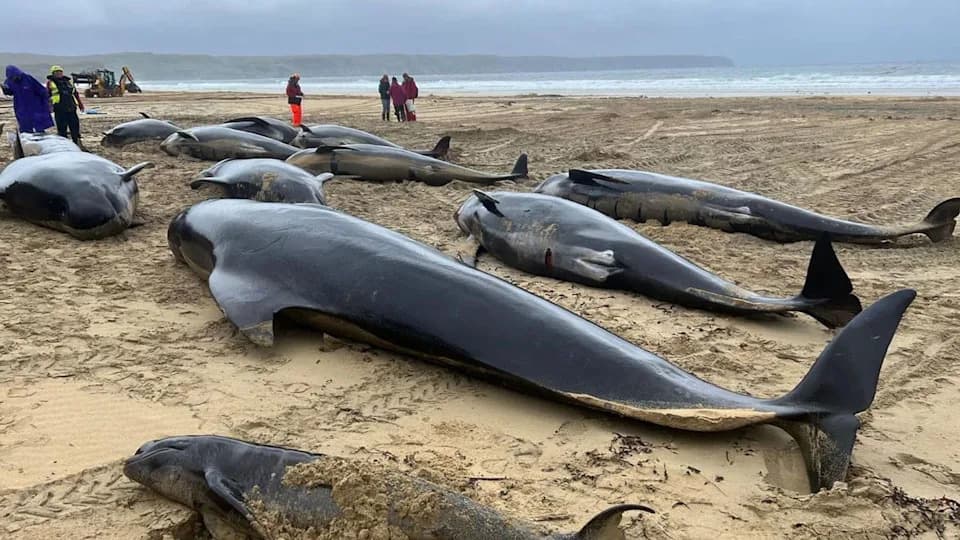
The incident — confirmed by NBC10 Boston as the largest recorded mass stranding of bottlenose dolphins in the northeastern United States — involved 34 animals. Local residents, responders and volunteers converged on the beach to provide immediate support.
"The closer I got, all of a sudden, it hit me. I was looking at more animals than I'd ever seen,"
Leslie Bracebridge told NBC10 Boston after finding the animals.
Bracebridge called the marine stranding hotline, which helped trigger a coordinated response from the International Fund for Animal Welfare (IFAW), local authorities and community volunteers.
On-the-Spot Care
Rescuers worked to keep the dolphins upright and breathing while waiting for the tide to return. Debbie Pearl, a veteran volunteer with IFAW's Marine Mammal Rescue team, described the immediate priorities:
"The only option at that point was to just keep supportive care, tried to keep them righted, have them breathing until the water came in and they were able to refloat."
Of the 34 dolphins involved, 11 ended up in shallow water; responders were able to refloat 10 of those. Despite the efforts, several animals died during the beaching, including individuals reported to be pregnant.
Two surviving dolphins were fitted with tracking devices so researchers can monitor their movements and assess their recovery once they return to open ocean.
Why Cape Cod?
Cape Cod's extreme tidal range leaves large stretches of shoreline exposed at low tide, making the region prone to strandings. But experts say the scale of this event and the species involved suggest broader changes may be underway.
"So while we only used to get one bottlenose dolphin stranded every year, every two years, now it's becoming more frequent in the last 10 years,"
Brian Sharp, director of IFAW's Marine Mammal Rescue, told NBC10 Boston. "Animals that used to be only found south of the Cape and south of Long Island, we're now finding north of the Cape."
Investigations and necropsies may follow to help determine causes, including whether environmental shifts, prey distribution, navigation errors or other factors contributed to the mass stranding.
Sources: NBC10 Boston; International Fund for Animal Welfare (IFAW).
Help us improve.