Researchers led by Dr. Ziad Obermeyer used machine learning on six years of Swedish health data—110,000 EKGs from 35,000 patients—to identify an AI‑predicted group with a 7.0% annual risk of sudden cardiac death, compared with ~4.6% using standard echocardiogram screening. About 80% of the high‑risk patients identified by the AI would have been missed by current LVEF screening. A second AI helped pinpoint a distinct EKG morphology in lead aVL associated with risk; further validation with imaging and prospective trials is required before clinical use.
AI Finds New EKG Signature That Flags Patients at Higher Risk Of Sudden Cardiac Death
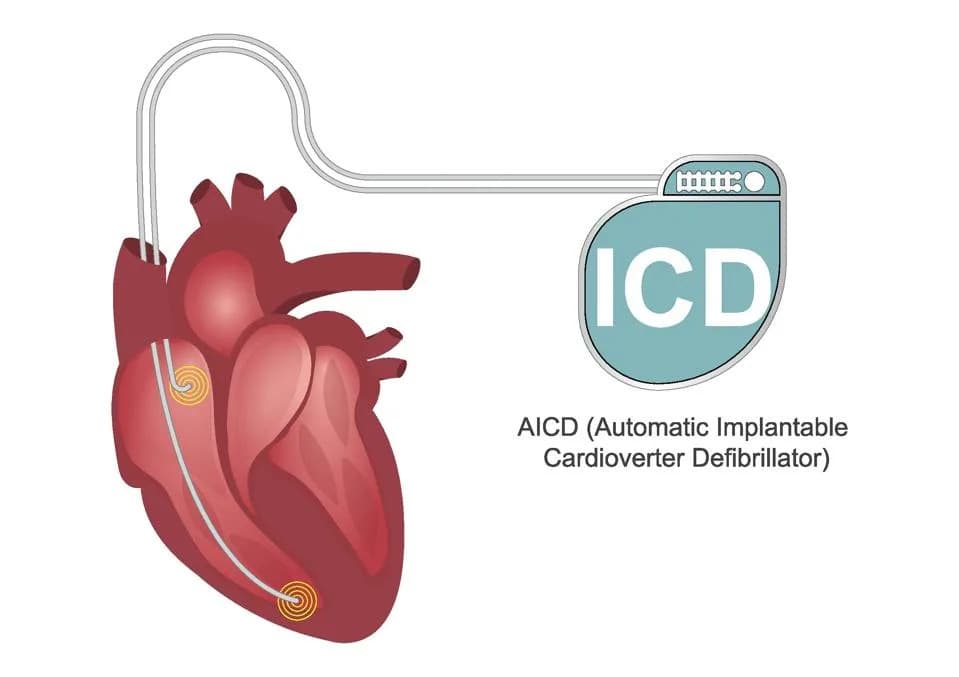
An automated implantable cardioverter defibrillator (ICD or AICD) is a small battery-powered device placed in the chest for uses electrical impulses to return heart rhythm to a normal pattern.medical
I was encouraged to read about a novel application of artificial intelligence that may significantly improve how clinicians detect patients at risk of sudden cardiac death (SCD).
Why This Matters: SCD accounts for roughly 10–15% of deaths worldwide and causes more than 300,000 fatalities in the United States each year. Preventive care often focuses on identifying high‑risk patients and implanting an automated implantable cardioverter‑defibrillator (ICD), a small, battery‑powered device placed under the skin of the chest that senses dangerous rhythms and delivers electrical therapy to restore a normal heartbeat.
Limits Of Current Screening
Today, the most commonly used screening tool is the echocardiogram (cardiac ultrasound). Patients with a low left ventricular ejection fraction (LVEF) are considered at higher risk and may be candidates for ICD implantation. However, LVEF is an imperfect predictor: many patients with reduced LVEF never suffer SCD, and many patients who do experience SCD would not have been flagged by LVEF alone.
What The New Study Did
Researchers led by Dr. Ziad Obermeyer (University of California, Berkeley School of Public Health) applied machine learning to six years of Swedish health records, analyzing roughly 110,000 electrocardiograms (EKGs) from about 35,000 patients. They trained models to link EKG features to outcomes—specifically, which patients later experienced sudden cardiac death.
Key Findings
- The AI identified a subgroup with an estimated 7.0% annual risk of SCD—substantially higher than the ~4.6% annual risk associated with the standard abnormal LVEF threshold.
- About 80% of the patients flagged as high‑risk by the AI would not have been detected by standard echocardiogram screening and therefore might otherwise have been discharged without consideration for an ICD.
- The model’s signals generalized: the researchers validated the findings on independent datasets from the United States (San Diego) and Taiwan.
How They Improved Interpretability
A frequent criticism of medical AI is opacity: many models behave like “black boxes.” To address this, Obermeyer’s team used a second AI to generate and iteratively modify synthetic EKGs that maximized the first model’s risk predictions. By rewarding changes that raised risk scores, the researchers homed in on which waveform features the classifier relied on.
They identified a specific alteration in the morphology of lead aVL (augmented vector left) that correlated with elevated SCD risk. While the precise biological mechanism remains to be proven, a plausible explanation is that localized scarring or tissue damage disrupts electrical conduction and both creates the EKG signature and increases susceptibility to lethal arrhythmias.
Limitations And Next Steps
These findings are promising but not yet ready for routine clinical use. The study demonstrates correlation rather than causation; follow‑up work using cardiac MRI, targeted myocardial biopsy, and prospective clinical validation is needed to confirm that the EKG pattern corresponds to structural lesions and that acting on this signal improves outcomes.
If validated, this approach could be clinically valuable because EKGs are inexpensive, ubiquitous, and noninvasive compared with MRI or invasive procedures—potentially allowing broader, low‑cost screening for SCD risk.
Bottom Line
This work is an encouraging example of how AI can both enhance clinical decision‑making and reveal previously unrecognized disease signatures. Continued validation and careful clinical trials will determine whether the finding can safely guide ICD placement and reduce preventable deaths from sudden cardiac arrest.
Note for Patients: If you are interested in participating in related research, contact the study team or your cardiology clinic to learn about ongoing trials and enrollment.
What Is An ICD? An automated implantable cardioverter‑defibrillator (ICD or AICD) is a small, battery‑powered device placed beneath the skin of the chest that senses dangerous heart rhythms and delivers electrical impulses or shocks to restore a normal heartbeat.
Help us improve.