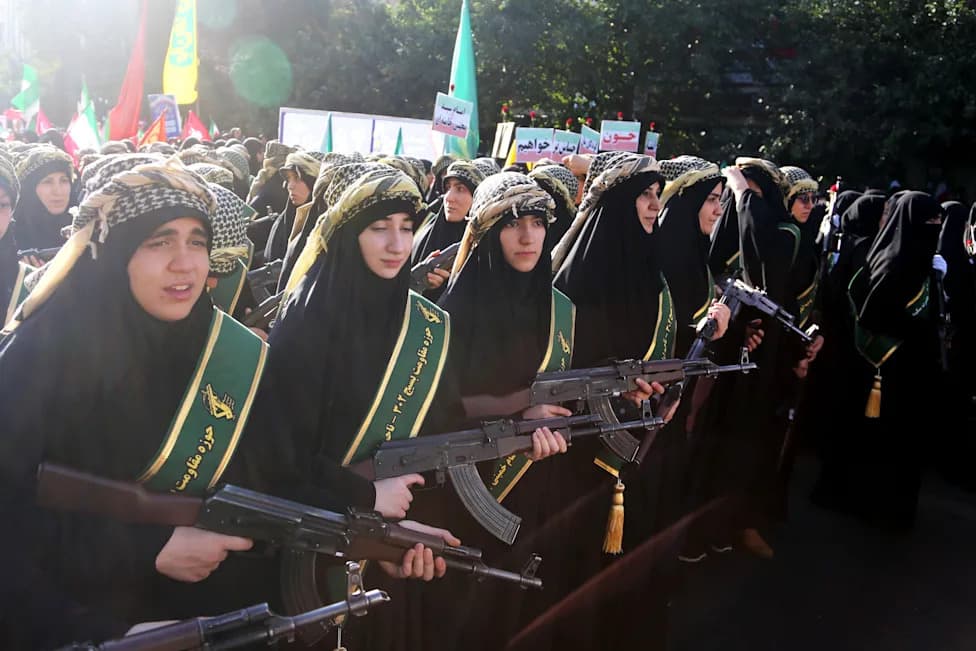
President Trump said the U.S. has done an "amazing job" in the five-month conflict with Iran and vowed continued, intense strikes. Iran's IRGC claimed attacks on tankers in the Strait of Hormuz and drone strikes on U.S. facilities in Kuwait; U.S. Central Command gave no immediate public comment. The confrontation has pushed oil prices sharply higher, boosting major oil-company profits, while a string of regional incidents—from tunnel demolitions near Beaufort Castle to drone attacks and espionage arrests—has expanded tensions. Verification of battlefield claims is increasingly complicated by new AI image-editing tools.
Trump: 'Amazing Job' Against Iran — U.S. Vows More Strikes as Regional Tensions Escalate
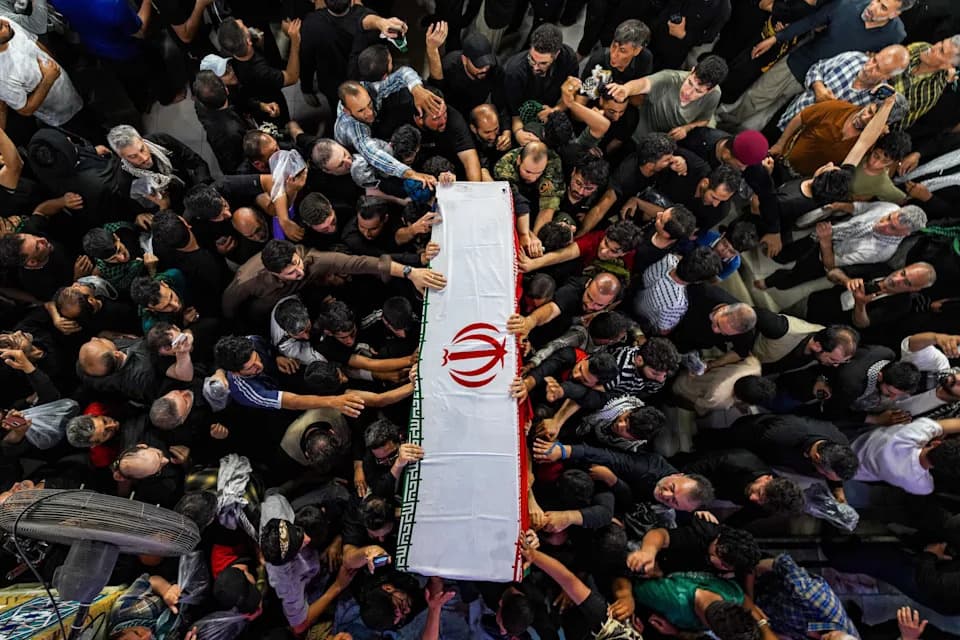
A funeral ceremony is held at the Imam Ali Shrine in Najaf, Iraq, on July 30, 2026, for members of Iraq's Popular Mobilization Forces and Iran's Islamic Revolutionary Guard Corps who were killed in U.S.-Saudi airstrikes across Iraq earlier this week. / Credit: Karar Essa/Anadolu via Getty Images
President Donald Trump opened a Cabinet meeting Friday by saying the United States has done an "amazing job" in the five-month conflict with Iran and warned Washington will keep striking Tehran "very hard" until Iran changes its behavior.
Trump's Remarks
At Camp David, Mr. Trump reiterated that the U.S. campaign has achieved significant results in a short period compared with longer 20th-century conflicts. He said, "We'll be hitting them very hard. And you know at some point, they're going to say, 'We just can't take it anymore.'" Pressed on proposals to "go big," he responded: "We are going big. We have already gone big. What is big?"
Iran's Claims And Maritime Tension
Iran's Islamic Revolutionary Guard Corps (IRGC) said it struck two tankers attempting to transit the Strait of Hormuz under what it described as a U.S. military "air escort" and forced four other vessels to turn back. The Iranian Persian Gulf Strait Authority also said that continued U.S. military actions made transit "not possible."
U.S. Central Command had no immediate public comment on the IRGC's claims. The U.S. has redirected commercial vessels as the dispute constrains movement through a waterway that normally carries roughly one-fifth of the world's oil and natural gas deliveries.
Regional Military Incidents
Iran claimed it launched drone strikes against U.S. facilities at Ahmad al-Jaber Air Base in Kuwait; Kuwait's defense ministry said it detected hostile drones and intercepted and destroyed them, reporting material damage from falling debris but no casualties. A Chinese-run facility in Kuwait was struck in a separate incident; China said no Chinese citizens were harmed.
In southern Lebanon, powerful detonations near the UNESCO-listed Beaufort Castle followed Israeli statements that tunnel networks used by Hezbollah had been destroyed. Israel said it used roughly 700 tons of explosives to demolish what it called a multilevel tunnel network it described as a "central command centre" for the group; Lebanon warned vibrations could have damaged the surrounding heritage site.
Egypt is investigating a drone attack on the port of Damietta that damaged a floating regasification unit (FSRU) and other vessels; no group has claimed responsibility. Meanwhile, authorities in Cyprus arrested a British-Azerbaijani man in connection with alleged surveillance at RAF Akrotiri and possible ties to Iran's IRGC.
Economic Impact
The conflict has tightened global oil supplies and pushed Brent crude from about $70 to above $100 a barrel for much of March–May, at one point touching roughly $126. That spike contributed to higher retail fuel prices, episodic shortages and rationing in some countries.
Major oil companies reported large second-quarter profits: Exxon Mobil posted $14.53 billion (up 105% year over year) on $116.02 billion revenue, and Chevron reported $12.07 billion (up 385%) on $70.06 billion revenue. Critics say some firms are benefiting financially from the crisis-driven price surge.
Verification Risks And Technology
Investigators warn that new image-editing tools complicate efforts to verify battlefield claims. CBS News demonstrated that Google's Nano Banana 2 AI editor could alter satellite imagery to show damage at Muwaffaq Salti Air Base in Jordan. Google says generated images include a SynthID watermark, but CBS reported that Google Lens' detection could be inconsistent depending on how an image was cropped.
Iran has repeatedly released unverified satellite images claiming damage to U.S. bases and equipment, a pattern that heightens the need for careful verification of visual claims in the conflict.
Political Fallout
The U.S. Senate again failed to pass a resolution limiting presidential war powers related to hostilities with Iran, losing 49–50. Three Republicans — Senators Lisa Murkowski, Susan Collins and Rand Paul — joined Democrats in favor; Sen. John Fetterman was the lone Democrat voting against. Senate Republican Leader Mitch McConnell did not vote while in a rehabilitation facility.
On social media, President Trump also posted that Hamas had agreed to a plan to disarm in Gaza under an initiative he described as the "Board of Peace," a claim that U.S. officials say involves negotiators and intermediaries but lacks a clear public timetable.
Note: Many operational claims in the region remain contested or unverified publicly. Attribution and casualty details are from official statements and media reports; some items reflect claims by involved parties and are reported as such.
Help us improve.