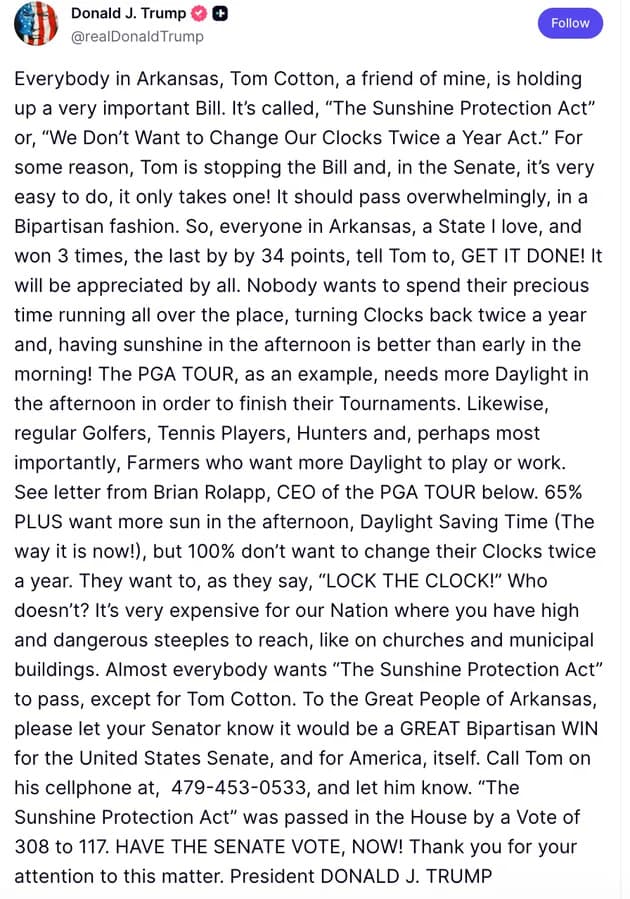
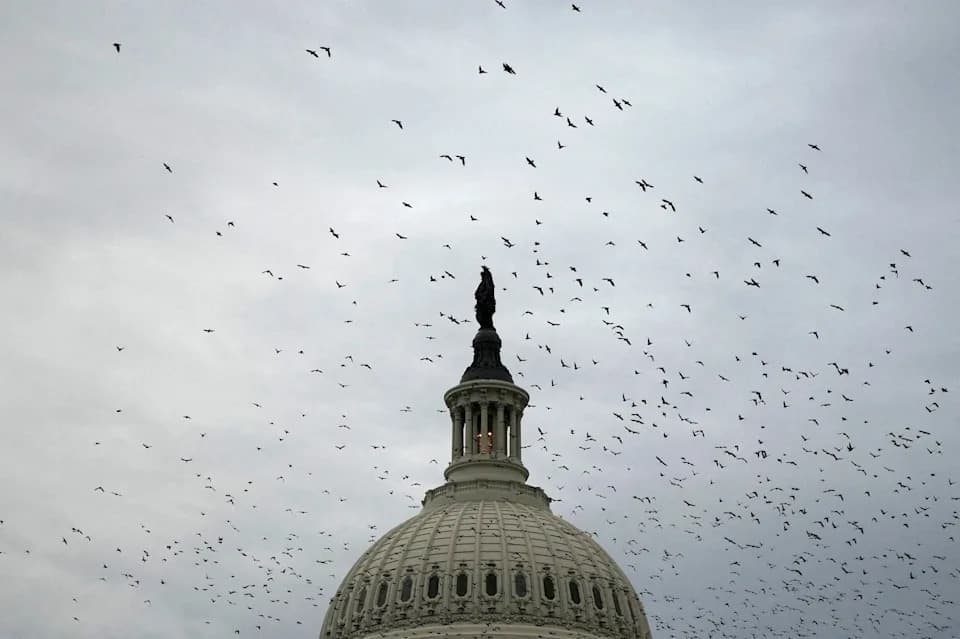
Most of the U.S. will set clocks back one hour at 2 a.m. local time on Sunday, Nov. 1, unless Congress passes new legislation. The House approved a bill in July to make daylight saving time permanent, and President Trump is lobbying senators to back the change, but the measure faces uncertainty in the Senate. Several states and territories already remain on standard time year-round. Health experts generally favor permanent standard time, warning that twice-yearly clock shifts disrupt circadian rhythms and are linked to short-term increases in heart attacks and crashes.
Nov. 1: Clocks Fall Back — Trump Pushes To Make Daylight Saving Permanent
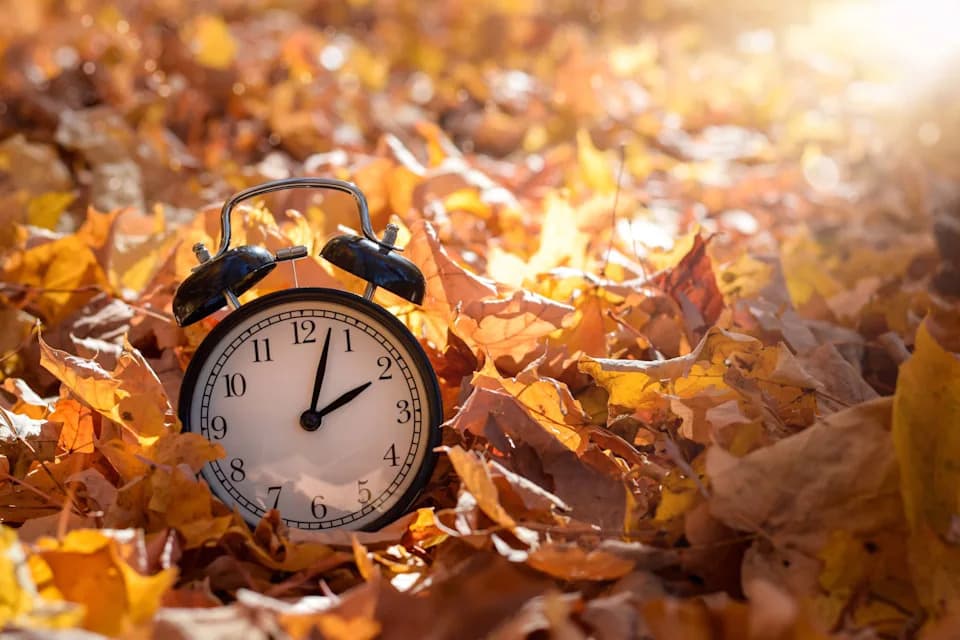
Daylight saving time is expected to begin on Sunday, March 8, at 2 a.m. local time in 2026, with clocks "springing forward" an hour, to 3 a.m. and sunrise and sunset occurring about 1 hour later.
Most Americans should plan to set their clocks back one hour on Sunday, Nov. 1, when daylight saving time (DST) ends. By federal law, the change occurs at 2 a.m. local time, when clocks are set back to 1 a.m., returning most of the country to standard time for the winter months.
Why The Change Will Still Happen
The reason clocks will still change this year is simple: Congress has not enacted a law to make daylight saving time permanent or to eliminate the seasonal switch. Lawmakers from both parties have introduced and debated various proposals—some aiming for year-round DST, others for permanent standard time—but none have become law.
Where The Proposal Stands In Washington
One notable effort, the Sunshine Protection Act of 2022, passed the U.S. Senate but did not become law. The U.S. House of Representatives later approved legislation in July to make daylight saving time permanent, and President Donald Trump has publicly urged senators to support that measure, saying, “Hopefully the Senate's going to approve that one.” Senate leaders, including Majority Leader John Thune (R-S.D.), have expressed doubts about whether there are enough votes to pass it in the upper chamber.
Who Already Stays On Standard Time
Several states and U.S. territories do not observe DST and remain on standard time year-round. These include:
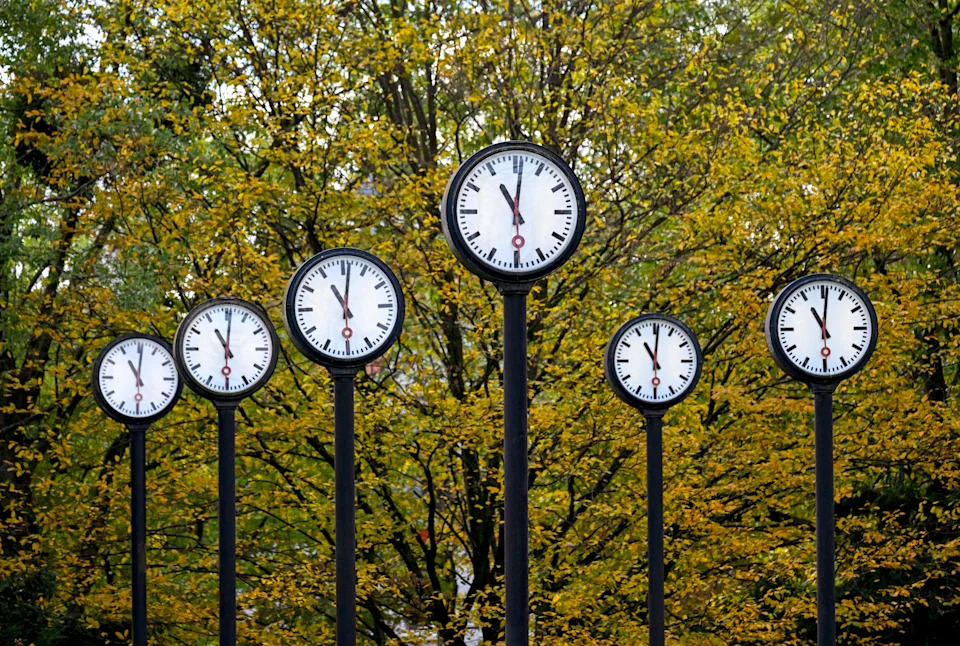
The Daylight Act of 2026 could change daylight saving time as we know it in the U.S.
- Hawaii
- Most of Arizona (except the Navajo Nation)
- American Samoa
- Guam
- Northern Mariana Islands
- Puerto Rico
- U.S. Virgin Islands
Public Opinion And Health Concerns
Public sentiment has increasingly favored ending the twice-yearly clock changes. A 2023 YouGov survey found 62% of Americans supported eliminating the biannual switch, and a January 2025 Gallup poll reported 54% wanted to end DST (48% favored year-round standard time; 24% preferred permanent DST).
Health and sleep experts warn that the clock shifts disrupt circadian rhythms—the body's internal clock that governs sleep and other biological functions. Erik Herzog, a biology and neuroscience professor at Washington University in St. Louis and former president of the Society for Research on Biological Rhythms, has said permanent standard time is the healthiest option. Studies have linked the springtime “spring forward” shift to short-term increases in heart attacks and traffic accidents.
What You Should Do
Because no new federal law has been enacted, most of the United States will "fall back" at 2 a.m. local time on Nov. 1. Set clocks back one hour before going to bed on Saturday, Nov. 31, or simply plan for an extra hour of sleep on Sunday morning.
Contributing: Reuters; Bart Jensen, Zachary Schermele, Jorge L. Ortiz, Fernando Cervantes Jr., Emily DeLetter, Julia Gomez, Kinsey Crowley, USA TODAY
Help us improve.