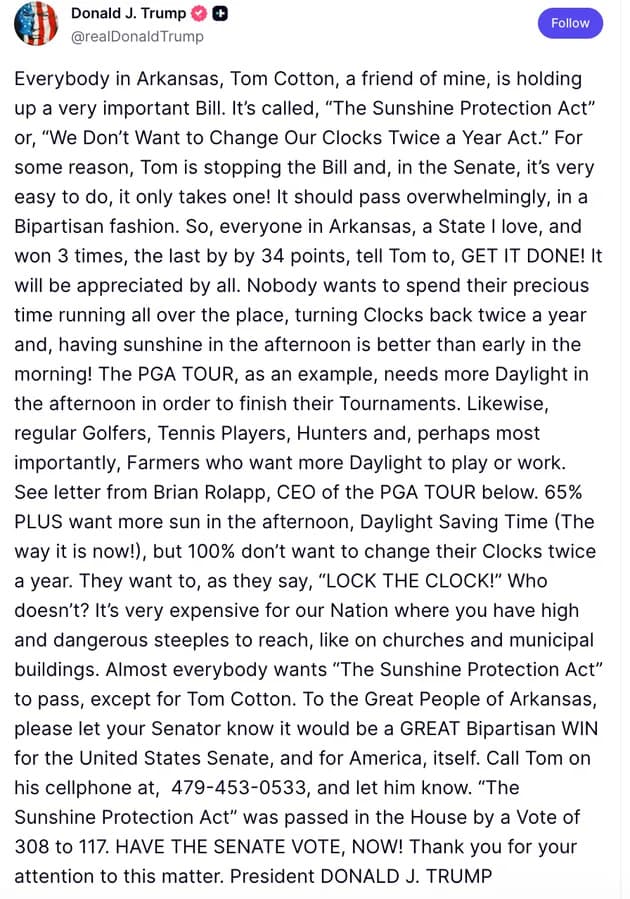
President Trump publicly pressured Sen. Tom Cotton to stop blocking the Sunshine Protection Act, a proposal to make daylight saving time permanent. Trump posted what he said was Cotton’s phone number and argued permanent DST would give Americans more evening sun and reduce crime. Opponents, including Cotton and other Republicans, warn it would create dark winter mornings and safety risks for children. Supporters cite convenience and economic gains, including a PGA Tour estimate of more rounds and revenue.
It's Dark! Trump Presses Tom Cotton Over Permanent Daylight Saving Time

President Trump arrives back at the White House at night. His current crusade is to eliminate standard time so that he doesn't have to "come home in the dark." Graeme Sloan / Getty Images
President Donald Trump has turned his sights on a new set of targets: Arkansas Sen. Tom Cotton, the nation’s clocks and, in his phrasing, "darkness" itself. On Saturday, Trump used Truth Social to demand that Cotton stop blocking legislation that would make daylight saving time permanent, arguing Americans deserve more afternoon sunlight.
What Trump Said and Did
Trump framed the issue as a matter of putting constituents first, writing that "If Tom Cotton were putting Arkansas first, he would give them an extra hour of daylight." He escalated the dispute by posting what he said was Cotton’s cellphone number and urging Arkansans to call the senator.
"CRIMINALS DON'T LIKE WORKING IN THE LIGHT," Trump wrote, and later said people he had spoken with told him they "HATE, immediately after a mandatory time change, going home at night -- and it's DARK. It's depressing!"
The Legislation: Sunshine Protection Act
The bill at the center of the debate is the Sunshine Protection Act, first co-sponsored in 2023 by Sen. Martin Heinrich (D-N.M.) and former Sen. Marco Rubio (R-Fla.). The measure would end the twice-yearly clock change by establishing year-round daylight saving time. That would not create extra daylight overall, but would shift an hour of natural light from mornings to evenings on the clock.
Opposition and Safety Concerns
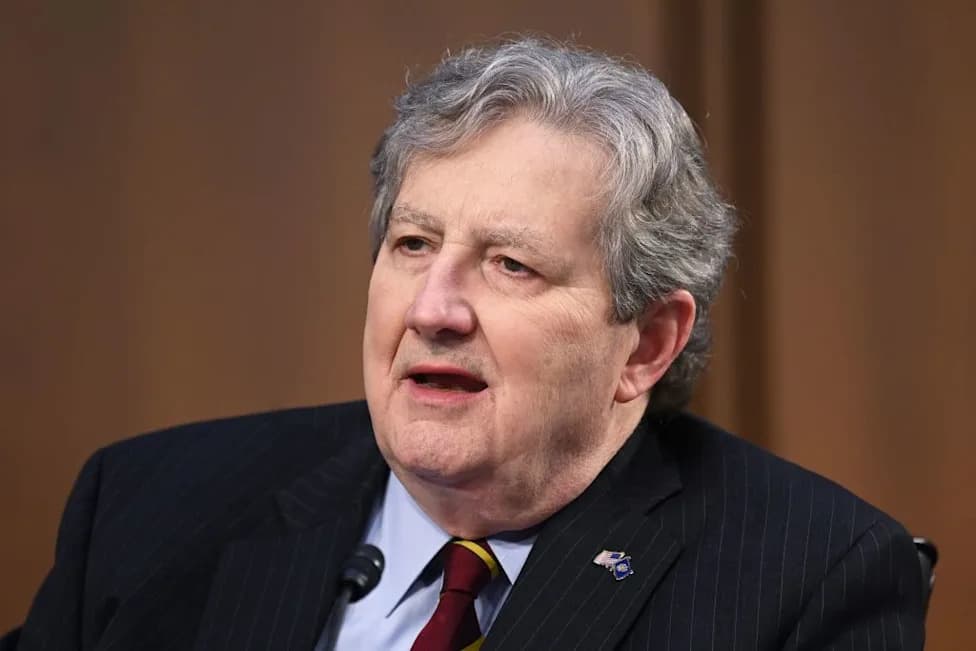
Sen. Tom Cotton and other Republicans, including Sen. John Kennedy of Louisiana, have opposed permanent daylight saving time. Cotton has warned the change would require children to travel to school in the dark during winter months, and has noted that previous national experiments with year-round DST produced unworkable winter sunrises and public safety concerns.
Supporters' Arguments and Economic Case
Trump cited practical difficulties with resetting clocks on church steeples and municipal buildings and argued evening light deters crime. He also shared an Oct. 1 letter from PGA Tour CEO Brian Rolapp backing permanent DST; Rolapp pointed to an industry estimate that additional evening daylight could generate about 23 million more rounds of golf and roughly $1 billion in annual revenue for the sport.
Historical Context
Congress did enact year-round daylight saving time during the 1970s energy crisis, but public support waned amid complaints about dark winter mornings and safety concerns for schoolchildren. Lawmakers reversed the policy before the experiment was scheduled to end.
As of publication, most of the country is still scheduled to turn clocks back on Nov. 1. The original version of this story appeared on Salon.com.
Help us improve.