Investigation: The Telegraph found that a majority of supermarket bottles labelled "award‑winning" are judged to be only mediocre by expert panels. Medal Over‑Giving: Competitions often award prizes to more than 80% of entries, with bronze the most common tier. Retail Impact: Supermarkets still promote and may mark up medal‑bearing wines, while industry defenders say their judging is rigorous. Advice: Treat medals as one factor among many when choosing wine.
The Truth Behind 'Award‑Winning' Supermarket Wines — Why Many Medals Mean Little

Illustration
More than half of the wines sold in UK supermarkets labelled as "award‑winning" are judged by expert tasters to be little more than mediocre, an investigation by The Telegraph found. Though medals are meant to help shoppers identify quality, critics say widespread prize‑giving has diluted their meaning and turned awards into a commercial marketing tool.
How Wine Competitions Work
Wine competitions rely on blind tastings by panels of judges. Producers pay an entry fee to submit bottles, and a high proportion of entries typically receive awards. Figures from recent competitions show that well over four in five entries often take home some form of medal.
What wine medals really mean
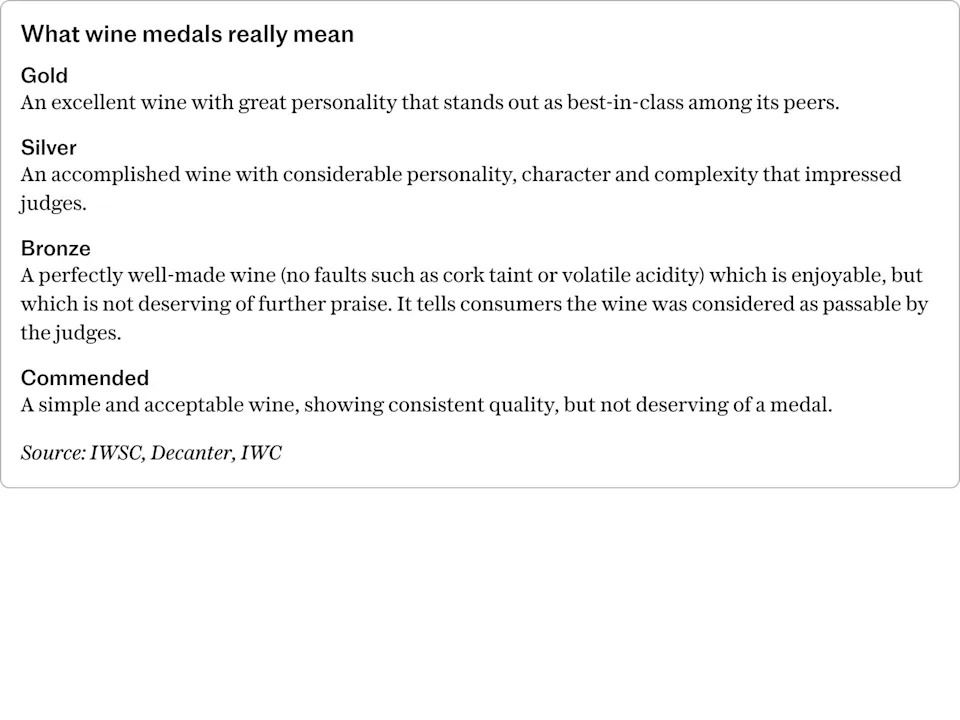
What Bronze—and 'Commended'—Really Mean
Bronze medals, the most common award found on supermarket shelves, generally indicate a wine that is "competently made" and drinkable but not outstanding. Competition organisers such as the IWSC and Decanter describe bronze as recognising "well‑made" or "satisfying" wines. Critics, including The Telegraph's wine critic Victoria Moore, warn that shoppers often mistake shiny stickers for evidence of high quality when many bronze or commended wines lack personality or distinction.
Retail Impact: Prices and Promotion
Despite modest endorsements, retailers frequently promote and sometimes raise the price of medal‑bearing wines — by as much as 15%. Competition organisers openly market medals as a sales tool: the International Wine Challenge (IWC) tells entrants medals can "turn medals into sales" and that even lower‑tier awards offer "real commercial advantages."

The system is not without its flaws – this made-up 'Château Colombier' from a €2 bottle fooled judges into awarding it a gold medal
Statistics And Notable Examples
Breakdowns of supermarket ranges underline how common bronze medals are: Asda had 286 of 460 award‑labelled wines (62%) carrying bronze medals; Waitrose 37 of 58 (64%); Sainsbury's 140 of 272 (51%, plus 16 commended); and Tesco 144 of 258 (56%, plus 15 commended). In recent competitions the IWSC awarded medals to around 85% of nearly 4,000 entries, with bronze representing 54% of prizes; Decanter awarded prizes to about 82% of 17,000 entries, 40% of which were bronze.
In 2023 a Belgian consumer advocate bought a €2 bottle, relabelled it "Château Colombier," paid an entry fee and won a gold medal — a stunt that highlighted vulnerabilities in the system.
Industry Response
Competition organisers reject the charge that awards are meaningless. The IWSC says its judging is rigorous and independent and that medal winners earn their place; Decanter makes a similar defence. Some supermarkets, such as Waitrose, stress not all their wines are submitted and that they aim to offer both quality and value.
Regulatory Steps And Consumer Advice
Some jurisdictions have moved to tighten oversight: Australia introduced rules in 2005 restricting medals to respected independent bodies to protect genuine achievement. For shoppers, the best approach is to treat medals as one of several buying cues — alongside tasting notes, price, producer reputation and independent reviews — and to be wary of assuming every sticker signals excellence.
Bottom line: Medals can indicate a perfectly drinkable wine, but the prevalence of bronze and commended awards and the commercial incentives behind competitions mean consumers should not equate every "award‑winning" label with top quality.
Help us improve.